AI Prompts to Write a Product Requirements Document (PRD) Your Engineers Will Trust
Why engineers often distrust PRDs and how AI offers a solution
Traditional specs frequently obscure objectives, dilute scope, and overlook testability, which leads to costly rework. Structured AI-generated prompts address these gaps by mandating clear sources, explicit assumptions, and well-defined outputs. This framework results in traceable decision-making that engineers can stand behind.
Ambiguity now means costly errors later. Treat each PRD as a set of enforceable contracts, not mere descriptive prose.
Prompting a problem statement your engineers will debate and endorse
Begin your PRD with a concise problem statement linked directly to business impact. Clearly connect it to a target user and define a timeline.
Commercially contextualized problem statement
Role: Senior product manager at a B2B SaaS. Task: Write a one‑page Problem Statement engineers can implement. Context: Industry = {{ industry }}; Product = {{ product_name }}; ICP = {{ segment }}; ARR goal impact = {{ goal_arr_change }} by {{ date }}; Current baseline metric = {{ baseline_value }} {{ metric }}. Constraints: Budget = {{ budget_range }}; Regions = {{ regions }}; Privacy regime = {{ regimes }}; Data residency = {{ residency }}. Risks already known = {{ risks }}. Deliverables: 1) Problem Statement (≤120 words). 2) Business driver with quantified impact and owner. 3) Primary user and JTBD. 4) Timebox and explicit out‑of‑scope. Output: Return Markdown with H3s for each deliverable and a final 2‑sentence engineering summary.Defining assumptions as testable hypotheses
You are a critical PM. Convert these assumptions into testable hypotheses for the PRD. Inputs: Assumptions = {{ list_of_assumptions }}; Evidence = {{ links_or_notes }}. Output: 1) Hypothesis table with columns [ID, Hypothesis, Metric, Leading Indicator, Data Source, Decision Rule]. 2) Top 3 to validate pre‑build with method and sample size. Style: concise, no fluff.
Prompting measurable objectives and success metrics
When goals are quantifiable and time-constrained, engineers build with greater clarity. Always define outcome measures and guardrails together.
North star metrics and counter-metrics
Task: Produce PRD Objectives that fit SMART and include counter‑metrics. Inputs: North Star = {{ north_star_metric }}; Current = {{ current_value }}; Target = {{ target_value }} by {{ date }}. Risks = cannibalization of {{ area }}. Output: List 3 primary objectives and 3 counter‑metrics with thresholds. Return a Markdown table [Objective, Target, Timeframe, Counter‑Metric, Abort Threshold, Owner].KPI dictionary built for engineering
Role: Analytics lead. Create a KPI dictionary for this PRD. Inputs: Metrics = {{ metrics_list }}. Output: For each metric provide [Name, Definition, SQL‑ish formula, Window, Source tables/events, Cardinality, Known pitfalls]. Add a final section with two canary checks for release.
Prompting user personas, roles, and permission frameworks for enterprise
Enterprise grade features demand rigorous identity and policy design. Define roles and access early to minimize rewrites and confusion.
B2B persona triad with pains and triggers
Create three B2B personas tied to this PRD: Buyer, Admin, End User. Inputs: Industry = {{ industry }}; Company sizes = {{ sizes }}. For each persona output [Goals, Top 5 Pains, Success Criteria, Objections, Day‑in‑life bullets]. Conclude with the single behavior change this PRD must cause.Role-based access control (RBAC) matrix
Task: Draft an RBAC matrix. Entities: {{ entities }}. Actions: {{ actions }}. Roles: {{ roles }}. Constraints: SCIM = {{ yes_no }}, SSO = {{ sso_provider }}, Region locks = {{ regions }}. Output: Markdown table [Entity, Action, Role, Allowed?, Condition]. Add JSON policy examples for two edge cases.
Prompting functional requirements as testable user stories
Specify only verifiable behavior
Functional requirements must be testable. Express each feature as an INVEST user story with specific acceptance criteria and assign owners for each metric.
User stories: acceptance, contracts, and telemetry
You are a staff PM. Convert this capability list into INVEST stories. Inputs: Capabilities = {{ bullets }}; Personas = {{ personas }}. For each story output [As a, I want, so that], Acceptance Criteria (Given/When/Then), Event payload schema (JSON with field names, types, required), and Telemetry events to log. Return as numbered stories.API-first requirement shaping
Role: API designer. From these stories, propose REST endpoints. Inputs: Stories = {{ story_ids_and_summaries }}. Output: For each endpoint return [Method, Path, Purpose, Request JSON schema, Response JSON schema, Error codes, Idempotency key rules, Rate limit]. Add curl examples.Anticipating edge cases and failures
Task: Enumerate edge cases that would break the stories. Inputs: Data model sketch = {{ model }}, Integrations = {{ vendors }}. Output: List by category [Latency, Partial failure, Timeouts, Duplicates, Replays, Permissions]. For each, supply a test case and expected UI/API response.
Prompting non-functional requirements: performance, security, compliance, and retention
Non-functional requirements are foundational to trust and reliability. Be explicit, vague aspirations don’t protect reliability.
Performance budgets per user scenario
Create performance budgets per user flow. Inputs: Flows = {{ flows }}; Markets = {{ markets }}; Device mix = {{ device_mix }}. Output: Table [Flow, P95 Latency, Payload Size Max, Throughput TPS, Timeout Policy, Degradation Strategy]. Include a note on synthetic monitoring.Security and compliance checklist
Role: Security architect. Draft PRD NFRs covering authN/Z, secrets, data residency, audit logs, and incident response. Inputs: Standards = {{ soc_iso_hipaa }}; DPA needs = {{ dpa }}. Output: Checklist with owner and verification method; add two misuse cases with mitigations.
Prompting boundaries, constraints, and non-goals
Explicitly state what’s out of scope. This gives engineers necessary guardrails and shields delivery dates from unplanned work.
Defining clear scope and trade-offs
Write PRD Scope with explicit non‑goals. Inputs: Must‑have = {{ must_haves }}; Nice‑to‑have = {{ nices }}; Exclusions = {{ exclusions }}; Technical constraints = {{ constraints }}. Output: 1) In‑Scope bullets. 2) Out‑of‑Scope bullets with rationale. 3) Trade‑off table [Option, Benefit, Cost, Decision, Owner].
Prompting dependencies, sequencing, and contracts with third parties
Lay out all dependencies in advance and sequence tasks to minimize blocking and coordination risks.
Mapping critical path and work sequencing
Identify dependencies and produce a critical path. Inputs: Components = {{ components }}; Teams = {{ teams }}; External vendors = {{ vendors }}. Output: DAG as adjacency list, plus a phase plan with merge gates and entry/exit criteria. Provide risks with mitigations and owners.Third-party integration contracts
Draft integration contracts. Vendor = {{ vendor_name }}; API docs = {{ link_or_summary }}; Rate limits = {{ limit }}. Output: 1) Contract table [Endpoint, Auth, Quotas, SLAs, Retries, Backoff, Webhooks]. 2) Failure policy and sandbox data set. 3) Legal flags needing review.
Prompting release slicing, rollouts, and migration plans mapped to risk
Deliver value quickly and minimize risk. Plan your rollout and data migration paths before merging code.
Release plan with protective guardrails
Propose a release plan in three slices: Pilot, GA‑1, GA‑2. Inputs: Risks = {{ risks }}; Users to pilot = {{ cohort }}; Feature toggles = {{ toggles }}. Output: For each slice include Scope, Kill switch, Canary metrics with thresholds, Rollback steps, and Success gates.Zero-loss data migration playbook
Role: Migration PM. Design a zero‑loss migration. Inputs: Source schema = {{ src_schema }}; Target schema = {{ tgt_schema }}; Volume = {{ rows }}; Downtime budget = {{ minutes }}. Output: Plan with backfill strategy, dual‑write period, reconciliation queries, and cutover checklist. Include an incident drill.
Prompting analytics, telemetry, and dashboards that drive decisions
Analytics must serve real decisions, not vanity metrics. Define events and dashboards teams will monitor and use.
Tracking plan and event schema standards
Produce a tracking plan for this PRD. Conventions: snake_case events, past‑tense verbs. Inputs: Key moments = {{ moments }}; Entities = {{ entities }}. Output: Table [Event Name, Description, Properties(name:type), PII?, Trigger, Owner]. Add two sample queries for retention and funnel.Health dashboard designed for on-call
Design a product health dashboard. Inputs: SLOs = {{ slos }}; Error budget policy = {{ policy }}. Output: Widgets for Latency, Error Rate, Saturation, and Business KPIs. For each, add alert thresholds, runbook link placeholders, and who gets paged.
Prompting for lifecycle alignment and supporting artifacts
Anchor the PRD in your organization’s delivery rhythm. Clearly map it to each project phase and ensure it integrates with charters, roadmaps, and executive expectations.
For more on project phases, see how to map PRDs to the five project lifecycle stages. For artifact packaging, use these planning templates for charters and roadmaps. For execution visualization, consider Gantt charts or nimble trackers.
Task: Create a cross‑phase PRD checklist. Inputs: Org cadence = {{ phases_and_ceremonies }}; Review gates = {{ gates }}. Output: Checklist grouped by phase with required artifacts, owners, and exit criteria. Include a one‑slide exec summary template.
Recommended workflow: create, review, and centralize PRDs in one workspace
Centralize all specs, decisions, and contractual documents in a unified workspace. Tools like Routine, Notion, and Coda excel at structured PRD management. Ensure your PRDs remain close to tickets, dashboards, and CRM data, so the entire team shares a single version of truth.
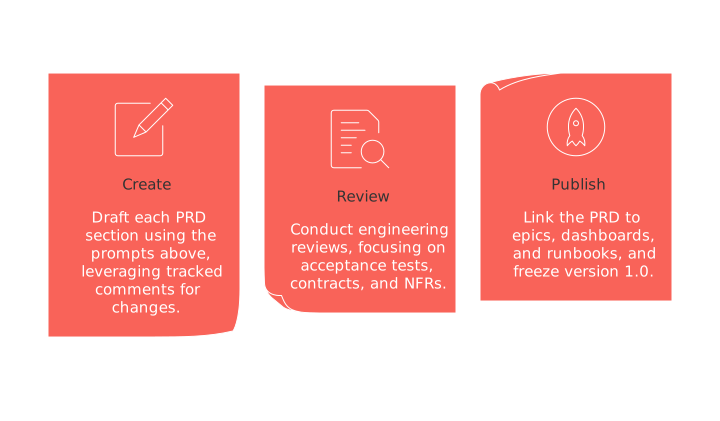
Create: Draft each PRD section using the prompts above, leveraging tracked comments for changes.
Review: Conduct engineering reviews, focusing on acceptance tests, contracts, and NFRs.
Publish: Link the PRD to epics, dashboards, and runbooks, and freeze version 1.0.
Role: Director of product. Final task: Critique my PRD for engineer trust. Inputs: Full PRD Markdown = {{ prd_text }}. Ask: 1) Identify ambiguity, missing contracts, or unverifiable claims. 2) Flag risky dependencies. 3) Suggest two alternative slices that deliver value sooner. Output: Return a severity‑ranked issue list with owners and due dates.
FAQ
Why do engineers often distrust traditional PRDs?
Traditional PRDs frequently lack clarity, making them prone to creating confusion and costly rework. They often obscure objectives and fail to outline testable requirements, leading engineers to mistrust their reliability.
How can AI-generated prompts improve PRD reliability?
AI-generated prompts enforce structured and traceable documentation by demanding clear sources and explicit assumptions. They create a framework of measurable outputs, instilling confidence in engineers to rely on decisions based on these prompts.
What is a commercially contextualized problem statement?
It's a concise PRD introduction that closely ties the problem to business impact, clearly articulating objectives within a commercial context. This ensures that the engineering focus aligns tightly with strategic business goals.
Why are testable hypotheses important in a PRD?
Testable hypotheses transform assumptions into verifiable facts, reducing the risk of error. They define the criteria for success early on, ensuring engineering efforts are logically directed and measurable.
How can Routine help centralize PRDs effectively?
Routine provides a structured workspace, keeping PRDs connected to related data such as dashboards and CRM systems. Centralization ensures every team member accesses the most current documents, minimizing fragmentation and confusion.
What are the risks of poorly defining non-functional requirements?
Vague non-functional requirements can lead to unreliable systems prone to failure, especially under pressure, compromising trust and user experience. Clearly defined parameters ensure robustness and security from the outset.
How does role-based access control (RBAC) improve enterprise security in PRDs?
RBAC frameworks rigorously outline identity and access permissions, reducing errors and unauthorized access. Early definition of roles and access minimizes confusion and protects against potential security breaches.
What are the potential downsides of not explicitly stating out-of-scope items in a PRD?
Failure to define out-of-scope items risks scope creep, leading to unplanned work that can derail timelines and budgets. Clear boundaries provide necessary guardrails, shielding delivery from unexpected demands.

Julien Quintard
Founder & CEO at Routine02/09/2026
