The 3-Window Method: How Solo Founders Structure Their Day Without a Rigid Calendar
How the 3‑Window Method helps solo founders work without a rigid calendar
Your day as a solo founder usually oscillates between building your product, generating demand, and handling day-to-day operations. The 3‑Window Method transforms this constant flux into an organized flow, without resorting to hour-by-hour scheduling. You divide your day into three focused periods: Build, Demand, and Ops. Each “window” gathers similar activities, allowing you to stay in a single productive mindset at a time.
Focusing on pace rather than rigidly adhering to a timed schedule can help maintain productivity and work rhythm. Each morning, you decide how to order your windows and how much time to allocate. Missed slots don’t trigger guilt. Your work keeps moving forward.
I build before I talk; then I follow through.
Understand the three windows for solo founders, each with its distinct scope and expected outcomes
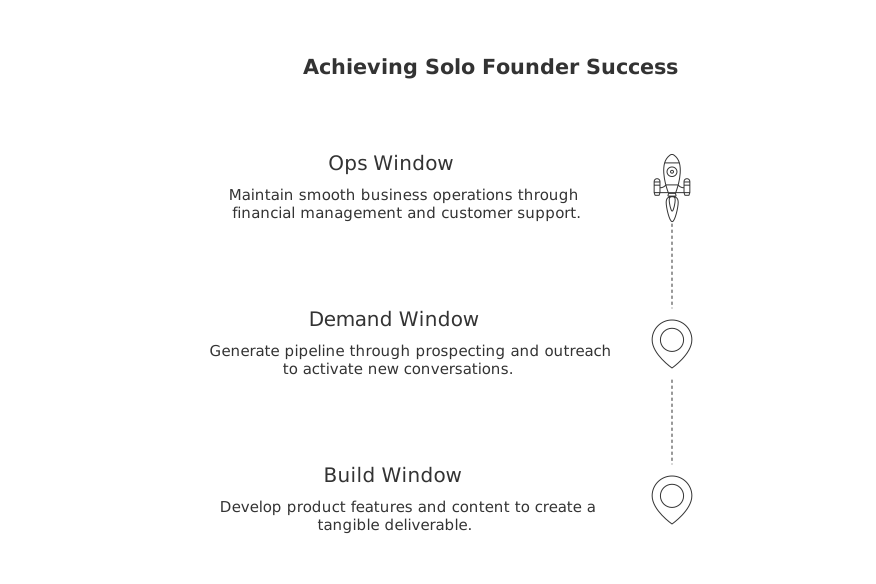
Build window: Create value. This is the time to develop product features, write content, design assets, or refine your service. Aim to finish with a tangible, demonstrable deliverable.
Demand window: Generate pipeline. Activities here include prospecting, publishing, advertising, email outreach, recording demos, and progressing deals in your CRM. The goal is to activate new conversations or secure concrete next steps.
Ops window: Keep your business running smoothly. Handle finances, take care of customer support, manage contracts and compliance, and maintain your tools. The desired outcome is fewer unresolved tasks and up-to-date processes.
Examples that fit each window
Build: Launch a new landing page section; draft a case study; prototype a payment flow.
Demand: Send 15 targeted outreach emails; respond to inbound leads; share a customer success story.
Ops: Pay invoices; organize receipts; resolve support tickets; clean up CRM fields.
Set up your 3‑Window day structure in under 20 minutes without using a calendar
Pick today’s order. Start with the window where your energy is highest or the stakes are greatest.
Set rough time limits for each window. Example: Build 120 minutes, Demand 90, Ops 45.
Define one clear outcome for each window. Make it concrete and deliverable.
Avoid mixing different types of tasks within the same window. Sales tasks stay out of Build, and admin tasks do not interrupt Demand.
Keep a single visible queue for each window. Simplify your task intake system.
Stop working in a window once you hit the time cap. Carry over unfinished tasks to that window’s queue for tomorrow.
Review your progress at the end of the day. Note what worked, and adjust the next day’s window order as needed.
Decide what goes into each window using project, CRM, and knowledge workflows
Route tasks based on Build, not their source. For example, a customer feature request becomes a Demand task, a webinar follow-up fits under Ops, and filling out a vendor form is an work mode job. Maintain three streamlined views so you can quickly triage new items.
For long-term task planning, pair your work windows with clear visual aids. If you prefer timelines and boards, check out these visualization tools for simple project management. To strategize beyond the daily grind, “Mastering the Project Lifecycle: The 5 Phases and What Really Happens in Each” can help you align your windows with the larger project phases, without getting dragged into micromanagement.
Apply the 3‑Window Method with real examples for freelancers, independent developers, and consultants
Independent developer building a Software as a Service (SaaS) application
Build: Implement trial limits and a success banner. Deploy changes to production.
Demand: Record a concise feature tour and share it with 20 trial users.
Ops: Update pricing in Stripe and CRM plans. Close two outstanding support tickets.
Freelance designer
Build: Deliver homepage hero concepts and a mobile-optimized variant.
Demand: Send three project proposal follow-ups and share a design carousel post on LinkedIn.
Ops: File two signed contracts, send out one invoice, and archive completed project files.
Consultant with retainer clients
Build: Draft a needs assessment for Client A, highlighting three quick wins.
Demand: Request testimonials and referrals from two satisfied clients.
Ops: Reconcile expenses and update engagement statuses in your CRM system.
Avoid common pitfalls when adopting the 3‑Window Method as a solo founder
Avoid mixing different types of tasks within the same window. Keep meetings and outreach separate from Build periods to safeguard focus.
Don’t overload your windows. Assign one primary outcome and at most two supporting tasks to each window.
Prevent endless Ops work. Set strict time caps for operational tasks, as admin work can easily expand without limits.
Clarify task intake. Ensure you use a single queue for each window, avoid scattered to-dos.
Don’t skip windows frequently. Rotate the order as needed, but try to work in all three windows on most days.
Choose tools that support the 3‑Window Method without creating maintenance overhead
You need a centralized place for project management, a simple CRM, and a basic knowledge repository. Platforms like Routine, Notion, Asana, or ClickUp can unify these needs. Prioritize tools and layouts that let you filter work by window and link related activities, such as “lead → task → project.”
If you’re still evaluating your options, this comparison of all‑in‑one workspaces versus specialized project tools explains key trade-offs and when consolidation can actually save you time.
Track progress and keep momentum with light weekly reviews that match the 3‑Window Method
Every day, note down the following metrics: number of completed projects (shipped deliverables), progress in demand-creating activities (pipeline moves), and completed operational tasks (ops items closed). At the end of each week, review any obstacles or challenges for each window and set a clear focus for each window in the upcoming week. Keep the process quick and tie each focus to something measurable.
Build: What actually shipped? What did you unblock?
Demand: Which messages or campaigns earned responses? Where did sales deals stall?
Ops: Which recurring admin tasks could be automated or batched?
For a deeper dive into balancing maker and manager mindsets, check out Paul Graham’s classic maker’s schedule vs manager’s schedule overview. It’s a valuable resource when deciding your daily window sequence.
Start a 10‑day experiment to validate the 3‑Window Method
Set time caps for each window that feel strict but realistic.
Write down a single, actionable outcome for each window every morning.
Focus only on tasks relevant to your active window during each period.
Track your three daily numbers at day’s end.
After 10 days, review changes in your output, stress level, and how your pipeline has grown.
If you notice clearer focus and steadier progress, keep using the 3‑Window Method. If not, adjust your time caps, reorder your windows, or refine your task intake. Most solo founders find a noticeable difference within a week.
FAQ
What is the 3-Window Method?
The 3-Window Method is a time management strategy for solo founders, dividing the day into \"Build,\" \"Demand,\" and \"Ops\" periods. Each window focuses on specific tasks, enhancing productivity by keeping the founder's mindset consistent within each type.
How does the 3-Window Method differ from traditional scheduling?
Unlike traditional scheduling, the 3-Window Method doesn't rely on rigid hour-by-hour planning. It emphasizes task batching and flexible time allocation, reducing time wasted on shifting contexts between diverse tasks.
Why should solo founders avoid mixing tasks within the same window?
Mixing tasks within the same window disrupts the focused mindset required for efficiency, causing context switching costs. By keeping tasks segregated, founders maintain momentum and minimize cognitive strain.
What are potential pitfalls of using the 3-Window Method?
Common pitfalls include overloading windows with too many tasks or frequently skipping windows. These actions lead to burnout or neglect of essential business areas, disrupting the balance intended by the method.
How can Routine support the 3-Window Method?
Routine can streamline task management by providing a centralized platform for project management, CRM, and knowledge repositories. It allows for better task sorting by window, ensuring efficient work mode transitions.
Are there specific tools recommended for implementing the 3-Window Method?
Tools like Routine, Notion, Asana, or ClickUp can help by organizing tasks into windows and tracking progress. Selecting the right tool, however, depends on the complexity of tasks and integrations needed for seamless workflow.
Can the 3-Window Method adapt to different industries or roles?
The method is versatile enough for various roles such as developers, designers, or consultants, each adapting the windows to suit their unique workflow nuances. The key lies in customizing the task types within each window to align with role-specific demands.
How do you measure success when using the 3-Window Method?
Success can be measured through tangible deliverables from the Build window, growth in demand activities, and reduced operational backlog. Regular reviews aid in adjusting the method to enhance performance and prioritize key tasks.

Julien Quintard
Founder & CEO at Routine05/25/2026
