Time Blocking for ADHD Founders That Need Flexible Buffers
The ADHD founder’s reality: time blocks must bend, not break
Rigid plans inevitably falter in the unpredictable world of startups. Deals get delayed. Unexpected problems arise. Motivation levels vary. For founders with ADHD, scheduled blocks that offer flexibility, complete with built-in cushions, are essential. These buffers help absorb disruptions while maintaining progress and preserving well-being.
Why time blocking fails ADHD founders without buffers
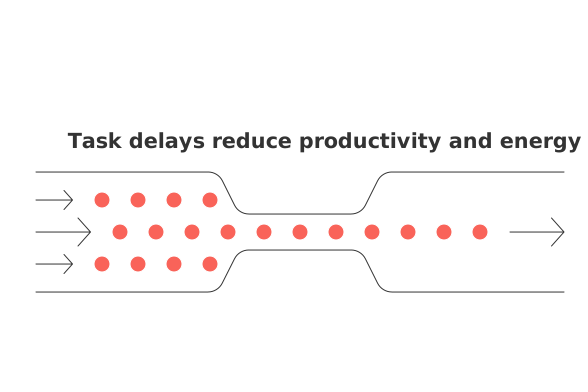
Traditional time management systems assume steady focus and seamless transitions between tasks. ADHD brains, especially in the fast-paced context of entrepreneurship, rarely meet these conditions. As friction builds, carefully made plans often fall apart.
Switching between different types of work takes more time than expected, so delays spill into subsequent time blocks.
Incoming urgent messages disrupt your schedule, leaving fragmented work slots and diminished productivity.
Hyperfocus leads to overruns, which can then cause a dip in energy levels.
Underestimating task duration can trigger feelings of guilt and result in jumping between unfinished tasks.
Lack of recovery time after meetings can leave you mentally fatigued for hours.
How flexible buffers make time blocking work for ADHD
Buffers are intentional blank spaces added around periods of focused work. They provide necessary slack, protect your mental energy, and reduce the pain of switching between activities.
Pre-focus buffer: 10–20 minutes to get oriented and mentally prepare for the task ahead.
Spillover buffer: 10–30 minutes after deep work to wrap up and close open loops.
Triage buffer: Short periods set aside to handle urgent messages and quick tasks.
Recovery buffer: 10–15 minutes after meetings to rest and reset.
Decision buffer: Time dedicated to thoughtfully choosing the next most important task, rather than just addressing the most pressing demand.
If it fights reality, reality wins. Design for reality.
Design a buffer‑first daily plan for ADHD founders
Assess your actual capacity first and keep your day intentionally light. Focus on fewer work blocks, each surrounded by ample buffer space.
Quick start for today
Identify a single mission‑critical outcome for the day. Just one.
Block out a 60–90 minute window of deep work for this priority.
Follow directly with a 15–20 minute spillover buffer to wrap up thoroughly.
Set a brief triage buffer before lunch and again late in the day for urgent items.
Limit yourself to just two more light blocks for routine admin or outreach tasks.
Stop planning when your schedule fills about 60–70% of your real capacity. Leave the remainder open for unplanned needs and learning opportunities.
Project management tactics that protect your buffers across teams
Team work etiquettes can either significantly consume your time or help you manage it effectively. Make buffer time a central pillar of your team's operating guidelines.
Set WIP limits: Cap the number of active tasks each person has to reduce context switching.
Use short “definition of done” checklists: Fewer reopens and surprises during task completion.
Batch async updates twice a day: Respond to communications only during triage buffers.
Pre-mortem weekly: Identify potential overruns in advance and adjust time allocations proactively.
Create an “escalation” lane: Major issues are routed here, intentionally replacing a planned block if needed.
CRM guardrails that prevent focus drift during sales work
Sales tasks require constant shifting of your attention, which can be disruptive. Use specific guardrails to maintain momentum and avoid the distraction of continual checking.
Batch similar outreach activities by their sales stage to minimize mental shifts.
Use stage-based checklists so you always have clarity on the next step.
Timebox follow-ups into a single outreach window rather than scattering them throughout your day.
Let the system auto‑log your activities and skip manual tracking to reduce busywork.
Looking for more automation tips that support your buffer strategy? Check out effective sales automations you can implement today to minimize interruptions and streamline decision-making.
Knowledge management that reduces decision fatigue during blocks
A flood of options can stall progress for ADHD minds. Build “just enough” guidance, directly where you do your work, to keep moving without overwhelm.
Create concise, one‑page playbooks for common tasks, each with three simple steps and a backup plan.
Add clear “if stuck, do this” actions to quickly restore progress.
Embed checklists directly in the relevant task, avoiding the need to search elsewhere.
Archive unused or outdated documents quickly. Unused or outdated documents can breed distraction and create doubt.
Tools that support flexible buffers without forcing a calendar
Select tools that connect your projects, CRM, and plans in a simple way. Many founders love all‑in‑one workspaces like Routine or Notion, while others prefer dedicated solutions such as Asana, Trello, or Pipedrive. Choose what streamlines your workflow and reduces switching, not simply for new features. If you’re comparing tools, this guide to all-in-one workspaces versus project tools can help you decide.
Visualizing buffers with simple project trackers, not just time slots
Visual cues about time buffers can influence behavior. Your project trackers should make this “slack” space visible, not just list tasks.
Add a “buffer” column to your project boards for post-task wrap-ups and recovery periods.
Tag tasks that are likely to spill over, so you can protect subsequent time blocks.
Show WIP counts at the top of each workflow lane to quickly spot and reduce overload.
Gantt bars, a type of project visualization, can be misleading if the initial time estimates are off. Lightweight trackers with WIP limits give a more accurate sense of real capacity and allow you to better handle inevitable setbacks.
Meeting formats that respect buffers and energy
Consider shortening meetings and ensure sufficient gaps between consecutive ones to avoid rushing. Aim to end gatherings five minutes early by default. Record decisions directly in tasks rather than elsewhere. Always schedule a recovery buffer after intensive discussions. For CXOs, assign a proxy to attend status calls so your most important focus block stays intact.
A sample buffer‑friendly day for an ADHD founder
8:30–8:45 Pre‑focus buffer: prepare for the day’s main objective.
8:45–10:15 Deep work on your most important outcome.
10:15–10:35 Spillover buffer: wrap up and address any unfinished details.
10:35–11:15 Admin block: tackle invoices, approvals, and quick correspondence.
11:15–11:30 Triage buffer: deal with urgent requests.
12:00–13:00 Lunch and time for movement.
13:00–14:00 Window for sales outreach.
14:00–14:15 Recovery buffer to recharge.
14:15–15:00 Customer calls.
15:00–15:20 Post‑call buffer: update records and next actions.
15:20–16:30 Project work block B.
16:30–16:45 Final triage buffer: last pass through messages, then wrap up for the day.
When life hits, salvage the day with simple rules
If you miss a planned block, don’t spread the delay across your entire schedule. Find the nearest low-priority block and swap in your top mission task instead. Whenever possible, leave your buffers untouched, they prevent mishaps from derailing the rest of your day and evening.
Next steps and further reading for ADHD‑friendly time blocking
Tomorrow, try scheduling a single deep work block with generous buffers. Add WIP limits and use stage-based checklists when possible, starting this week. For additional guidance, CHADD provides straightforward advice for adults; see their practical ADHD strategies for everyday work and personalize what works for you.
FAQ
How are flexible time blocks beneficial for individuals with ADHD?
Flexible time blocks provide essential cushion for those with ADHD, accommodating the brain's natural fluctuations in focus and motivation. They minimize the risk of disruptions derailing your entire day, unlike rigid schedules that can collapse under unexpected changes.
What happens if I skip buffers in my daily plan?
Skipping buffers can leave you vulnerable to cascading disruptions whenever a task runs over its allotted time. This may lead to increased cognitive fatigue and a compromised ability to complete key tasks effectively.
Why are buffer periods after meetings crucial?
Buffers after meetings allow for mental recovery, which is crucial to maintaining focus and performance. Ignoring these buffers can lead to accumulated fatigue, which decreases your effectiveness throughout the day.
How does Routine support ADHD-friendly scheduling?
Routine offers tools that integrate buffers seamlessly into your schedule, allowing you to adapt to changes without derailing your targets. This adaptability is essential in managing an ADHD-driven work environment, where traditional planning fails.
Can traditional time management systems work for those with ADHD?
Traditional systems often fail due to assumptions of consistent focus and seamless task-switching, both challenging for ADHD individuals. Ignoring these cognitive dynamics can result in frequent deviations from the planned schedule.
What are the risks of not managing context-switching?
Frequent context-switching without proper buffers increases cognitive overload and decreases overall productivity. It can lead to task fragmentation, where nothing significant gets accomplished, straining both time and resources.
Why is it important to limit work-in-progress (WIP) tasks?
Limiting WIP tasks helps reduce cognitive load, minimizing the need for constant context-switching and improving task completion rates. Overextending without these limits leads to quicker burnout and quality degradation in deliverables.
How can knowledge management reduce decision fatigue in ADHD?
Effective knowledge management provides \"just enough\" guidance where it's needed, reducing the paralysis of choice overloaded brains often experience. This clarity helps maintain momentum and prevents wasted time in searching for information.

Julien Quintard
Founder & CEO at Routine04/30/2026
