How to Structure a One-on-One Meeting Agenda That Employees Actually Value
Why one-on-ones fail when the agenda is vague
Employees arrive guessing. Managers default to status updates. No one leaves with momentum. A vague plan creates rushed check-ins that feel perfunctory. The fix is not longer meetings; it is a clear, employee-first agenda that sets expectations before you join.
I never know what to bring. When you hear this, your agenda lacks structure or purpose.
Define the purpose of your one-on-one meeting agenda before you add items
A strong agenda states why you meet. Pick one primary objective and one secondary objective so focus is obvious.
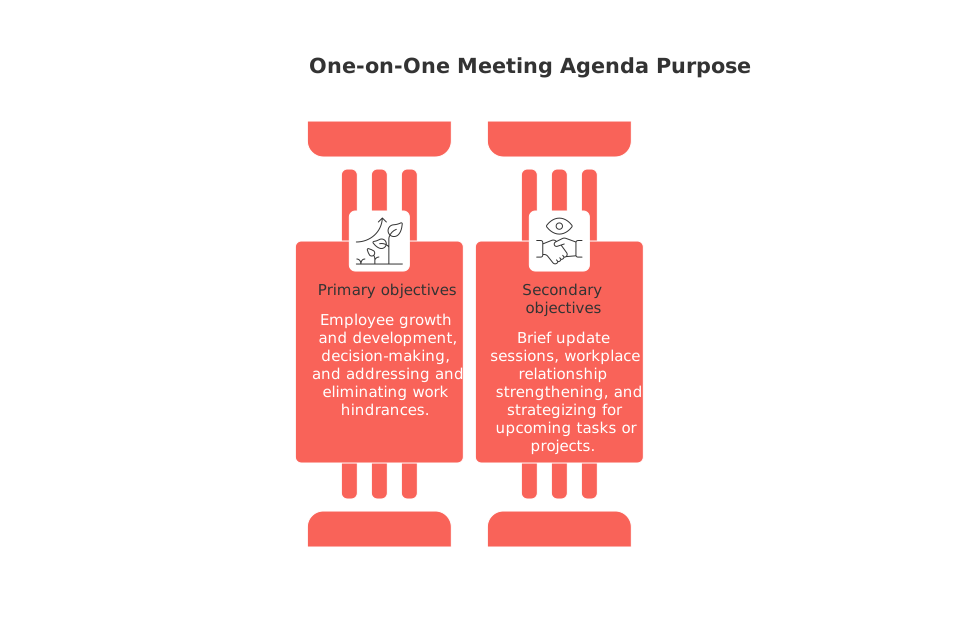
Primary objectives: employee growth and development; decision-making; addressing and eliminating work hindrances.
Secondary objectives: brief update sessions; workplace relationship strengthening; strategizing for upcoming tasks or projects.
Share the purpose in the invite notes and at the top of the doc. Repeat it until it sticks.
Structure a one-on-one meeting agenda that employees actually value
Use a short, repeatable flow. Keep it human. Let the employee go first.
Wins and highlights(3 minutes). Start positive. Prime the brain for problem-solving.
Employee topics first(10 minutes). Their questions, decisions, and concerns lead.
Projects and blockers(5 minutes). Discuss risks, priorities, and trade-offs.
Development and feedback(7 minutes). One skill, one behavior, one next step.
Decisions and commitments(3 minutes). Convert talk into clear actions.
Recap(2 minutes). Who does what by when.
For ready-made structures, review efficient one‑on‑one meeting templates and adapt them to your context. Then standardize across your team.
Project management topics to include in a one-on-one agenda
Tie discussion to outcomes, not tool screens. Keep focus on risk, scope, and sequencing.
For product, design, and engineering
What user problem matters most this cycle? What trade-off did we accept?
Where could scope shrink without hurting value?
Which dependency threatens delivery, and who owns the mitigation?
For operations and marketing
Which process shows the most rework this week? Why?
What campaign or channel is noise? Decide to pause or pivot.
Which metric moved because of our work, not seasonality?
For freelancers and solo workers
Which deliverable risks late handoff? Clarify acceptance criteria now.
What small scope change would delight the client without new budget?
CRM and customer work inside the one-on-one agenda
If you sell or manage accounts, treat part of the agenda as a mini pipeline review.
Health check: stage aging, last meaningful touch, and next value event.
Deal strategy: one stuck opportunity. Identify the real blocker and a testable next move.
Voice of customer: one insight worth sharing with product or service teams.
For consultants and creators who operate via projects or retainers, replace the term deal with engagement to match your context, the same three prompts (health check, strategy for the stuck item, and voice of customer) still apply.
Knowledge management in one-on-ones without turning it into note‑taking
Use the meeting to codify decisions and links to existing docs. Avoid raw minutes. Capture only:
The decision made and why it beats the alternative.
The single owner, deadline, and success signal.
References: PRD, brief, or CRM record. No duplication.
Keep agenda history in the same workspace as projects and CRM. Cross-link; don’t copy-paste.
How to prepare and close the one-on-one meeting agenda in minutes
Asynchronous prep saves time. Ask the employee to add two topics and one decision they want before the call. You add one coaching area. That’s enough.
Before the meeting: review the last recap, confirm the agenda’s purpose, and identify the key decisions you must make.
During the meeting: timebox each section, start with the employee’s topics, and record owners and dates as decisions are made.
After the meeting: write a two-sentence recap and delegate responsibilities with clear due dates.
Try this quick prompt to draft your talking points:
Draft a 30‑minute 1:1 agenda for me as a product manager. Purpose: remove blockers and decide scope for feature X. Include 3 employee‑first questions, 2 decisions we must make today, and a 2‑line recap template. Keep it concise.
And this prompt to generate a crisp recap:
Summarize our 1:1 decisions in two sentences. List owners and deadlines as bullets. Use action verbs. No fluff.
Templates: sample one-on-one agenda for managers, employees, and freelancers
Manager–employee (people manager)
Wins since last time.
Employee’s topics and decisions.
Project risks and trade-offs.
Skill focus: one behavior to practice.
Commitments and dates.
Peer coaching (IC to IC)
Context in 60 seconds.
One blocker and two options.
Ask for feedback on a draft or plan.
Pick one next step.
Freelancer–client check-in
Outcome delivered since last call.
Acceptance criteria for upcoming deliverable.
Risk or assumption to validate this week.
One idea to add value within current scope.
Use this prompt to turn a template into a personal agenda:
Create a personalized 1:1 agenda using the freelancer–client template. Client: e‑commerce brand. Deliverable: homepage redesign. Risks: holiday deadline, image approvals. Suggest the top three questions I should ask.
Tools that support your one-on-one agenda structure without adding chaos
Pick a workspace that connects projects, knowledge, and customer data. Tools like Routine, Notion, ClickUp, or HubSpot can work if they reduce context switching. Prefer a system that ties agenda items to tasks or deals, so action lives where work happens.
Link agenda bullets to tasks or records; avoid duplicate lists.
Store past recaps with the project or opportunity timeline.
Use light automations for reminders and follow-ups, not for conversation.
Executives should see patterns across 1:1s: recurring risks, staffing gaps, and decision bottlenecks. That visibility comes from connected data, not longer meetings.
Metrics to tell if your one-on-ones are working
Follow-through rate: percent of action items completed by the next 1:1.
Decision-per-meeting: at least one meaningful decision each time.
Blocker clearance time: days from flag to resolution.
Satisfaction pulse: a 1–5 rating from the employee after the call.
Track these for eight weeks. If results stall, revisit the purpose and order of sections.
Common anti-patterns to avoid in a one-on-one agenda
Manager talks first and most.
Tool demo replaces the conversation.
“Any updates?” replaces clear decisions.
Agendas change last minute without notice.
Everything is urgent; nothing gets scoped.
Fix one anti-pattern at a time. Start with “employee topics first.” It changes the mood fast.
Further reading on meeting formats and short‑term goal systems that strengthen one-on-ones
If your 1:1s need better shape, review our guide to efficient meeting formats and templates for productive conversations. To keep goals tight between sessions, try the 12‑Week Year approach to short, focused cycles. Both pair well with the agenda above.
FAQ
Why do many one-on-ones fall flat?
One-on-ones often devolve into status updates, leaving employees uncertain about what truly matters. Without a focused agenda, meetings lack direction and can erode trust.
How can a clear agenda improve one-on-one meetings?
A clear agenda sets a primary purpose and aligns topics to that goal, fostering meaningful dialogue. This structured approach avoids aimless conversations and builds trust.
What is the role of the employee in a one-on-one meeting?
Involving the employee early ensures they voice priorities, challenges, and feedback, which builds trust. This employee-led approach shifts focus from manager to team member needs.
Why are written commitments important for one-on-ones?
Commitments in writing clarify expectations and drive accountability, transforming abstract advice into concrete actions. Without them, discussions risk being forgotten.
How can Routine help structure effective one-on-one meetings?
Routine offers tools that integrate projects and CRM data into your agenda for seamless tracking and follow-up. This reduces context switching and keeps actions aligned with meeting discussions.
What common anti-patterns should be avoided in one-on-one meetings?
Avoid scenarios where managers dominate the conversation or use tools instead of engaging dialogue. Ensure the agenda remains consistent and decisions are clear to enhance effectiveness.
What metrics indicate successful one-on-one meetings?
Key metrics include a high follow-through rate on action items and at least one meaningful decision per meeting. Low blocker clearance time also signifies efficient problem-solving.
Can a well-structured agenda reduce the need for longer meetings?
Yes, a well-structured agenda makes meetings more efficient, often eliminating the need for extending their duration. Focused agendas lead to quicker, more decisive outcomes.
How can one effectively prepare for a one-on-one meeting?
Allocate time for asynchronous preparation, ensuring both parties suggest topics and decisions beforehand. A review of past recaps and defining the meeting's intent are crucial steps.

Julien Quintard
Founder & CEO at Routine09/29/2026
