Split your to-do list in two: today's three tasks and everything else
The two-list method: focus on today’s three tasks and everything else
You don’t need twenty priorities. You need three meaningful wins today. The remaining tasks can wait, guilt-free.
Choose three, complete three, and feel accomplished. That’s the principle.
This approach separates your to‑do list into two categories: Today’s Three and Everything Else. This structure reduces distractions and prevents unexpected work from taking over your day.
Gather all tasks in a single backlog.
Select three tasks for today and commit to finishing them first.
Organize everything else in the backlog. Only return after the three priorities are complete.
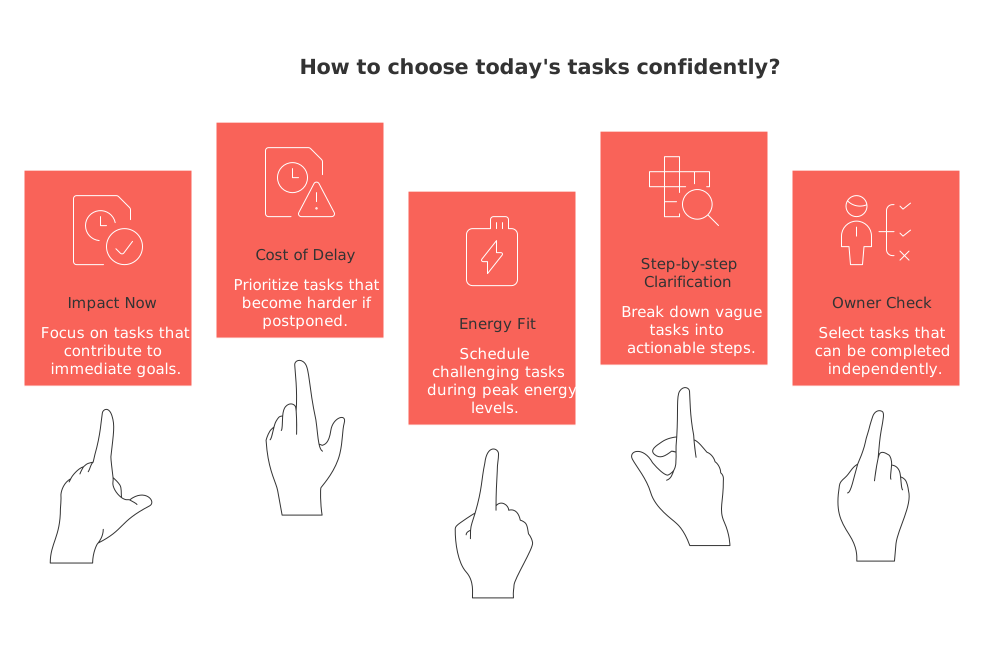
How to choose today’s three tasks confidently
Apply clear decision criteria to stop second-guessing and start making steady progress.
Impact now: Will this task help you achieve a goal this week?
Cost of delay: Will postponing make the task more difficult or time-sensitive?
Energy fit: Schedule challenging tasks when your energy peaks.
Step-by-step clarification: If a task seems vague, identify and define its first actionable step.
Owner check: Pick tasks you can finish independently without waiting for others.
How to organize “everything else” without cluttering your day
Maintain a calm, organized backlog. Use straightforward labels like waiting, blocked, and later. You aren’t ignoring these tasks, you’re prioritizing their order.
Small actionable steps for a manageable backlog
Sort tasks by intended outcome rather than by which application or context they belong to.
Phrase tasks as verbs plus objects, such as “Draft landing copy.”
Divide multi-step tasks into smaller, easy-to-complete pieces.
During a quick weekly review, hide duplicate tasks and remove ideas that are no longer relevant.
Practical examples for individuals, freelancers, and small teams
Individuals
Today’s Three: cancel an unused subscription, book a dentist appointment, finish a workout plan.Everything Else: household repairs and reading lists.
Freelancers
Today’s Three: send a client project estimate, record a Loom video update, invoice the last sprint.Everything Else: update your portfolio and experiment with new tools.
Small teams
Today’s Three: approve the homepage headline, finalize pricing tiers, send out an email test.Everything Else: backlog refinement and planning future experiments.
How to set up the two-list method in your digital tools
Use a single workspace, such as Routine, Notion, Asana, or Todoist, to avoid constantly switching between apps. These platforms offer a straightforward Today view for your top three priorities and a separate section for your task backlog. If you’re unsure which software best fits your workflow, compare all-in-one workspaces to specialized project management tools to find the right balance for everyday productivity.
For teams, personal task management apps can hinder collaboration. Discover why personal productivity apps often fail for teams and how using structured data can make task ownership transparent and improve coordination without unnecessary overhead.
Simple rituals to maintain the efficiency of the system
Consistent routines help your system work smoothly. Focus on keeping them short and easy to repeat.
Daily reset: Once you’ve finished the three daily tasks, select three for tomorrow.
Weekly review: Archive old items and rephrase tasks that are unclear.
Blocker sweep: If you’re stuck, make a single request to move things forward.
When three tasks aren’t enough: how to adapt and stay on track
Some days may become overwhelming with unexpected demands. Don’t give up on the two-list method, just add a small buffer.
Optional extras: Keep up to two extra tasks in reserve. Treat these as options, not commitments.
Time limit: If a single task will take more than 90 minutes, break it into smaller parts.
Emergency slot: Set aside a 30‑minute window to handle urgent surprises.
Measure what matters: did your three priorities make real progress?
Evaluate your productivity based on results, not the time spent. Focus on what you actually finished, not just busywork.
Completed outcomes: What deliverables or results did you achieve or deliver to a client?
Work unblocked: Did you resolve any dependencies that helped projects move forward?
Long-term benefits: What improvements will save you time in the future?
For project work, connect daily tasks to milestones for clarity
Link each day’s three tasks directly to a project milestone or stage. This way, you’ll see how each small step adds up to continuous progress, without getting overwhelmed by more complex aspects of the project. If a task doesn’t contribute to a bigger milestone, reconsider its priority or move it to your backlog.
End your day with clarity, start tomorrow ready
Each evening, pick your top three tasks and park the rest. Arrive tomorrow ready to complete your priorities first. This simple step will help you feel ongoing progress, each day, undistracted by noise or clutter.
FAQ
How do I decide which tasks go on 'Today’s Three' list?
Focus on tasks that significantly impact your goals and evaluate if delaying them will cause any setbacks. Consider your energy levels and tackle the most demanding tasks when you're at your peak. Be ruthless: not everything urgent is important.
What should I do with tasks in the 'Everything Else' list?
Keep them organized with clear labels like 'waiting' or 'later' to prevent clutter. Regularly review and reshape these tasks to ensure they're relevant, but only address them after completing your top priorities to maintain laser-focused execution.
Can this method be adapted for teams?
Yes, but avoid traditional personal apps that lack collaboration features. Use tools like Routine to align tasks with team goals, ensuring everyone knows their priorities without drowning in redundancy or miscommunication.
What if unexpected tasks disrupt my 'Today’s Three'?
Stay committed to your three main tasks, but allow a small buffer for emergencies. Distinguish between true urgencies and minor distractions; not every surprise is a crisis requiring immediate action.
Why focus on just three tasks daily?
Most people overestimate what they can achieve in a day, leading to burnout and reduced quality. The three-task focus forces you to prioritize effectively and ensures meaningful progress without succumbing to endless busyness.
How do I handle tasks that take longer than expected?
Break tasks exceeding 90 minutes into smaller, actionable steps. This prevents overwhelm and allows completion over multiple days, maintaining momentum without derailing your other priorities.
What defines 'real' progress in this method?
Real progress is about delivering tangible outcomes, not just checking off tasks. Assess whether your completed tasks move projects forward, resolve blockages, or create long-term efficiencies.

Julien Quintard
Founder & CEO at Routine05/26/2026
