How to Set Boundaries With Coworkers Who Constantly Interrupt You
Interruptions erode focus and trust at work
You are mid‑thought. A coworker pops in. Your momentum vanishes. The task now feels heavier. Repeat this often, and stress rises. Quality slips, deadlines drift, and relationships strain.
Most interruptions are innocent. Still, they send a message: Your time looks available. Boundaries reset that message with clarity and care.
I want to help. I’m focusing right now. Let’s pick a time that works for both.
Decide which boundary you actually need
Not all interruptions are the same. Choose a boundary that fits the moment and context.
Time‑based:“I’m heads‑down 9–11. I’ll reply after.”
Channel‑based:“Use chat for quick items. Send complex topics by email.”
Topic‑based:“Product questions go to the support channel first.”
Process‑based:“Please open a task. I’ll triage it today.”
Exception‑based:“Interrupt me only for blockers or customer emergencies.”
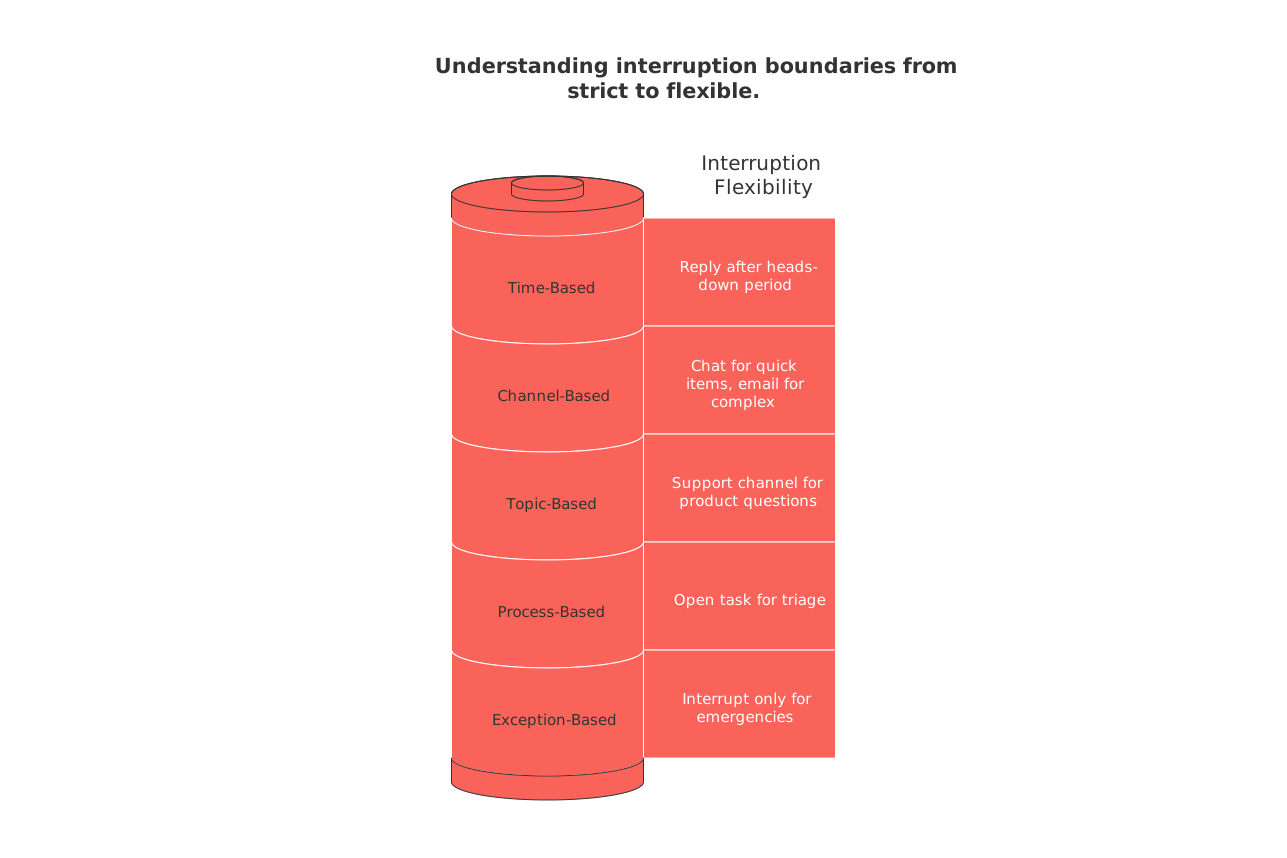
Pick one boundary. State it simply. Repeat it until it sticks.
Say it out loud: script clear, kind phrases
Short, predetermined responses can help lower tension and remove uncertainty while communicating. Keep a calm tone and name a next step.
If they interrupt live:“I want to hear this. I’m finishing something. Can we talk at 3?”If they ping in chat:“On focus time now. Please drop details in the thread. I’ll respond after 2.”If they start explaining anyway:“I don’t want to split attention. Let’s pause and book a slot.”
Personalize your language so it sounds like you. Consider creating three friendly, one‑sentence boundary scripts you can reuse when a colleague interrupts you mid‑task. Keep them calm, clear, and time‑specific.
Keep meetings from derailing when someone cuts in
Meetings collapse when voices stack. Agree on basic turn‑taking and visible timing. Use hand‑raise or round‑robins for balance. Name a “parking lot” for off‑topic items.
If you run the meeting
Open with expectations. Say how turns work. Appoint a timekeeper. Pause interrupters with respect: Hold that thought. We’ll come to you next.
For formats that reduce cross‑talk, review meeting formats and ground rules that keep conversations on track. These structures protect flow without silencing ideas.
If you are a participant
Back up the facilitator. Redirect with kindness: Let’s finish Maya’s point, then hear Jake. Your cue helps the room breathe.
Route quick questions into shared systems, not your brain
Many “Got a minute?” pings are status checks. Let tools answer those. Centralize FAQs and project status where people already look.
Decide where work lives. Some teams prefer one hub. Others split by function. If you’re still choosing, compare trade‑offs in comparing all‑in‑one workspaces and dedicated tools. Clear ownership reduces ad‑hoc asks.
Show progress with simple project boards or timelines. Visual status cuts repeat questions. If you need inspiration, explore how teams use visual trackers from boards to timelines in lightweight guides.
For customer work, funnel drive‑by updates into your CRM tasks. Triage by impact. Respond in batches instead of on demand.
When a coworker keeps pushing past your boundary
Some patterns persist. Use a calm loop: acknowledge, restate, redirect, and close.
Acknowledge:“I see this matters.”
Restate:“I’m in focus time until two.”
Redirect:“Add it to the task. I’ll review after.”
Close:“Thanks for understanding.”
If behavior continues, involve your manager or HR. Keep your tone factual and specific. If you need to follow up in writing, send a brief, polite note that restates your boundary and proposes one concrete next step, such as scheduling a time or adding details to a shared task.
Protect deep work without isolating your team
Signal availability. Set your status to “Heads down.” Mute non‑critical alerts. Keep one path open for true emergencies.
Offer office hours for quick help. People learn when to reach you. You stay responsive without constant context switching.
Use respectful auto‑replies during focus blocks. Example: I’m focusing until 1. I’ll reply shortly after.
Want practical language on assertiveness? Try this concise guide from Harvard Business Review on saying no at work. Adapt the phrasing to your style.
For CXOs and team leads: make boundaries a team practice
Because executives set norms by example, they can strengthen the culture by clearly sharing response‑time expectations, defining quiet hours, clarifying what truly counts as urgent, and publicly praising boundary‑friendly behavior in shared channels.
During planning, reserve clear owners for tasks. When ownership is obvious, people interrupt less. Use simple dashboards so anyone can check status without tapping shoulders.
Equip managers to coach scripts and redirections. Normalize phrases like, Let’s capture that and schedule it. The culture shifts when leaders model it daily.
FAQ
How do interruptions affect work quality and deadlines?
Interruptions not only scatter focus but also erode the quality of work and stretch deadlines. When repeated, they amplify stress and foster an environment where errors are common and timelines become unconstrained.
What types of boundaries can be set to manage interruptions at work?
Boundaries can be time-based, channel-based, topic-based, process-based, or exception-based. Each type requires clear communication and consistency in order to effectively mitigate interruptions.
What's the impact of improperly managed meeting interruptions?
Meetings tend to derail when interruptions occur, leading to incomplete discussions and fractured decision-making. Proper structures, such as turn-taking rules and designated timekeepers, are crucial in maintaining productivity.
How can quick questions be streamlined in a work environment?
Quick questions usually disrupt workflow and can be managed by leveraging shared information systems for FAQs and project statuses. Centralizing information reduces unnecessary pings and hydrates the focus on substantial issues.
What should you do if a colleague repeatedly ignores set boundaries?
Persistent boundary-breaking requires a cycle of acknowledgment, restatement, redirection, and closure. If the behavior persists, escalate to management or HR, framing the issue factually and specifically.
How can executives foster a culture of boundary respect?
Executives should lead by example, clearly defining response expectations and promoting boundary-friendly behavior. Normalizing scripts and open willingness to shield focus times contribute significantly to cultural shifts.
Why is it important to signal availability clearly during work hours?
Transparent availability signals prevent unnecessary interruptions and allow team members to prioritize emergency communications. Implementing office hours and status indicators ensures clarity in communication.
Can Routine help manage workplace interruptions effectively?
Routine offers tools and strategies like shared systems and visual trackers to manage and reduce interruptions, promoting a more structured workflow. Their solutions enable professionals to focus on deep work without frequent disruptions.

Julien Quintard
Founder & CEO at Routine09/17/2026
