How to Recover From a Missed Deadline Without Derailing Your Week
Start with a fast reality check when a deadline slips
The clock ran out. You still have work to ship. Breathe, then run a 15‑minute audit. Define what is actually late, who is waiting, and what must land this week. Separate the deliverable from the nice‑to‑have extras. You’re designing a recovery, not a confession.
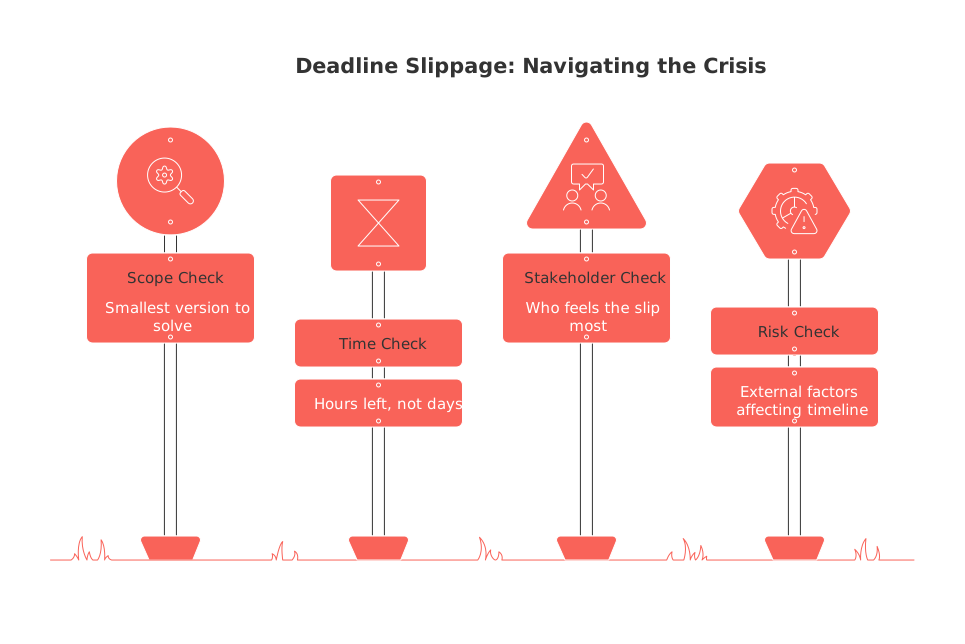
Scope check: Name the smallest version that solves the problem today.
Time check: Count the hours left this week, not the days you wish you had.
Stakeholder check: List the two people who will feel the slip most.
Risk check: Identify any approvals, vendors, or files outside of your control that may affect your project timeline.
Re-scope the work to fit the remaining week after the missed deadline
Ship a Minimum Lovable Outcome. Keep what delivers value now. Defer polish. Offer one clear trade‑off so stakeholders can say yes fast.
Use the 3D rule to reshape scope
Deliver: Commit to the core output this week.
Defer: Schedule add‑ons for the next cycle.
Delete: Drop anything no one will miss.
Example: A freelance designer sends the approved logo files and a two‑page style guide now. The full brand book and motion rules move to next Tuesday. The unused colorway gets cut.
Sequence tasks by risk to recover time this week
Start with work that can block everything else. Risk‑first sequencing beats size‑based to‑do lists when time is tight.
Anything waiting on external approval or a vendor response.
Steps with long lead times like legal review or manufacturing.
Tasks with unknowns that could explode your estimate.
Do these first. Then stack fast, independent tasks. You’ll surface surprises while there’s still room to adapt.
Communicate a new promise to stakeholders after a missed deadline
Skip the apology tour. Send a short, accountable update that replaces uncertainty with a plan.
We missed Monday’s handoff on the onboarding emails. Cause: copy approvals took longer than expected. New plan: ship the welcome and day‑3 emails by Thursday 3 p.m., with the final two on Monday 10 a.m. Quality holds: links tested, tracking added. Please reply “OK” to confirm or note changes.
If drafting an update for stakeholders feels challenging, you can start with a template or prompt, and then customize it to match your communication style.
Draft a 110‑word client update after you’ve missed the [ deliverable ] by [ X days ]. Include: one‑line status, single cause without excuses, the new scope and exact dates, one quality safeguard, and a confirmation request. Tone: calm, accountable, confident. Audience: [ stakeholder name and role ].
Replan the rest of your week across projects without breaking commitments
Protect existing promises while you recover. Anchor must‑ship work at your highest‑energy hours. Bundle similar tasks to cut switching. Hold a small daily buffer for surprises.
If your workspace ties projects, knowledge, and CRM together, think Routine or alternatives like Notion or ClickUp, you can update tasks, link related project pages, and record client touchpoints in one place. This avoids chasing information across tools and keeps decisions visible to others.
Need help seeing knock‑on effects? Lean on simple project visualization tools to map dependencies quickly. It pairs well with a phase‑based review; for deeper context, see “Mastering the Project Lifecycle: The 5 Phases and What Really Happens in Each.”
Protect deep focus with simple five-day rules
Say “no” to new work until the recovery ship date is confirmed.
Mute nonessential chat channels and auto‑file FYIs.
Turn off alerts during two daily focus windows.
Touch email at set times; never between tasks.
Stop the day after your last planned deliverable, not after inbox zero.
Discipline for a week beats heroics for a night.
Update CRM and agreements the same day when revenue is at risk
If the missed deadline has financial implications, update the relevant documents and communication records immediately. Adjust the delivery date in the CRM. Add a next step and the new promise in the appropriate fields. If scope changed, send a short change order or addendum.
Same‑day actions: revise dates in the CRM record, email the updated milestone, and notify finance if an invoice shifts.
Write a one‑paragraph change‑order addendum for a service contract. Context: scope trimmed from 5 videos to 3, price reduced from $8,000 to $5,200, delivery dates moved to [ new dates ]. Include an acceptance line for e‑signature and the phrase “all other terms remain unchanged.” Tone: clear and neutral.
Run a quick retro to prevent the next missed deadline
Hold a 10‑minute review once the dust settles. Capture one constraint, one rule to catch it early next time, and one habit to drop.
Stop: committing without confirming external lead times.
Start: risk‑first sequencing at the week’s kickoff.
Continue: sending tight, dated updates.
Prefer short cycles? The 12‑Week Year approach for solo operators gives you fast resets and clearer bets for each quarter‑sized block.
Ready‑to‑use micro‑prompts for your recovery week
Copy one, tailor the brackets, and send. Ship the message before perfecting the message.
Create a five‑day recovery plan for [ project ], currently [ X% ] complete. Output a bullet schedule with exact dates and owners, a risk‑first task order, and two client‑visible milestones. Keep it under 120 words.
Draft a 90‑word internal update for the team on [ project ]. Include: what slipped, what ships this week, who’s on point for approvals, and how to flag new risks. Tone: concise and steady.
FAQ
What is a fast reality check and why is it important when a deadline is missed?
A fast reality check prioritizes identifying critical aspects of the delayed project, such as what's truly essential and who is affected. It helps avoid wasting time on unnecessary extras, allowing you to focus on recovery rather than dwelling on missed deadlines.
How should I approach re-scoping work after missing a deadline?
Re-scope by committing to delivering the core output immediately, deferring non-essential elements, and eliminating insignificant tasks. This approach ensures stakeholders focus on what truly adds value now, simplifying decision-making.
Why is risk-first sequencing critical for tight timelines?
Risk-first sequencing identifies tasks that have the potential to delay everything else, prioritizing their completion. This proactive approach exposes potential bottlenecks early, preventing unforeseen issues from exacerbating the delay.
What should be included in a communication update after a missed deadline?
Communicate a clear, concise plan highlighting what will be delivered shortly, without making excuses. Update stakeholders on revised deadlines and actions taken to maintain quality, ensuring they have confidence in the revised schedule.
How can I maintain focus after missing a deadline?
Maintain focus by rejecting new work until the recovery is confirmed, muting distractions, and scheduling strict focus windows. Discipline is essential, as scrambling after missed deadlines often leads to burnout and more errors.
Why should CRM and agreements be updated immediately when a deadline is missed?
Delays can have direct financial implications; updating the CRM and agreements immediately maintains transparency and accountability. This proactive step prevents revenue loss by ensuring all stakeholders are informed and agreements are accurately adjusted.
What steps can prevent missing future deadlines?
Learn from the missed deadline by identifying constraints, establishing rules to detect them early, and adopting efficient habits. Implementing risk-first sequencing weekly can help anticipate obstacles and streamline future project management.

Julien Quintard
Founder & CEO at Routine09/16/2026
