How to Structure a Quarterly Business Review Meeting for Small Teams
Why a quarterly business review meeting matters for small teams
A well-structured QBR gives small teams clarity, speed, and accountability, often achieving the goals of large-company reviews with less overhead. It concentrates attention on results and decisions instead of ceremony, so limited time and resources create maximum impact.
Quarters create urgency without burnout. They match real work cycles and consumer seasons. For a solo operator or tiny crew, this cadence beats vague annual plans. See how the 12‑week year helps individuals turn goals into focused execution.
Decisions beat discussion. Every QBR must end with clear, owned commitments.
What to cover in a quarterly business review agenda for small teams
Keep the scope crisp. Skip slide avalanches. Aim for signal, not drama.
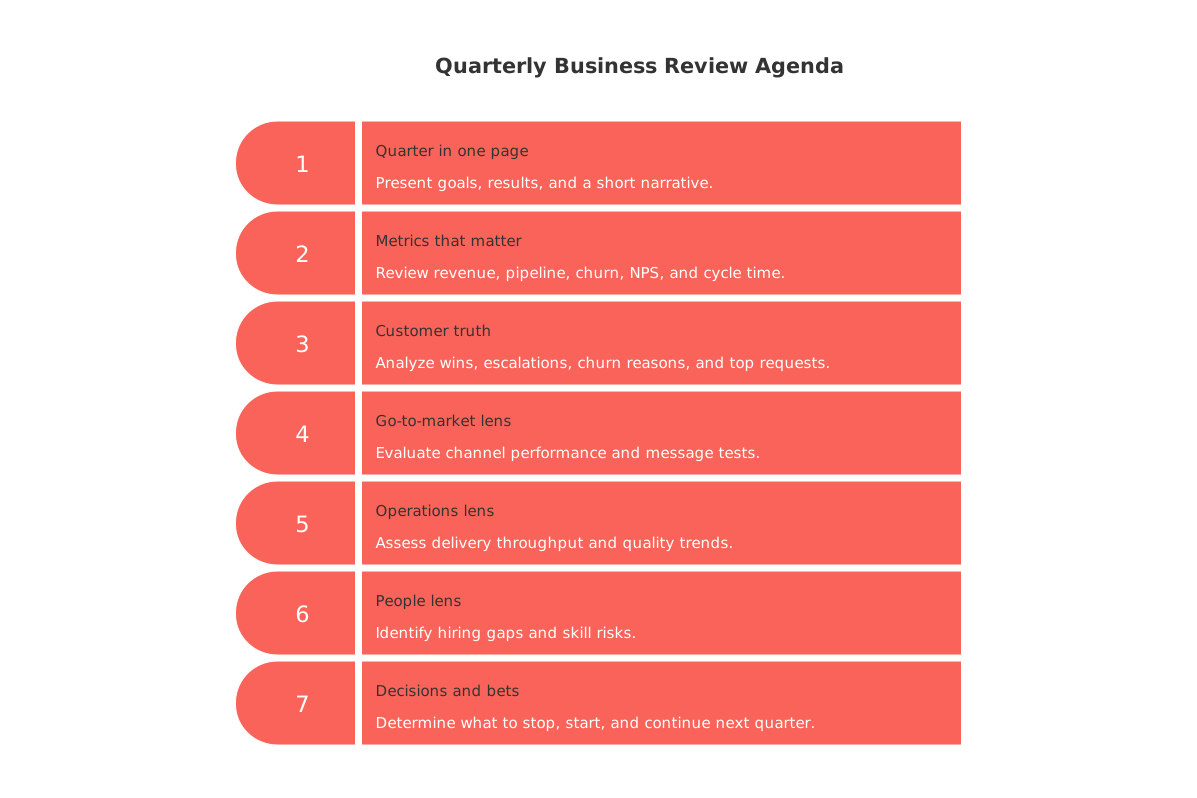
Quarter in one page: goals, results, and a short narrative.
Metrics that matter: revenue, pipeline, churn, NPS, cycle time.
Customer truth: wins, escalations, churn reasons, top requests.
Go‑to‑market lens: channel performance and message tests.
Operations lens: delivery throughput and quality trends.
People lens: hiring gaps and skill risks.
Decisions and bets: what to stop, start, and continue next quarter.
How to define quarterly objectives and metrics before the review
Write three to five objectives. Assign each goal to a specific team member (the owner), and attach a quantifiable measure (the number), for example a target value, threshold, or deadline.
Balance lagging results with leading activity. Example for a three‑person studio:
Lagging: $90k quarterly revenue; 10% net margin.
Leading: 20 qualified demos; 4 partner webinars; 30% trial‑to‑paid.
For a freelancer, the mix changes. Track booked projects, repeat clients, average invoice, and referral rate.
How to prepare a one‑page QBR scorecard for small teams
Summarize your QBR findings in a one‑page report. This brevity promotes comprehension, allowing everyone to grasp the core takeaways within two minutes.
Header: objectives, owners, target vs actual.
Chart strip: three sparkline trends for the quarter.
Customer panel: top reasons for win, loss, and churn.
Experiments: test, outcome, and keep/kill decision.
Top three risks: with likelihood and mitigation.
Keep colors minimal. Green means met, amber means at risk, red means missed. Add short context, not essays.
How to facilitate the quarterly business review meeting for small teams
Assign roles before you start. A founder or CXO hosts. Another teammate keeps time. Owners present their parts.
Use this cadence:
0–10 min: scorecard flyover and key shifts.
10–30 min: metrics dive and root causes.
30–55 min: customer and CRM insights.
55–75 min: decisions and bets for next quarter.
75–90 min: confirm owners and success criteria.
Want formats you can reuse? See these effective meeting templates and formats.
How to read CRM and customer insights during a QBR with a small team
Treat the CRM as your single source for revenue truth. Pull one clean pipeline snapshot the day before.
Coverage: pipeline value vs next quarter target.
Velocity: average stage age and win time.
Quality: win rate by segment and channel.
Churn: logos lost, ARR lost, and top exit themes.
Selling to consumers? Swap pipeline for website conversion, cart recovery, and repeat purchase rate. Add support tags for feature demand.
How to convert QBR decisions into a next‑quarter plan for small teams
Keep your plan succinct and focused, prioritizing key actions. You can add detail or adjust later as evidence emerges.
List five to seven commitments with owners.
Attach the metric and target for each commitment.
Map the first milestone due in week two.
Identify one risk and a counter‑move for each item.
Share the plan with the whole team the next day.
If everything is top priority, nothing is. Protect the focus.
Which tools help small teams centralize QBR data without juggling apps
Use one workspace to connect projects, CRM views, and knowledge. Tools like Routine, Notion, or ClickUp can do this well.
The goal is simple. Link each objective to live tasks, dashboards, and customer records. Then decisions flow into execution without copy‑paste.
Opt for a tool your team is comfortable with and uses regularly. Ease of use and adoption often matter more than an extensive feature list you won’t fully use, so long as the tool supports the core QBR workflows you need.
Sample 90‑minute quarterly business review agenda for small teams
Try this flow next quarter. Adjust timings to team size.
0–5: Purpose and expectations.
5–15: One‑page scorecard overview.
15–30: Objective 1 review and learning.
30–45: Objective 2 review and learning.
45–55: Customer insights and churn themes.
55–70: Decision workshop and trade‑offs.
70–85: Next‑quarter commitments and owners.
85–90: Risks, final check, and close.
Keep time sacred. Park tangents for a separate session.
Common quarterly business review pitfalls for small teams and how to fix them
Vanity metrics: replace with leading indicators tied to revenue.
Endless slides: enforce one page and a strict clock.
Decisionless debate: name a decision owner for each topic.
Tool sprawl: consolidate dashboards and task links in one place.
Whiplash goals: lock priorities for 12 weeks before changing course.
When you need a visual aid, keep it simple. For deeper visual planning, explore lightweight trackers rather than complex suites.
FAQ
Why is a quarterly cadence effective for small teams?
Quarterly cycles align with natural business rhythms, providing urgency without the fatigue of longer plans. They make goals clearer and keep small teams nimble, focused, and accountable, ensuring objectives are regularly reviewed and adjusted.
What should a small team focus on during a QBR?
Small teams need to prioritize metrics that drive revenue and customer satisfaction, like churn rate and pipeline value. Decisions must be specific, with commitments clearly owned to avert the trap of generic discussions that lead nowhere.
How can small teams prepare an effective QBR scorecard?
Condense results into a single page, focusing on key objectives and outcomes. This brevity ensures that all stakeholders understand the critical insights quickly, avoiding the clutter of unnecessary data.
What roles should be assigned during a QBR for small teams?
A structured QBR requires clear roles, from a meeting host to timekeeper, to maintain focus and efficiency. Disorganized meetings without specific job functions often lead to wasted time and diluted outcomes.
Why is CRM data crucial in a QBR?
CRM data offers a definitive view of your revenue pipeline, eliminating guesswork and assumptions. Real-time data allows small teams to make informed decisions, directly linking customer insights to strategy and execution.
How can tools like Routine help optimize QBR processes?
Routine integrates tasks, projects, and CRM views into a single platform, eradicating the chaos of multiple apps. This ensures streamlined access to all critical data and processes, supporting focused decision-making and seamless execution.

Julien Quintard
Founder & CEO at Routine10/04/2026
