Outlook Calendar and OneNote Workflow for Microsoft-First Teams
Why Microsoft-First Teams Prefer the Outlook Calendar and OneNote
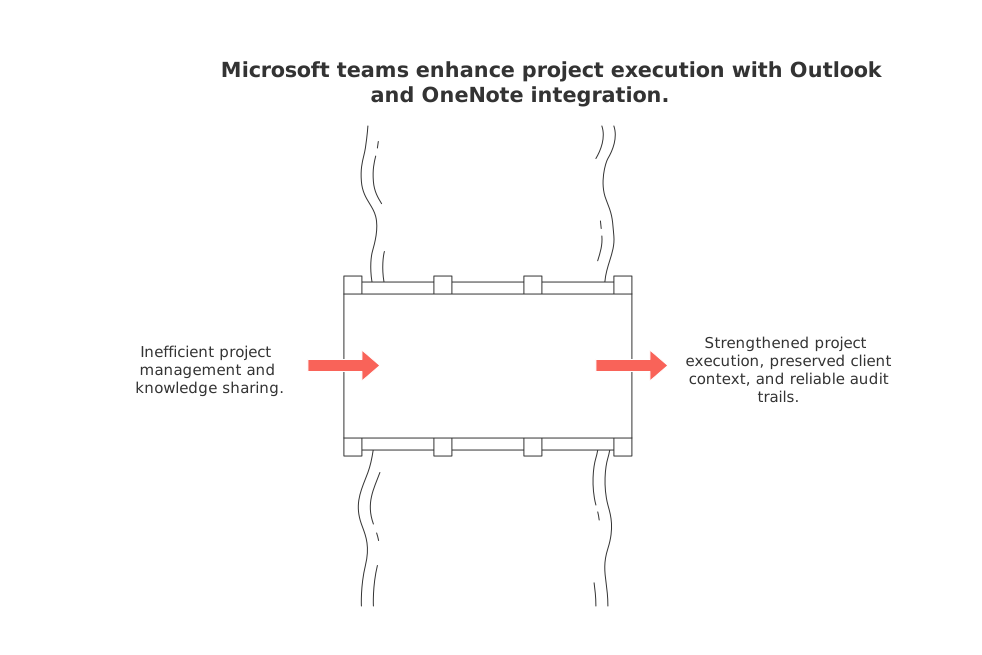
Teams that rely on Microsoft as their primary platform already have the right building blocks. Outlook schedules time, and OneNote organizes knowledge. Used together, they strengthen project execution, preserve client context, and create reliable audit trails.
Think in outcomes, not apps. Meetings drive tasks. Notes capture reasoning. Calendar entries anchor who, when, and why. This pairing builds traceability without extra software.
Project management: move from agenda to action to timeline.
Knowledge management: keep decisions and context searchable by topic.
Lightweight CRM: log interactions and next steps by account.
Set up a shared language for Outlook Calendar and OneNote across projects
Agree on names and structure before the first meeting. Consistency beats tools.
Folder and notebook structure
OneNote notebook per portfolio or department.
Section per project or account, with pages for meetings and decisions.
Prefix sections with a client or project code for quick search.
Naming and tagging rules
Outlook subject format: [Client] | Topic | Goal.
Use Outlook categories for project or account codes.
Tag pages in OneNote with “Decision,” “Risk,” or “Blocker.”
Keep a short glossary in the first section. New hires will thank you.
Run meetings with Outlook Calendar and OneNote without losing decisions
Prepare in Outlook. Capture in OneNote. Close with clear owners and dates.
Create the event with a one-line goal and three outcomes.
Paste the OneNote page link into the event body for continuity.
Start the page with agenda, attendees, and timeboxed sections.
Record decisions and tasks inline with initials and due dates.
End with a 60‑second recap and confirm owners live.
Decisions unrecorded are decisions undone. Write them as you say them.
Need a reference on formats and note styles? See these ready-to-use meeting minutes templates.
Turn meeting outcomes into project tasks and timelines using Microsoft tools
Tasks born in meetings must surface in plans. Do not rely on memory.
Convert each action into a task with assigned owner and deadline in your task management system (for example, Planner or To Do).
Link the OneNote page in the task for instant context.
Add milestones to a simple timeline for status reviews.
If you present timelines to stakeholders, pick clear visuals. Review visualization tools for simple project management and trackers to choose an approach people will read.
Use OneNote as a lightweight CRM hub connected to Outlook
Small teams do not need heavy CRM fields for every touchpoint. Use OneNote pages for context and Outlook for scheduling and email.
Suggested page template for accounts
Header: account name, segment, current stage.
Contacts: roles, interests, and influence notes.
Timeline: last three interactions with links to Outlook items.
Open opportunities: value, owner, next meeting date.
Risks and objections with planned replies.
After each call, paste the Outlook event link at the top. Add a two-line recap and the next step with a date. That keeps pipeline motion clear.
Create a searchable knowledge base in OneNote with traceable meeting context
Document not only the final decisions but also the process leading to them. This will be crucial for you in the future.
Centralize “How we do X” pages per discipline.
Embed links back to the meeting pages that formed the standard.
Tag reusable snippets with a consistent label for reuse.
During onboarding, share a curated index. Include links to the most cited meetings and decisions. People learn by example.
Weekly rhythms that keep Outlook and OneNote in sync
Monday: schedule key sessions and create linked pages.
Daily: capture decisions live and assign owners.
Thursday: review open tasks against upcoming deadlines.
Friday: archive wins and update the knowledge base.
Short reviews prevent backlog creep and stale notes.
Security and governance for Microsoft-first workflows
Restrict notebooks by team and client sensitivity.
Use private sections for HR and legal items.
Define retention for meeting notes and project artifacts.
Audit external sharing on a set schedule.
Executives should support the implementation and ensure the consistent application of these rules.
Common pitfalls when pairing Outlook Calendar and OneNote
Ambiguous names: fix with clear subject and section patterns.
Orphaned tasks: always assign owners and dates during the meeting.
Long pages: split by decision or sprint to keep search useful.
Hidden context: link the event and the page both ways.
Small habits prevent chaos later.
When an all-in-one workspace makes sense alongside Microsoft 365
Some teams add a shared workspace for cross-tool dashboards. Consider Routine or Notion when you need tighter rollups, cross-project reviews, or client portals. Compare options carefully; see All-in-One Workspaces vs Dedicated Project Tools as a decision frame.
Templates you can copy into OneNote for projects and clients
Project review page
Goal for this review and success metric.
What moved since last review.
Top risks and owners.
Decisions made today.
Actions with dates and initials.
Client meeting page
Objective for the session and expected outcome.
Attendees with roles and influence.
Key questions to resolve.
Notes, decisions, and next steps.
Links to prior sessions and relevant emails.
Keep pages short. Link out to deeper docs when needed.
Rollout plan for Microsoft-first teams in four weeks
Week 1: define structure, naming, and access rules.
Week 2: pilot with two projects and one account team.
Week 3: train on live note-taking and task capture.
Week 4: review outcomes and document the playbook.
Invite feedback early. Adjust templates after the pilot.
Next step: train the team and refine your playbook
Run one cycle this week. Publish the templates. If you need quick product guidance, explore Microsoft’s official tutorials on OneNote and Outlook workflows on Microsoft Learn. Keep improving the workflow every Friday for one month.
FAQ
How can Microsoft-first teams improve meeting effectiveness using Outlook and OneNote?
The synergy between Outlook Calendar and OneNote ensures meetings are outcome-driven rather than just procedural; actionable tasks with deadlines emerge from every session. Over-relying on memory or disparate tools results in lost decisions—always link tasks to OneNote for context.
What are the advantages of combining Outlook Calendar with OneNote for project management?
Together, they form a cohesive system where meetings naturally convert into tasks and timelines. Without this integration, teams drown in isolated data and non-contextualized tasks, losing traceability and accountability.
How should teams avoid common pitfalls when merging Outlook and OneNote?
Standardize naming conventions and immediately assign task owners and deadlines. Neglecting these basics leads to ambiguous information, orphaned tasks, and unsearchable content that disrupts workflows.
Can OneNote serve as a CRM for small teams, and what are the risks involved?
While OneNote can structure client interactions efficiently, avoid overloading it with every minor detail, which leads to clutter and hinders quick insights. Use it for context and refer to Routine for a streamlined overview.
What's the best approach for onboarding new hires into this Microsoft-first workflow?
Equip newbies with an organized glossary, top decision records, and streamline their access to meeting templates for fast adaptation. Forego a robust initial setup, and they risk drowning in irrelevant or mismanaged information.
How do teams maintain security and governance while using these Microsoft tools?
Each team's data sensitivity must guide notebook restrictions, while strict audit schedules for external sharing protect data integrity. Skipping governance invites vulnerabilities that compromise competitive positioning.
Are there scenarios where an all-in-one workspace is more beneficial than combining Outlook with OneNote?
For organizations needing consolidated performance dashboards or tailored client portals, an all-in-one solution like Routine could prove vital. Separate tools can only go so far in solving complex, cross-departmental needs.

Julien Quintard
Founder & CEO at Routine06/24/2026
