Kanban vs Gantt: Which Method Suits Fast-Moving Teams in 2026?
What Kanban means for fast-moving teams in 2026
Kanban is all about turning work into a visible flow. Teams move cards from to do to done, keeping work-in-progress (WIP) limits tight to sustain focus. The board quickly highlights bottlenecks, which is critical when team priorities change week by week.
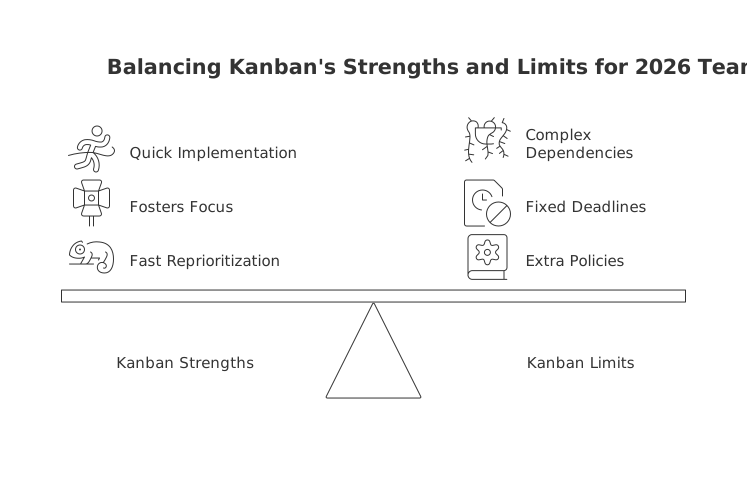
Strengths: quick to implement, fosters focus, allows for fast reprioritization, and requires less upfront planning.
Limits: not ideal for projects with complex, sequential dependencies; needs extra policies to manage fixed deadlines.
Real-world applications today:
Freelance design studio: Handles requests, design, review, and delivery. WIP limits prevent overload and minimize context switching.
Indie SaaS team: Manages weekly releases, urgent bug fixes, and rapid experiments. Flexibility in flow outpaces the need for rigid due dates.
Support squads: Deal with fluctuating ticket volumes. Metrics like throughput and aging charts help adjust staffing proactively.
In many scenarios, Kanban’s flow-oriented approach can reveal potential risks sooner than traditional status meetings.
Common pitfalls to avoid with Kanban
Unclear or vague card titles that hide the true scope of work.
Lack of explicit exit criteria for each column.
Neglecting aged cards, stale work can mask critical blockers.
Where Gantt charts excel for deadline-driven work in 2026
Gantt charts visually map out tasks, their timelines, and dependencies, making them invaluable when firm dates and complex processes are involved. They are especially effective for product launches, regulatory projects, or phased rebrands with several vendors or teams.
Strengths: offers clarity around dependencies, prioritizes milestones, and enables resource balancing across multiple teams.
Limits: less adaptable to major changes in project scope, and can create false confidence if deadlines or estimates start to slip.
If your project plan spans several teams or vendors, a well-structured timeline can aid negotiations. For a quick overview of timelines and visual project management, review this guide on Gantt charts and project trackers.
Gantt works best when...
You must meet a deadline set by regulators or high-priority clients.
Third-party vendors need to finish their work before your team can begin.
Budgeting between teams depends on well-timed handoffs.
Kanban vs Gantt: a decision framework for your next project
Use this rapid filter when starting a new project:
Is uncertainty high? Choose Kanban to learn quickly by delivering small, testable increments.
Are there many dependencies? Use Gantt to uncover and manage the critical path.
Is the launch date flexible? Opt for Kanban to maximize flow and responsiveness.
Is the date fixed? Choose Gantt to anchor efforts around milestones.
Do both conditions apply? Blend them: use Gantt for top-level milestones and Kanban for detailed execution.
Rule of thumb: If your project obstacles originate from people or resource allocation, use Kanban. If obstacles arise due to timing or scheduling conflicts between tasks, use Gantt.
Run a hybrid: Kanban for execution, Gantt for milestones and dependencies
Many teams in 2026 combine both Kanban and Gantt methods to streamline project management without significantly increasing their workload or costs. Here’s how to blend them for best results:
Begin by defining clear milestones that focus on outcomes rather than individual tasks.
Map significant dependencies, highlighting where vendor approvals or external sign-offs are required.
Break down each milestone into small, Kanban-ready segments.
Assign WIP limits for each Kanban lane to prevent review and QA stages from becoming bottlenecks.
Review your overall timeline weekly, updating only the necessary bars and phases.
Track aging cards to flag tasks that exceed your target cycle times, and escalate as appropriate.
Planning prompt:
Metrics that steer Kanban and Gantt without micromanagement
Choose just a handful of key metrics to guide project behavior, and avoid overwhelming teams with excessive dashboards.
Cycle time (Kanban): The time taken for each card from start to finish, track at the 85th percentile for realistic improvements.
Throughput (Kanban): Cards completed per week, monitor for unexpected drops as an early warning sign.
Work in progress: Watch for WIP limit breaches that signal context switching or hidden blockers.
On-time delivery (Gantt): The percentage of tasks completed by their planned dates.
Critical path buffer: Measures how many days can be delayed before threatening the overall launch date.
Align your chosen metrics with project phases. If you want a refresher, check out this breakdown of five project lifecycle phases.
Lightweight review prompt:
Tools in 2026 that let you switch views without duplicating work
Choose software that allows a single task to be displayed in multiple formats, such as boards or timelines. This eliminates the need for copying and pasting data between systems, and ensures all conversations and updates remain in one place.
All-in-one workspaces: Solutions like Routine and ClickUp provide both board and timeline views from a single task record.
Board-first tools: Trello can be effectively used with timeline add-ons, although the modeling of task dependencies may remain relatively basic.
Timeline-first tools: Asana’s Timeline view is especially strong in managing dependencies and resource allocations.
No matter which solution you pick, define a single system of record for all project tasks. Switch views as needed, but avoid splitting or duplicating tasks across different tools. Executives need clarity; team members want fewer open tabs. Both benefits are delivered through a unified platform.
Final take: Opt for Kanban when speed and ongoing learning are key. Use Gantt charts when deadlines are inflexible and timing is critical. For the best of both worlds, especially when both certainty and discovery are required, blend both methodologies to drive results in 2026.
FAQ
What is the primary advantage of using Kanban for fast-moving teams?
Kanban shines by enhancing visibility and maintaining focus through strict work-in-progress limits, allowing teams to adapt quickly and efficiently. This flexibility can be critical when priorities shift frequently, reducing the overhead of planning and enabling rapid reaction to change.
Why might a team prefer Gantt charts over Kanban?
When projects demand strict deadlines and complex dependencies, Gantt charts offer clarity by mapping out tasks and timelines precisely. They help ensure resource balancing and align various teams or external vendors on milestone priorities.
Can Kanban handle projects with fixed deadlines effectively?
Kanban is less suited for projects where deadlines and dependencies are critical unless complemented with additional policies and structures. Teams should exercise caution, as ignoring underlying task complexities can lead to missed deadlines and increased friction.
What are the risks of neglecting aged cards in Kanban?
Aged cards can hide significant blockers and disrupt team efficiency, stalling progression and obscuring real issues. Addressing these promptly is crucial to maintaining momentum and avoiding hidden backlogs.
How can teams effectively blend Kanban and Gantt methodologies?
Integrating both involves using Gantt for milestone tracking while employing Kanban for day-to-day tasks, thereby balancing strategic oversight with tactical flexibility. This hybrid approach can prevent overwhelm and focus teams on both high-level goals and ground-level execution.
What role do tools like Routine play in project management?
Tools like Routine streamline workflows by offering versatile views that unify task tracking and communication, minimizing the typical chaos of task duplication. This ensures all project stakeholders are aligned, which is vital for maintaining clarity and efficiency.
What common pitfalls should teams watch out for when using Kanban?
Poorly defined card titles and lack of explicit exit criteria can cause unnecessary confusion and stall progress. Teams must clearly delineate what completion looks like for each task to prevent ambiguity and drive actionable outcomes.

Julien Quintard
Founder & CEO at Routine05/13/2026
