The Ivy Lee Method: One Task Rule That Outlasted a Century
A century‑old one‑task rule that still works
A compelling testament to the method’s effectiveness is the well‑known story of how steel magnate Charles Schwab thanked Ivy Lee, the consultant who popularized it, with a $25,000 check for brief yet impactful advice: choose six tasks, rank them, and start with one. Whether apocryphal or not, the lesson endures because it is painfully simple and hard to dodge.
Decide the six. Rank them. Do the first one until it is done.
What the Ivy Lee method is and how it works
List up to six important tasks for tomorrow. No more.
Order them by true importance, not convenience.
Start your day with task one. Work on it without switching.
Finish it or stop at a natural checkpoint.
Move to task two. Repeat the focus rule.
Push any leftovers to a new list of six for the next day.
Six forces trade‑offs. The order kills dithering. The one‑task rule removes constant context switching.
Why limiting yourself to six tasks improves daily focus
Fewer choices, fewer stalls. Cutting options reduces decision fatigue.
Monotasking beats juggling. Switching tasks taxes working memory and attention.
A visible finish line. You can “win” the day without chasing endless lists.
Better priorities. Ranking clarifies what matters before the day explodes.
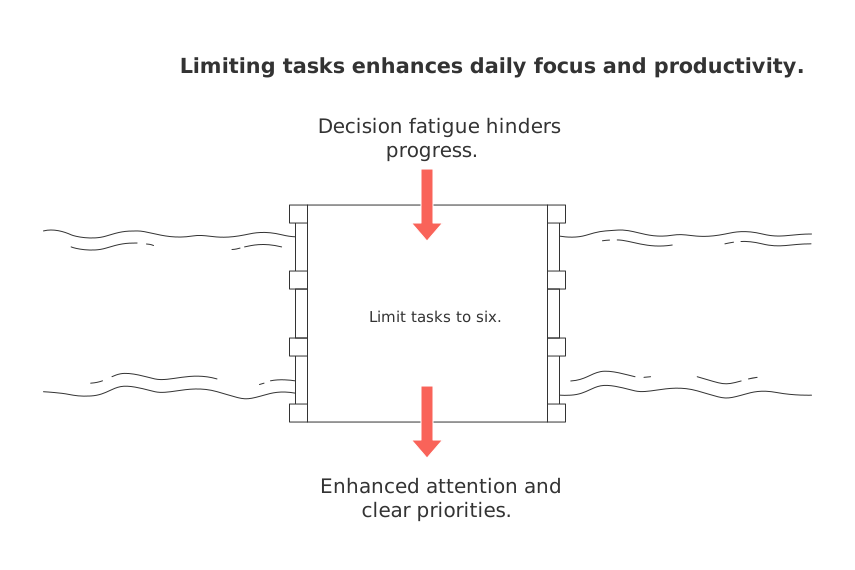
You trade breadth for traction. That trade pays more often than not.
How individuals, freelancers, and small teams can apply the method today
Example: a freelancer’s six
Send proposal for the ACME redesign.
Draft homepage copy for the boutique jeweler.
Edit case study images.
Invoice March retainers.
Follow up on two warm leads.
Outline next week’s portfolio update.
Example: a student’s six
Write thesis abstract.
Review three journal articles.
Prepare slides for seminar.
Complete problem set: questions 1–5.
Email advisor for feedback slot.
Library returns.
Keep tasks actionable. Ensure every task on the list begins with an actionable verb. Avoid vague terms like “research” or “marketing”; choose specific actions and break large items down first.
Plan one day deeply and one week lightly without breaking the rule
Use the method for your day. Then sketch a light map for the week so tomorrow’s six come faster. Consider a compact planning cadence that favors execution over forecasts. For freelance professionals or solo operators using the Ivy Lee method, try a shorter execution cycle, such as 12 weeks, as it often produces better momentum; learn more in this guide on using a 12‑week execution rhythm instead of annual goals.
Try this quick prompt when you feel stuck making your six:
1. Create a six‑item Ivy Lee list for tomorrow.2. Identify your role and top outcomes (e.g., I am a freelance designer. My top outcomes: ship ACME proposal, finish jeweler homepage copy, and invoice March retainers.)3. Flag dependencies.4. Estimate time in 25/50/90‑minute blocks.5. Return the list in priority order, with one sentence per item.
Pick a simple tool stack for your six
You need a place to see the six and re‑order fast. An all‑in‑one workspace such as Routine or Notion keeps tasks, projects, and simple CRM in one view, while dedicated tools like Trello, Things, or Asana offer focused task flows. If you are unsure which direction fits your work, this explainer will help you choose between an all‑in‑one workspace and dedicated project tools.
Whichever you pick, pin the daily six where you start work. Hide everything else until you finish number one.
Prioritization that works with Ivy Lee: four quick checks
Value: Which task, if finished, changes results this week?
Urgency: Which task carries a real, near deadline?
Effort: Which task can land today with available time?
Timing: Match hard tasks to your best energy window.
Rank with these checks. Adjust tomorrow based on progress, not mood.
Common mistakes that break the method
Listing more than six. Scarcity fuels clarity.
Mixing vague projects with concrete tasks.
Ignoring energy. Put creative work when you think best.
Skipping order. Reordering mid‑day invites dithering.
Packing tasks that each need hours. Split them first.
Letting email dictate the list. Batch messages after task one.
Scale up from six without losing clarity
Use the six as your daily front page. Keep larger projects in the background with lightweight trackers or milestones. When a project grows, promote just one next action to the six. The list stays sharp, and progress continues.
When everything feels urgent, zoom out, cut scope, and pick the next visible brick. The list should feel tight, not heroic.
FAQ
What is the primary advantage of limiting yourself to six tasks per day?
Limiting yourself to six tasks forces prioritization and clarity, avoiding the paralysis of too many choices. It combats decision fatigue and ensures that each task gets the focus it deserves, unlike lengthy to-do lists that scatter attention.
How does multitasking negatively affect productivity according to the Ivy Lee method?
Multitasking fractures your attention and depletes working memory, making you less efficient on each task. The Ivy Lee method's one-task focus helps avoid this pitfall by promoting monotasking, which boosts performance and reduces errors.
Why should tasks be ranked by importance rather than convenience?
Convenience-based task selection often sidelined critical work in favor of easier, less impactful tasks. Prioritizing by importance ensures that energy is dedicated to efforts that drive the most significant results, preventing wasted effort on inconsequential activities.
How does the Ivy Lee method address the common issue of endless to-do lists?
The method imposes a six-task limit, which naturally curtails endless lists and imposes discipline. This approach transforms vague ambitions into tangible daily victories, as each task completed is a step towards visible progress.
What role does energy management play in applying the Ivy Lee method effectively?
Ignoring energy levels when scheduling tasks results in diminished productivity and burnout. The Ivy Lee method emphasizes aligning demanding tasks with your peak energy times, ensuring each task gets tackled when you are at your best.
Is it possible to scale the Ivy Lee method for larger projects?
Yes, by keeping larger projects in the background and promoting specific next actions to the daily six. This keeps the daily list actionable while ensuring long-term projects remain on track without overwhelming the task list.
How can Routine or similar tools streamline the Ivy Lee method?
Tools like Routine consolidate tasks, projects, and CRM, providing a seamless environment to manage and reorder your daily six. They enable quick adjustments without disrupting focus, ensuring the method’s simplicity isn’t lost in complex setups.
What common mistakes can disrupt the effectiveness of the Ivy Lee method?
Common pitfalls include listing more than six tasks, mixing vague projects with specific tasks, and reordering priorities mid-day. Each of these mistakes dilutes focus and clarity, underscoring the necessity of adhering strictly to the method's parameters.
How does the Ivy Lee method encourage better daily focus?
By promoting fewer choices and prioritizing monotasking, the method significantly reduces cognitive load. This leads to clearer, more focused thinking and execution, cutting through the noise that typically hinders productivity.

Julien Quintard
Founder & CEO at Routine07/15/2026
