How to Design a Personal Weekly Scorecard to Track What Actually Matters
Define what “actually matters” before you measure it
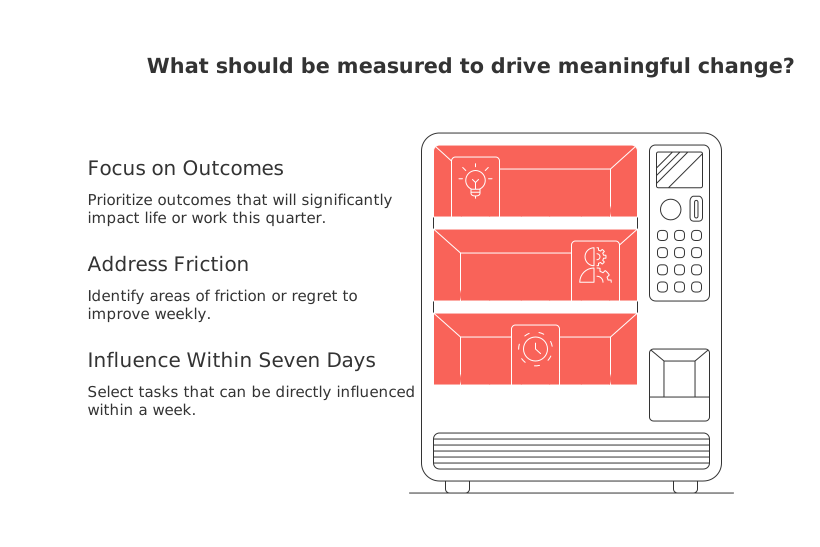
You can count anything. The art is deciding what deserves counting. Start with outcomes, not tasks. Ask three questions:
Which outcomes, if improved weekly, would change my life or work this quarter?
Where do I feel friction or regret by Friday?
What can I directly influence within seven days?
Limit yourself to three to five outcomes. More invites noise. Keep them personal and specific. “Health” is vague. “Resting heart rate under 60” or “three strength sessions” tells you what to do and when you’re done.
Choose weekly outcome metrics that fit your life and work
Choose metrics that directly indicate your habits, not trivial or feel‑good numbers. Favor counts, durations, and simple yes/no checks. Examples for individuals and freelancers:
Health: workouts completed, average protein per day, bedtime kept, steps.
Learning: pages read, language sessions, portfolio pieces drafted.
Relationships: one meaningful call, one date night, one friend check‑in.
Money: expenses logged, invoice cycle time, savings transfer made.
Solo business: qualified leads added, proposals sent, client retention actions shipped.
Make definitions unambiguous. “Workout” means “40 minutes at or above Zone 2.” “Lead” means “contact who replied with a meeting date.”
Translate outcomes into clear targets and simple scoring
Targets create tension. Scoring creates honesty. Use a quick rubric:
Set a weekly target for each metric. Example: “Three deep‑work blocks.”
Define levels of success: assign 0 if you missed your target, 1 if you partially achieved it, and 2 if you met or exceeded it.
Assign weights. Higher weight = strategically important this quarter.
Keep the calculations simple. Total possible points should fit on one line. If you need a calculator, you picked the wrong system.
Design a one-page weekly scorecard you can complete fast
Your layout should answer four questions at a glance: What did I target? What happened? What’s my score? What will I change?
Columns: Metric, Definition, Target, Actual, Score, Insight, Next move.
Rows: Three to five metrics only.
Color code lightly: green, amber, red. No art project.
Rule of thumb: if filling the scorecard takes over ten minutes, simplify it.
Run a 15‑minute weekly review that drives one change
Five quick steps for Friday or Sunday
Record actuals. Don’t guess. Check devices, logs, or CRM entries.
Score each metric using your rubric.
Total the score. Compare to last week.
Write one insight per metric. Keep it to a sentence.
Commit one next move. One. Not three.
End with a short reflection: What single tweak makes next week easier? Capture actions in your task system, not on the scorecard.
Connect your scorecard with projects and CRM data
Great scorecards pull from real systems. Tie metrics to project trackers and your CRM so numbers update fast. Individuals can map “deep‑work blocks” to focused sessions. Freelancers can map “qualified leads” to pipeline stages.
Execute the above process in an all‑in‑one workspace like Routine or in alternatives such as Notion, ClickUp, or Airtable. Pick the tool that reduces copy‑paste and surfaces the exact fields you need. If your setup grows, integrate lightweight automations that move deals or tasks when a field changes.
Adopt a 12‑week window to keep urgency high
Weekly metrics work best inside a short season. Plan in 12‑week blocks, then reset. You’ll feel healthy pressure without burnout and can pivot quickly. Learn why this cadence beats annual goals in this deep dive on 12‑week planning for solo operators.
See progress with simple visuals when motivation dips
Charts help your brain see momentum. A tiny trendline for each metric is enough. If you also manage projects, use visual representations that clearly link tasks to outcomes. For more guidance, explore our comprehensive guide, Effective Project Management Visual Tools.
Weekly scorecard examples for different lifestyles
Busy parent with a side business
Family time kept: three tech‑free meals.
Fitness: two strength sessions and one long walk.
Side revenue: two outreach emails and one follow‑up call.
Sleep: five nights in bed by 10:30 p.m.
Freelance designer
Pipeline: five new qualified leads added.
Delivery: two milestones approved by clients.
Marketing: one case study section drafted.
Finance: invoices sent within 24 hours of delivery.
In‑house marketer
Growth: three experiments launched.
Content: two assets published that support one campaign.
Retention: one activation improvement shipped with product.
Learning: one teardown analyzed and summarized for the team.
Scorecard pitfalls and how to avoid them
Too many metrics: cap at five. Add a new one only by removing another.
Vague definitions: write the “done” criteria in one sentence.
Activity bias: count outcomes, not hours spent looking busy.
Data hunting: automate inputs or reduce metrics.
Shifting targets: change targets only at 12‑week resets.
When to upgrade tools without overcomplicating your setup
If a spreadsheet still takes under ten minutes, keep it. Upgrade when you need relationships between projects, contacts, and outcomes. All‑in‑one workspaces can help individuals and small teams centralize tasks, documentation, CRM entries, and meetings. Dedicated tools may suit specialists who need advanced features. Always prioritize straightforward tools or methods over ones that offer more complicated features.
Your next step: set targets for the coming week
Pick three outcomes. Define each metric in one sentence. Set a realistic weekly target. Decide weights. Schedule a 15‑minute review at week’s end. By next Monday, you’ll know what mattered and what changed.
FAQ
Why limit outcomes to three to five metrics?
Focusing on three to five metrics avoids overwhelming noise and ensures clarity. Prioritizing a few meaningful outcomes helps you maintain direction and track progress effectively without diluting your efforts.
What makes a good weekly outcome metric?
A good metric directly reflects critical habits and not superficial numbers. Choose measures like counts or durations that provide clear, actionable insights into your actions and progress.
How should I assign weight to metrics?
Assign more weight to metrics that align strongly with your strategic priorities for the quarter. This ensures that your efforts are concentrated where they will drive the most impact.
What should be included in a weekly scorecard?
A weekly scorecard should outline the metric, its definition, the target, actual results, score, and insights. This streamlined process facilitates quick understanding and necessary adjustments.
How can I ensure my scorecard is effective?
Make sure filling out the scorecard is quick and straightforward; if it takes more than ten minutes, simplify it. An effective scorecard immediately highlights what’s working and what’s not, prompting timely adjustments.
When should I upgrade my scorecard tools?
Upgrade only when your current setup struggles to manage relationships between projects, contacts, and outcomes efficiently. An all-in-one workspace like Routine can centralize and streamline complex workflows with lightweight automations.
What is the risk of having too many outcome metrics?
Too many metrics can obscure your focus and lead to diluted efforts. Stick to a maximum of five to maintain clarity and prevent wasting time chasing irrelevant activities.
Why use a 12-week planning window?
The 12-week window maintains urgency and adaptability, unlike annual goals that risk stagnation. This time frame pressures consistent progress without burnout and allows timely pivots when necessary.
What constitutes a 'done' criteria for a metric?
Define the \"done\" criteria in a single, unambiguous sentence to eliminate vagueness. This ensures that everyone understands when a target is achieved, enhancing accountability and clarity.

Julien Quintard
Founder & CEO at Routine09/22/2026
