How to Design a 30-Hour Workweek as a Solo Founder
Why a 30-hour workweek can work for a solo founder
Thirty hours can carry a company when every hour serves a job. Tight limits force trade‑offs, which reduce drift and rework. You also avoid burnout, which quietly kills momentum. The goal is clarity per week, not heroics.
Constraints create clarity. Treat 30 hours as a hard budget, not a wish.
Translate your 30-hour capacity into firm weekly budgets
Assign hours to the work that actually moves revenue and retention. Keep the math blunt and visible.
Product and delivery: 12 hours for building, shipping, or servicing clients.
Growth and marketing: 8 hours for strategies like SEO, social media engagement, email outreach, partnerships, and small experiments.
CRM and customer success: 6 hours for pipeline, demos, and support.
Finance and operations: 2 hours for billing and compliance.
Admin: 2 hours for the rest. Trim it first when needed.
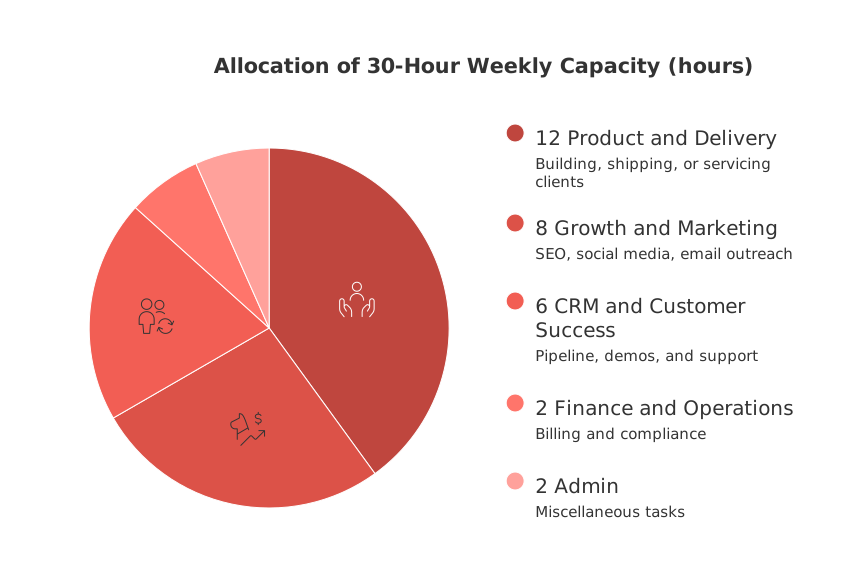
Lock these buckets for four weeks before you adjust. Changing budgets every few days hides weak decisions.
Plan with short cycles so progress shows every week
Work in compact cycles that end with a shippable outcome. Many solo founders thrive on 12‑week horizons. They compress goals and cut fluff.
How to run a 12‑week cycle as a team of one
Choose one business theme, like “Activate trials” or “Speed client onboarding.”
Define two to three outcomes, each measurable and unambiguous.
Break each outcome into five to seven tasks you can finish within weeks.
Reserve a buffer of 10% for surprises, not more.
End with a short retro and one decision for the next cycle.
For a deeper playbook tailored to solos, study the 12‑Week Year approach for solo operators. It shows why quarters beat annual plans when you work alone.
Keep project tracking lean and visual to reduce overhead
You do not need enterprise ceremony. You do need one reliable view of status. Keep a single board with four states: Backlog, In Progress, Waiting, Done. Tag by outcome, not by person.
Limit work in progress to three items. Excess WIP steals hours.
Pair each task with a clear “done when” line.
Review the board twice weekly for 15 minutes.
See practical options in visualization tools for simple project management, from Gantt views to lightweight trackers. Pick the lightest tool you will actually maintain.
Run CRM in focused batches, not in your inbox
Give sales and support two firm windows per week. Close the inbox during product work. Your pipeline deserves structure, not constant peeking.
A two‑touch weekly rhythm
Touch 1 (early week): qualify, create next steps, and schedule demos.
Touch 2 (late week): follow up, send proposals, and tidy records.
Use a simple pipeline: New(new customer inquiries), Active(sales in progress), Waiting(paused or slow‑moving deals awaiting a client action), Won/Lost(successful or unsuccessful sales). Store one‑sentence next actions in the deal itself. Tools like Routine, Notion, Pipedrive, or HubSpot all work. Keep it consistent across weeks.
Automate repeat tasks before you outsource them
List chores you repeat more than five times a month. Begin by automating those tasks first. Good targets include lead capture, invoice nudges, and status updates between apps.
Send new form submissions into your CRM with tags and an owner.
Fire a friendly invoice reminder three days after due date.
Post “Done” items to a client portal or email recap automatically.
For a menu of quick wins, read the internal guide titled Top 5 Automations Every B2B Sales Team Should Set Up Today. Adapt each idea to a team of one.
Build tiny SOPs that teach your future self
Document your best method the moment it works. Keep each SOP under eight lines. Focus on triggers, steps, and a “done when” line.
Trigger: A trial user asks for pricing.
Steps: Send a pre-crafted email template, update CRM stage, set follow‑up date.
Done when: User books a call or declines.
Store SOPs where you execute work. Avoid scattered files that you will never open again.
Shrink context switches with a compact tool stack
Every extra app could possibly distract you and require extra time to manage. Favor an all‑in‑one workspace that covers projects, knowledge, CRM, and meetings. Routine and Notion both centralize this. If you prefer modular tools, keep one per function and connect them with native integrations first.
Here are some general guidelines:
One system of record per dataset: tasks, docs, and contacts.
One dashboard for the week’s outcomes and blockers.
One inbox for leads; forward everything else there.
Stop rules that protect your 30-hour limit
Set boundaries now, before the week overruns.
Define a daily cut‑off and stick to it.
Refuse scope creep after mid‑cycle unless revenue demands it.
Log carry‑over tasks; never steal time from product work.
Schedule one short review and one reset each week.
Want a complementary cycle method? Explore the Shape Up approach to six‑week bets. Borrow its ideas on appetite and scope slicing.
Where to go next for structure you can actually keep
Pair your 12‑week cycles with a board you check twice weekly. For planning ideas tailored to solos, use the 12‑Week Year guide for single‑person companies. For tracking options you can run in minutes, review these lightweight project visualization tools and Gantt‑style views. Then pick one setup and commit for a month.
FAQ
Can a 30-hour workweek really sustain a solo founder's business?
Yes, a succinct 30-hour workweek can drive a business forward. The key is not extra hours but clarity and prioritization—every hour must directly contribute to revenue and growth, or it becomes waste.
How should I allocate my limited time weekly?
Focus on what's crucial: allocate hours to product development, marketing, customer relations, finance, and admin. Firm time limits ensure consistent discipline and prevent scope creep.
What role do short planning cycles play in a solo venture?
Short cycles, like 12-week plans, create urgency and demand focus, stripping away non-essentials. They allow rapid iteration and expose inefficiencies immediately, providing a reality check on your progress.
Why limit work-in-progress to just three items?
Excessive concurrent tasks dilute focus, leading to half-baked results. A cap on active tasks ensures you can devote ample concentration to each, reducing errors and rework.
Why is automation crucial before outsourcing tasks?
Automate repetitive tasks to cut down mundane workload and improve consistency. Outsourcing without automation risks escalating complexity and costs without addressing the core inefficiency.
How do I manage CRM effectively as a solo founder?
Implement structured CRM touchpoints twice a week to maintain momentum in client relationships without interrupting deeper work. Schedule dedicated time for CRM tasks, limiting distractions to ensure focus.
Why shouldn't I change my weekly time allocations frequently?
Frequent shifts in budgeting sabotage strategic clarity and lead to reactive decisions. Stability over several weeks creates a reliable baseline to assess effectiveness and identify genuine issues.
How can Routine help manage a solo founder's workflow?
Routine offers centralized solutions for project management, CRM, and task tracking, reducing tool redundancy. It minimizes context switching, keeping your focus on high-value tasks.
What's the risk of adding too many apps to my workflow?
An excessive number of apps complicates processes, creating distractions and inefficiencies. Maintaining a minimal yet comprehensive tool stack fosters seamless task execution and coherent workflow.

Julien Quintard
Founder & CEO at Routine06/22/2026
