Why Deep Work Dies in Open Floor Plans (and How to Save It)
Open floor plans trade visibility for attention, and your brain pays
Open floors look lively but they inadvertently fragment attention. Every laugh, chair scrape, and shoulder tap invites a context switch. After enough switches, hard problems stall. You leave work late and wonder what actually moved.
Deep work needs friction against interruption. Open layouts remove that friction by design. The space wins; your focus loses.
Silence is not the enemy of teamwork. It is a teammate.
Signs that deep work is dying in your office or studio
Look for these patterns. They show up before velocity drops.
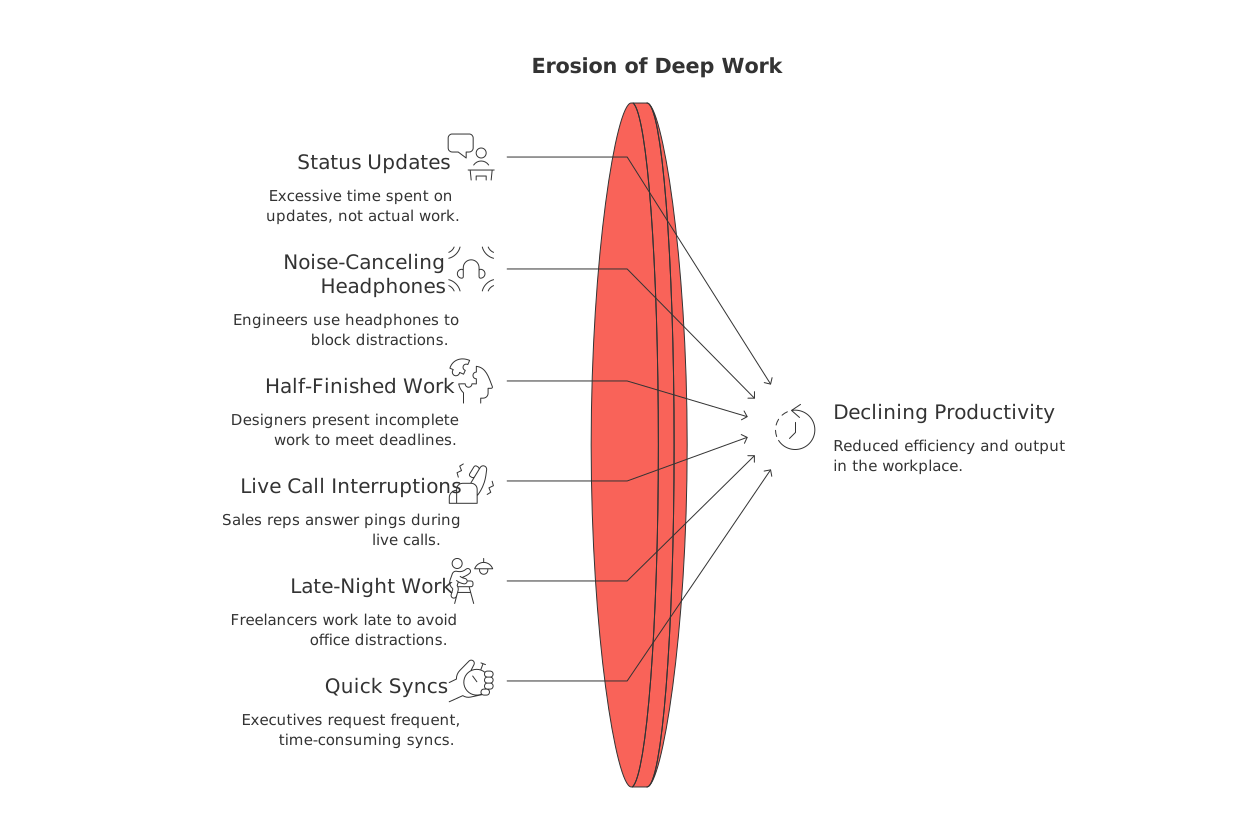
People might spend more time writing status updates rather than doing the actual work.
Engineers carry noise-canceling headphones everywhere.
Designers present half-finished work to hit a meeting slot.
Sales reps answer pings during live calls.
Freelancers stay late to do real work after the chatter stops.
Executives ask for “quick syncs” that never stay quick.
Why noise, motion, and chat apps shatter focus in seconds
Noise steals working memory. Motion pulls your eyes. Chat apps trigger vigilance. Together, they nudge your brain into reaction mode. You skim. You reply. You forget the hard idea that mattered two minutes ago.
Context switching is the real hindrance. Each switch forces your brain to reload the problem. That reload costs minutes, not seconds. Ten reloads make a morning disappear.
Create spatial rules that protect focus without killing collaboration
Organize the physical working space before sorting out your schedule. Draw lines on the floor with intent.
Simple zoning model
Library zone: Heads-down only. No talking. Short, dense desks. Soft light. Clear sightlines blocked.
Workshop zone: Discuss, sketch, test. People expect conversation here.
Huddle zone: Stand, decide, leave. High tables. Timers on walls.
Shared signals
Use a visible focus token at each desk. When up, no interruptions.
Set quiet hours for the Library zone. Two blocks daily, same times.
Agree on walk and talk for quick chats. Don’t hover behind screens.
Acoustics matter. Add rugs, plants, and panels to help dampen sounds. People lower voices when rooms feel soft.
Set communication contracts that respect maker time and reasonable response times
Tools are not the problem. Undefined expectations are. Write a one-page contract with these choices.
Channels by purpose: Decisions in one place. Brainstorms in another. Social in a third.
Response windows: Two hours for chat, 24 hours for docs, urgent by phone only.
Batch messages: Send summaries at set times, not drips all day.
Status first:“In focus” means no pings. Don’t “just check in.”
Chat platforms shape habits. Before you set rules, compare how they nudge behavior. Read this guide to key differences between Slack and Microsoft Teams for small companies. Pick features that support slower, clearer threads, not just faster replies.
Rebuild meetings around outcomes, not attendance
Meetings should trade time for decisions. If that trade fails, cancel the meeting.
Publish the decision and inputs one day before.
Invite only the people whose input is crucial to making the decision.
Start with a two-minute read of the brief. Then decide.
End with a single owner and first next step. No “TBD.”
Shorten defaults to 25 or 50 minutes. Keep a clock visible. Standing huddles beat long roundtables. Asynchronous reviews beat slide marathons.
Reduce tool sprawl so one workspace holds tasks, docs, and CRM
Tab-juggling kills depth. Split work across five tools and you invite five inboxes. Unify tasks, docs, projects, and light CRM in one place. Fewer jumps mean fewer reloads of context.
Teams often compare all-in-one workspaces with specialized stacks. If you face that choice, refer to this resource to better compare all‑in‑one workspaces and dedicated project tools. Pick the smallest set that supports delivery, not vanity metrics.
Platforms like Routine, Notion, and ClickUp centralize work. Choose based on your workflows, not features you rarely use. Individuals and freelancers benefit too. One home for gigs, clients, and assets reduces mental tax.
A 30‑day deep work rescue plan for teams and solo operators
Week 1: Observe and agree
Run a three-day interruption audit. Track source, time, and cost.
Draft your communication contract. Share it. Adjust once.
Week 2: Redesign the space
Create Library, Workshop, and Huddle zones with visible signs.
Set two daily quiet blocks. Treat these quiet block times with the same importance as scheduled meetings.
Week 3: Reset rituals
Replace status meetings with written updates.
Batch chat to two windows per day.
Week 4: Ship and reflect
Pick one meaty deliverable. Ship during quiet blocks.
Review metrics and identify any obstacles or hindrances. Keep what worked.
Then shift planning into 12‑week cycles. Short cycles create urgency without chaos. Solo operators find the cadence especially helpful.
Metrics that keep deep work alive after the floor plan redesign
Deep time ratio: Hours in protected focus divided by total hours.
Interrupts per person: Count unsolicited pings and desk taps.
After‑hours messages: Track trend lines, not single spikes.
Decision latency: Time from brief to clear decision.
Meeting load: Weekly meeting hours per person. Cap it.
Work in progress: Limit active tasks. Finish more by starting less.
Review these weekly. Individuals can do the same at a personal scale. Keep the numbers simple and visible.
For executives: protect depth as a company asset
Set the tone. Model quiet blocks on your calendar and hold them. Reward outcomes, not online presence. Tie promotion stories to shipped work, not attendance. When space and culture conflict, culture must win.
Final note: open floors can support deep work when choice is real
Open layouts can still be successful. They fail when they force constant exposure. They win when they offer clear choices: where to talk, when to focus, and how to reach each other. Write the rules, shape the room, and treat attention as scarce. Deep work returns when the office finally respects it.
FAQ
How does an open office plan impact productivity?
Open office plans tend to undermine deep work by increasing distractions and noise, which fracture attention and slow down output. The illusion of efficiency from seat density doesn't translate into actual productivity gains.
What are some hidden costs of open office layouts?
Hidden costs in open offices include increased overtime, project rework, and missed handoffs, which aren't apparent when only measuring seat density. These inefficiencies can elevate stress levels and reduce the quality of work shipped.
Why isn't using headphones a sufficient solution in open offices?
Headphones are merely a coping mechanism, not a solution. They isolate noise to some extent but don't address other forms of distraction such as visual cues and social interruptions endemic to open spaces.
What makes deep work possible in a shared, noisy environment?
A carefully structured routine and space design signal when focus shouldn't be interrupted. Utilizing libraries, call corners, and defining clear visual cues can help, but the key lies in disciplined execution and respect for these boundaries.
How can Routine help in managing focus and productivity in open offices?
Routine provides centralized workspaces to reduce context switching, integrating tasks, knowledge, and CRM into a single platform. It minimizes interruptions by organizing and streamlining how work is managed and communicated.
What can be done to improve meeting efficiency in an open office?
Clustering meetings in designated time slots and requiring pre-reads can significantly reduce disruptions. Also, enforcing strict endings and focusing on decision-outcome meetings ensures that 'maker time' is respected.
Why should companies track interruption metrics?
Tracking interruptions can reveal the actual productivity loss attributable to the open office. It helps in crafting data-driven strategies to reshape workspaces and processes for improved deep work and focus.
How do open floor plans affect productivity?
Open floor plans can seem dynamic but often disrupt deep work by creating constant distractions. Visibility comes at the cost of attention, leading to frequent context-switching that undermines complex tasks.
What methods can help recover focus in an open office?
Implement spatial zones like Library, Workshop, and Huddle areas to organize space by activity type. Clearly defined areas and shared signals can help balance focus and collaboration.
How can noise be controlled in open workspaces without stifling collaboration?
Use acoustic materials such as rugs and panels to dampen noise, creating a quieter atmosphere that encourages focus without eliminating collaboration. Options like Routine can help maintain clear communication channels.
Why is context switching problematic in work environments?
Context switching drains cognitive resources and requires time for the brain to reload tasks, which can result in a significant loss of productivity. Ten context switches can make an entire morning disappear.
What are communication contracts, and why are they important?
Communication contracts clearly define the use of channels and expected response times, reducing interruptions. This structure fosters a disciplined communication culture that respects deep work.
How can meetings be optimized to support deep work?
Reframe meetings to focus on outcomes rather than mere participation. Keep them short, decision-oriented, and only invite crucial participants to avoid wasted time and maintain focus.
Why is tool sprawl a threat to effective work habits?
Too many tools lead to fragmented work with endless context switches. Unifying tasks, documents, and communication in a single platform like Routine minimizes these disruptions.
Can open floor plans support deep work under certain conditions?
Yes, when open floor plans offer genuine choices for focus and interaction, they can support deep work. It's crucial to establish clear rules and respect attention as a finite resource.
What metrics indicate the health of deep work in an organization?
Metrics such as deep time ratio, interrupts per person, and decision latency can assess how well an organization protects its workers' focus and productivity.

Julien Quintard
Founder & CEO at Routine10/02/2026
