Chronotypes Explained: Scheduling Your Day Around Your Natural Energy
Why building your day around energy beats rigid schedules
Your body has its own innate rhythm that is more crucial to productivity than any externally imposed timetable. Chronotypes describe when you think, create, and decide best. Work with those natural peaks and you’ll finish more with less struggle. Stop forcing 9-to-5 tactics on a 24-hour body.
Plan tasks to fit your energy, not the other way around.
What chronotypes are and how they shape daily performance
A chronotype reflects your preferred sleep and alertness windows. It stems from circadian biology and genetics. Morningness and eveningness sit on a spectrum, and most people fall between the extremes. Your chronotype influences attention, mood, appetite, and reaction time. Respecting it reduces friction and decision fatigue.
Want a primer from sleep experts? Read this accessible overview for science and tips: Sleep Foundation guide to chronotypes.
The four practical chronotypes and the tasks they suit best
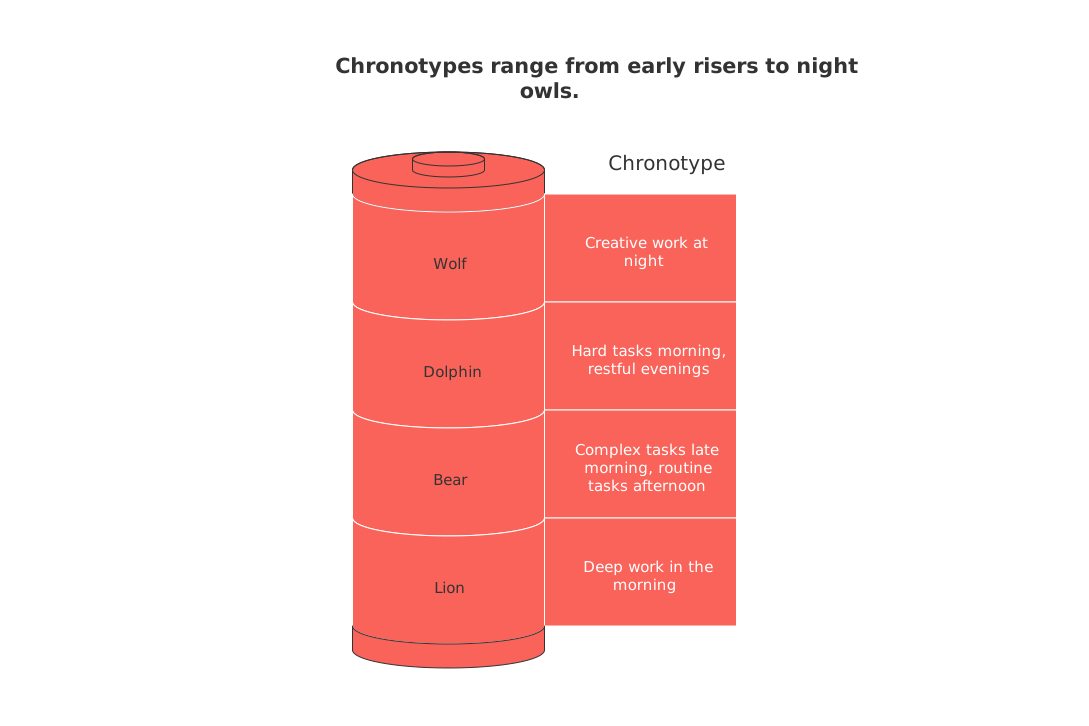
Lion (early): Peak focus 6–10 a.m. Schedule deep work first. Hold light admin after lunch. Power down by early evening.
Bear (mid): Peak 9 a.m.–1 p.m., then 3–6 p.m. Do complex tasks late morning. Run routine tasks mid‑afternoon. Evenings stay flexible.
Wolf (late): Peak 1–4 p.m. and 7–10 p.m. Warm up slowly. Batch calls after lunch. Ship creative work at night if life allows.
Dolphin (light sleeper): Short peaks scattered. Use 9–11 a.m. for hard tasks. Protect calm, quiet windows. Keep evenings restful.
How to discover your chronotype in seven days without a lab test
For a week, wake naturally on days you can. Note the time.
Record two daily peaks when work felt effortless.
Track one daily slump when thinking went fuzzy.
Log when caffeine helps and when it backfires.
Compare work quality across time blocks, not hours spent.
Group your notes. A pattern will stand out.
Draft a schedule that leans into those peaks next week.
Scheduling solo work and life around your chronotype
Match tasks to energy, not importance alone. Important work done tired often spawns rework. Schedule your demanding tasks during your peak energy periods. Routine tasks should be allotted to the times when your energy dips. To conserve mental energy, aim for smooth transitions between different types of tasks, batch similar work, minimize context switches, and insert brief resets between blocks.
Task-to-energy map for everyday life
Deep creation: Write, design, or analysis during your strongest window.
Social or sales: Calls and demos when you feel verbally sharp.
Maintenance: Filing, CRM updates, expenses during predictable dips.
Movement: Short walks before and after deep sessions to reset.
Family time: Protect a daily slot you can keep, even brief.
Strategies to effectively coordinate team workflows across mixed chronotypes
Teams rarely share a single rhythm. Treat handoffs like relay batons. Agree on windows for quick responses. Let deep work remain quiet.
Define two shared periods per day when everyone is available, overlap windows for real-time communication and collaboration. To maintain productivity, keep these windows brief and focused on essentials so the majority of the day supports uninterrupted solo work.
Time proposals and reviews when recipients feel most alert.
Batch approvals so executives can decide during their peak.
Publish clear deadlines with time zones to avoid guesswork.
Favor written briefs for complex tasks. Talk to clarify, not to think.
Applying chronotypes to project management, CRM, and knowledge tasks
Translate energy into workflow rules. Schedule architecture tasks during peaks. Use dips for tidy handoffs and documentation. In CRM, place discovery and negotiation in verbal peaks. Do data cleanup in slower hours. For knowledge bases, draft during high focus. Edit and refactor when attention is steady but lighter.
Planning sprints and quarters that align with your energy peaks
Plan short cycles that respect momentum. Many solo operators prefer 12‑week horizons to keep urgency honest and feedback tight. If you want a field‑tested playbook, this guide explains the rhythm well: 12‑week planning for solo operators.
Selecting workspaces and views that respect your chronotype habits
Your tools should bend to your energy, not force it. Some prefer one workspace for tasks, docs, CRM, and projects. Others like separate, dedicated apps. Compare trade‑offs before switching stacks. This deep dive helps you decide: choosing between all‑in‑one workspaces and dedicated tools.
If you prefer centralizing your tasks and projects, platforms like Routine or Notion can reduce the need to switch between different apps or tools, enhancing focus and productivity. If you specialize, tools such as Trello for projects and Pipedrive for CRM keep focus tight. Pick the setup that supports your best hours.
When work or family clashes with your chronotype
Life sets constraints. You still have options. Use small, repeatable levers, protect one peak block each day, front-load priorities on your best hours, and stack low-stakes tasks on your dips. Even modest alignment compounds into steadier output and less stress.
FAQ
What is a chronotype, and why does it matter for productivity?
A chronotype is a classification of your natural sleep-wake preferences, influenced by circadian rhythms and genetics. Ignoring your chronotype leads to decreased focus and increased fatigue, undermining productivity.
How can I determine my chronotype without specialized tests?
Over a week, observe your natural wake-up times, productivity peaks, and slumps. Analyze these patterns to identify when your energy and cognitive functions are at their best. Use these insights to optimize your schedule.
Can everyone on a team have the same chronotype?
It's rare for a team to share the same chronotype, as individual biological rhythms vary. Attempting to align everyone’s schedule can lead to inefficiencies and miscommunication. Instead, establish overlapping communication windows while respecting diverse peak times.
Is it effective to plan tasks purely based on importance?
No, importance-based planning can be counterproductive if you're not considering your energy levels. Tackling important tasks during energy slumps results in poor quality and rework. Harness your peak periods for demanding tasks and reserve low-energy times for routine duties.
How can I manage family commitments when they clash with my chronotype?
Prioritize at least one peak productivity block each day and shift lower-priority tasks into your off-peak hours. While life demands flexibility, aligning energy with crucial tasks maintains output and curtails stress.
Should I always align my schedule with my chronotype?
Ideally, yes, but constraints exist. Even partial alignment of crucial tasks with high-energy periods yields better efficiency and quality. Routine tasks relegated to energy dips secure essential focus for priority work.
What risks do I face by ignoring my natural chronotype?
Disregarding your chronotype invites chronic fatigue, increased stress, and subpar work quality. It forces unnecessary mental effort, leading to burnout. Architecting your day around natural energy levels optimizes both productivity and well-being.

Julien Quintard
Founder & CEO at Routine09/05/2026
