How to Build a Simple OKR Tracking System Using ChatGPT
Why structured OKR data matters before bringing in ChatGPT
KPIs measure outcomes, but OKRs trigger the actions that get you there. ChatGPT becomes a powerful assistant when your information is orderly and well-defined.
Begin by agreeing on definitions. Clarify metrics, assign owners, and set a routine review pace. Once your OKR data is organized, ChatGPT can effectively generate summaries, identify risks, and compare results.
“Ambiguity in inputs creates ambiguity in outputs.” Handle your OKR data with the same rigor as product data.
Specify unambiguous OKR entities, fields, and links for reliable ChatGPT results
Core entities and attributes
Objective: title, theme, timeframe, executive sponsor, business impact
Key Result: metric, baseline, target, unit, direction, owner
Initiative: related project, milestones, dependencies, due date, status
Evidence: source link, date of record, value, auditor notes
Relationships: parent objective, cross-team tags, CRM references, risk flags
Build a lightweight OKR repository your teams can update weekly
Choose a single storage method, spreadsheet, database, or CRM custom object.
Assign an owner to each key result, and make ownership visible to leadership.
Pick a consistent update day. Wednesday works well for many global teams.
Only track critical fields. Avoid entering the same data in multiple places.
Use clear, human-readable IDs for rapid review.
Keep change management minimal, limit schema adjustments to the start of each quarter.
Set up ChatGPT workflows for drafting, scoring, and weekly OKR check-ins
Drafting workflow
Provide last quarter’s OKR data and lessons learned.
Define this year’s business themes and constraints.
Prompt ChatGPT for three objective proposals per theme, each with suggested metrics.
Weekly check-in workflow
Upload up-to-date key result values and evidence links.
Request a concise executive summary from ChatGPT.
Identify risks, blockers, and decision requests with clear highlights.
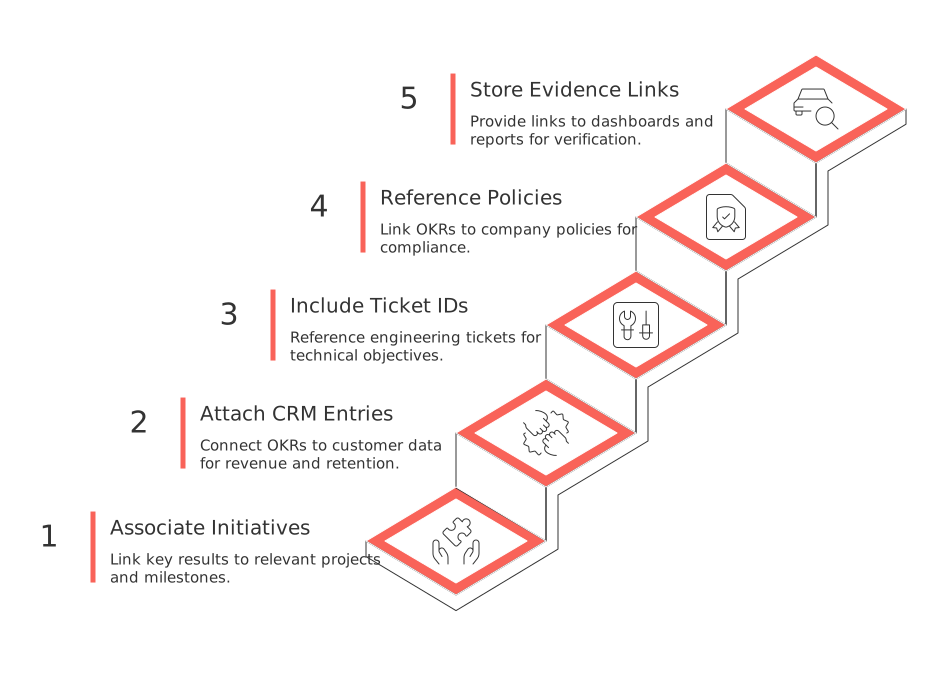
Integrate OKRs with projects, CRM, and knowledge for full traceability
Associate each key result with relevant initiatives and key milestones.
Attach CRM entries to revenue or retention-focused OKRs.
Include engineering ticket IDs for technical objectives, like Jira epics.
Reference company policies or SOPs stored in your knowledge base.
Store evidence links to dashboards, reports, or raw data extracts.
Every key result should point to a concrete artifact, providing ChatGPT with valuable context for deeper analysis.
Decide where your OKR data lives: unified workspace or dedicated tools
Choose a storage solution that fits your stack and security needs.
All-in-one workspaces make cross-team OKR reviews easier.
Dedicated tools offer deeper integration with project and CRM systems.
Most mature teams maintain a single source of truth, sometimes blending both approaches.
For a detailed breakdown, see this guide comparing all-in-one workspaces to dedicated project tools.
Solutions like Routine and Notion are examples of unified platforms, while Jira or Salesforce exemplify specialized tools.
Visualize OKR progress with executive-friendly tools
Key result scorecards: show owner, baseline, target, current value, status, and a brief narrative.
Bullet graphs: deliver quick visual cues for thresholds and trends.
Funnel views: ideal for acquisition or onboarding-focused KRs.
Burn-up charts: effective for visualizing cumulative progress.
Find more on pragmatic visualization options in this overview of visualization tools beyond Gantt charts.
Ensure governance, security, and data integrity in ChatGPT OKR workflows
Remove personal or sensitive data before sharing with ChatGPT or any AI model.
Log all changes to key result values and comments for traceability.
Define who reviews OKRs and set up a clear escalation process per objective.
Save quarterly data snapshots for board reviews or audits.
Document both how you use models and their limitations to meet compliance standards.
ChatGPT is an assistant, not your source of record. The repository remains your authoritative system.
Templates for OKR submission, weekly updates, and quarterly recaps
OKR intake
Objective title, theme, sponsor, and timeframe
KR metric, unit, baseline, target, direction, owner
Related projects, CRM links, dependencies, and risk notes
Weekly update
Latest KR value, calculated progress, confidence rating
Supporting evidence and data collection date
Blockers, decisions required, next actions
Quarterly summary
Final scores, achieved outcomes, business impact
Analysis of success and failure (what worked, what didn’t, and reasons)
Proposed objectives for the next quarter
If you need inspiration, look to commonly used project planning templates from your PMO toolkit.
Common pitfalls to avoid in ChatGPT-enabled OKR workflows
Poorly defined objectives that obscure intended outcomes, always make statements measurable.
No baseline for metrics, resulting in meaningless progress, document starting values.
Inconsistent scoring, apply one standard formula across all teams.
Manual data re-entry, link data between systems instead of duplicating.
Lack of accountability, appoint a responsible person for every key result.
Dense blocks of text, stick to structured fields as much as possible.
Measuring first-quarter success with clear signals
Update completion rate is at least 85% by week four.
Exec review time per objective drops below 20 minutes.
Evidence links are attached to at least 90% of key results every week.
Action decisions are made one reporting cycle faster.
All cross-functional OKRs have visible dependency records.
If you’re hitting these signals, you’re ready to roll out ChatGPT OKR tracking at scale.
FAQ
Why is structured OKR data important for using ChatGPT effectively?
Structured OKR data ensures ChatGPT processes information accurately, avoiding ambiguity in the outputs. Without clear inputs, expect muddled insights and misdirected actions.
How can I ensure our team sticks to updating the OKR data regularly?
Choose a day for consistent updates and hold key result owners accountable, highlighting their roles in leadership displays. Routine allows for a streamlined update process when embedded across tools the team already uses.
Can I rely on ChatGPT to store and manage my OKR data?
No, ChatGPT is not a repository; it's merely an assistant. Your primary system should still be the authoritative source of truth, ensuring data governance and integrity are maintained.
What role does Routine play in managing OKR data?
Routine offers unified workspace solutions to integrate OKR data across various project management and CRM tools. This helps in maintaining consistency and providing a true picture without duplicating effort.
Why should dense text be avoided in OKR management?
Dense text leads to misunderstandings and inefficiency in data retrieval and review processes. Structured fields and human-readable formats enable quick processing and actionable insights using tools like Routine and ChatGPT.
How can I safeguard sensitive information when using ChatGPT for OKR tracking?
Always exclude personal or sensitive data before processing with ChatGPT. Maintain logs of changes and set clear guidelines on who can access and modify the data to uphold compliance and privacy standards.

Julien Quintard
Founder & CEO at Routine01/26/2026
