Atomic Notes: Why Smaller Notes Make a Smarter Second Brain
Why atomic notes build a smarter second brain
Large, congested notes can obscure clear idea presentation. Small notes make ideas visible, linkable, and easy to reuse.
Atomic notes capture one idea each. They live as independent pieces. You can connect them when needed. You can also file or resurface them later.
One idea per note. Clear context. Easy links. That’s the atomic rule.
This approach fits busy consumers, freelancers, and executives. It reduces friction and supports steady knowledge growth.
What an atomic note is in knowledge management terms
An atomic note is a tiny, permanent record of a single concept. It carries just enough context to stand alone and connect elsewhere.
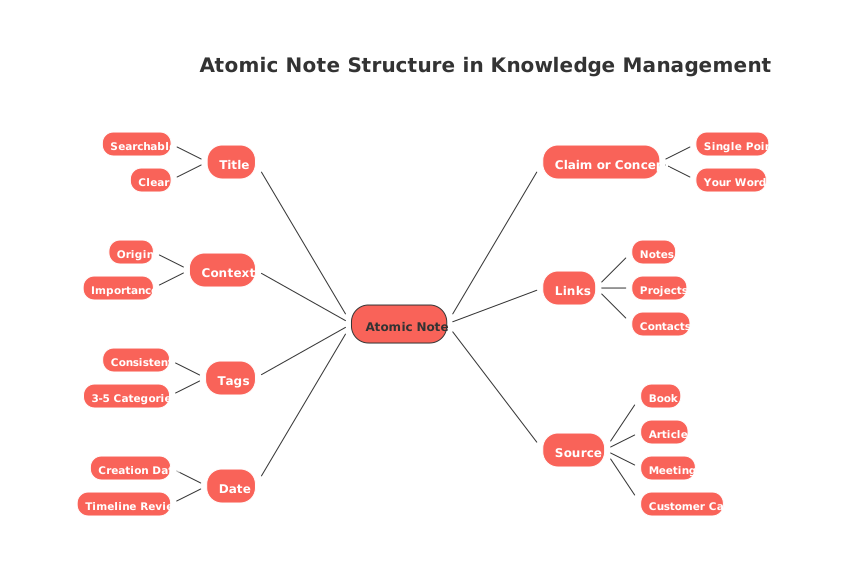
Core elements every atomic note should include
Title: A clear, searchable statement of the idea.
Claim or concept: One point only, written in your words.
Context: Where it came from and why it matters.
Links: Related notes, projects, or contacts.
Tags: 3–5 consistent categories, not a laundry list.
Source: Book, article, meeting, or customer call.
Date: Creation date for timeline review.
Keep formatting light. Use short sentences, bullets, and explicit links. Avoid long paragraphs inside a single note.
How smaller notes improve recall and creative recombination
Small notes reduce cognitive load. You can scan and decide fast. Retrieval becomes quick and precise.
Faster recall: One idea per page reduces search noise.
Flexible linking: Notes connect like building blocks.
Idea mixing: You can combine notes into outlines quickly.
Error control: Corrections touch one note, not an essay.
Adopt a creation‑linking approach. Create the note first, then connect it to people, projects, and outcomes.
A simple atomic note template for consumers and freelancers
Use a lightweight template. It should take under two minutes to fill.
Template fields you can copy today
Title: State the idea in 8–12 words.
Idea: Write the claim in one short paragraph.
Context: Trigger, source, or scenario.
Links: Related notes, tasks, and contacts.
Tags: Pick a few stable categories.
Next step (optional): If action is obvious, add one task.
Personal example: turning a book highlight into an atomic note
Title:“Group similar tasks, like email time, to reduce task‑switching.”Idea: Batch email into scheduled blocks to minimize context switching. Context: From a productivity book. Links: Focus notes, weekly plan. Tags: workflow, focus.
How to connect atomic notes to projects without creating clutter
Projects require concise and targeted outcomes, not extensive volumes of text. Link notes to the smallest relevant deliverable.
Create atomic notes during research and scoping.
Link each note to one project milestone or task.
Summarize a deliverable using only linked notes.
Archive the project, but keep notes active and reusable.
This flow turns research into shipping. You avoid duplicate writing and outdated docs.
Using atomic notes in a CRM workflow for individuals and teams
Customer knowledge decays fast when trapped in long reports. Atomic notes keep it fresh and traceable.
Where atomic notes fit inside a CRM-like process
Discovery calls: Create one note per key insight or objection.
Contacts: Link each note to people and organizations.
Pipeline stages: Attach only the notes that affect the stage.
Follow-ups: Convert one note into a single next action.
Handoffs: Share a bundle of linked notes, not a slideshow.
Individuals can mirror this process. Keep notes minimal, link them to contacts, and track only decisive points.
Meeting notes that convert discussion into durable atomic knowledge
Meeting pages often become cluttered. Distill each decision or insight into its own atomic note right after the call.
For structure and speed, review these structured agenda, minutes, and recap templates that keep meetings tight. Then extract each decision into separate notes and link them to owners.
Capture the raw minutes.
Extract each decision or risk into a new note.
Link notes to owners, tasks, and the project phase.
Send a short recap that references the new notes.
Common mistakes to avoid when creating atomic notes
Writing essays inside a single note.
Mixing multiple ideas under one title.
Storing tasks inside knowledge notes without links.
Tag sprawl that hides rather than reveals structure.
Duplicating notes instead of linking to the original.
Forgetting context, which turns notes into riddles.
Keep notes concise, reliable, and linked. If a sentence becomes long, consider splitting it into simpler sentences or multiple points within the same note.
Choosing a workspace that respects atomic notes and structured work
Atomic notes shine when your workspace supports links, references, and structured fields. Avoid tools that restrict the free flow and connection of ideas.
To understand the tradeoffs, read why personal productivity apps fail teams and how structured data solves the problem. For a tooling overview, also consider “All‑in‑One Workspaces vs Dedicated Project Tools: Which Serves Your Business Best?” as further reading.
Look for frictionless capture, fast search, stable tags, and robust linking. Those features keep your second brain coherent.
FAQ
What are atomic notes?
Atomic notes are concise records of single ideas that stand alone but link easily to other notes. They reduce cognitive load by avoiding clutter and enabling clear connections, facilitating a more organized approach to knowledge management.
Why should professionals use atomic notes?
Atomic notes streamline idea retrieval and integration, reducing the noise that large documents create. They foster efficient knowledge reuse and minimize the risk of losing context, critical for timely decision-making in fast-paced environments.
How can atomic notes support project management?
By linking atomic notes to specific tasks and milestones, you avoid redundant information and ensure clarity. This approach aids in maintaining focus on deliverables while enabling flexible adaptation as projects evolve.
What common mistakes should be avoided when creating atomic notes?
Avoid cramming multiple ideas into one note or creating isolated, context-less snippets. Such practices obstruct the linking potential and clarity that atomic notes are designed to provide, leading to fragmented knowledge silos.
How do atomic notes enhance creative thinking?
They enable rapid idea mixing and recombination, allowing new insights to emerge from established knowledge blocks. This modular approach breaks down mental barriers, supporting innovative problem-solving.
Why is context important for atomic notes?
Without context, notes become riddles, hampering understanding and application. Linking notes with clear contextual references ensures they remain useful and actionable over time, protecting against knowledge decay.
Can atomic notes be used in CRM workflows?
Yes, they ensure each key customer interaction or insight is noted and linked to relevant contacts. This keeps customer knowledge current and accessible, facilitating informed strategic moves and follow-ups.
What role do tags play in atomic notes?
Tags categorize notes into consistent themes, enhancing search efficiency and structural clarity. However, excessive tags create chaos rather than order, so sticking to a few stable categories is crucial for maintaining coherence.

Julien Quintard
Founder & CEO at Routine06/04/2026
