Top 9 AI Prompts to Automate Sprint Retrospectives with Actionable Outcomes
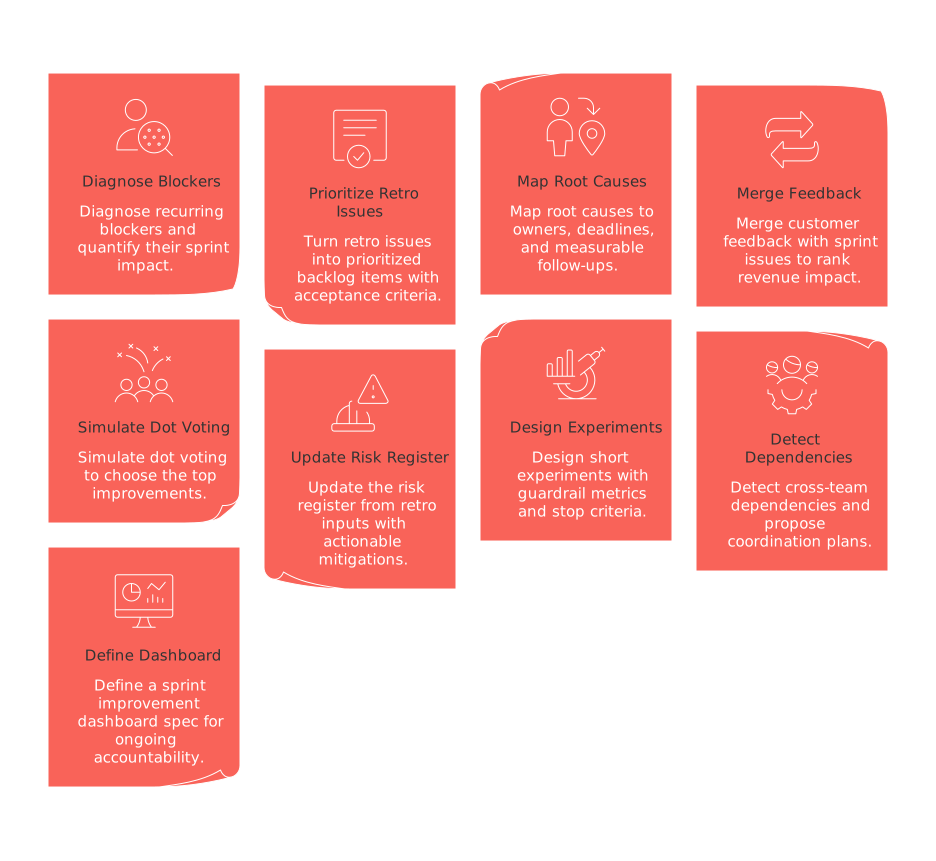
Prompt 1: Diagnose recurring blockers and quantify their sprint impact
Let’s move from anecdotal blockers to reliable data-driven insights. This prompt is designed to collect information about sprint impediments, any issues or obstacles faced in recent work, and quantify their impact to suggest targeted actions.
inputs = [ Impediments.csv , Velocity.csv ] ; metric = blocked_hours ; pareto_cut = 0.8
Act as an agile process analyst. Use only the pasted data.Input A: Impediments, with columns including Sprint, Team, Issue, Tag, StoryPointsAffected, BlockedHours.Input B: Velocity, detailing Sprint, Committed, Completed, and CarriedOver items.Tasks: Group issues by Tag, summing BlockedHours and StoryPointsAffected. Rank tags by their overall impact.Carry out a Pareto analysis to find which tags cause 80% of delays.Estimate throughput loss per sprint by measuring the difference between Completed and Committed items.Output: Provide a table listing Tag, Count, BlockedHours, AffectedPoints, ImpactPercent, and Top3Actions.Assign suggested owners by role, such as Engineering Manager, QA Lead, and DevOps. List quick wins that can be accomplished in a single sprint.
For this prompt, it’s recommended to use impediments data spanning the last six sprints. This should cover any issues or roadblocks encountered during each sprint.
Include the corresponding velocity data for these six sprints.
Prompt 2: Turn retro issues into prioritized backlog items with acceptance criteria
Streamline your retro notes into actionable backlog items. This prompt helps convert scattered feedback into structured user stories, prioritizes them, and creates clear, testable outcomes for your development process.
scoring = RICE ; output = [ User story , Gherkin , RICE ]
As a product operations partner, use the retro issues you’ve collected.For each issue, rewrite it as a user story with a clear value statement.Add acceptance criteria in Gherkin format, including negative scenarios.Apply the RICE scoring method. This method evaluates Reach (per sprint), Impact (scored 1–3), Confidence (scored 0–1), and Effort (measured in story points).Return a ranked backlog that includes each story, its RICE score, effort, and dependencies.Clearly mark which items fit within the next sprint’s typical capacity (e.g., 40 points).
Tip: Request both JSON and human‑readable output formats for easy import into other tools.
Prompt 3: Map root causes to owners, deadlines, and measurable follow‑ups
Ensure fast follow-through by making accountability visible. This prompt connects every root cause to a clear owner, deadline, and way to track improvement.
You will be setting Key Performance Indicators (or KPIs) by focusing on aspects like cycle time, lead time, and escaped defects. The goal is to achieve results within a predetermined timeframe, such as 14 days.
Assume the role of a delivery coach. Use your problem list as input.For each issue, perform a succinct 5 Whys analysis, drilling down three layers to pinpoint the root cause.Create a one‑page plan for each item, including Owner, Co-owner, and DueDate.Add details for KPI, Baseline, Target, and the measurement method for tracking.Include a weekly check-in template that uses status colors and a section for risks.
Define practical targets, and keep KPI definitions clear and specific.
Prompt 4: Merge customer feedback with sprint issues to rank revenue impact
Bridge the gap between customer feedback and the difficulties encountered by your engineering team. This helps ensure improvements have a tangible impact on revenue.
crm = Salesforce ; revenue_window = 90 days ; pii_policy = redact emails and names
Step into the role of a product analyst. Use both retro issues and extracts from your customer relationship management tool.Inputs include NPS comments, open opportunities, churn reasons, and ticket tags.Before analysis, ensure all Personally Identifiable Information (PII) is redacted, such as names or emails. Confirm in your output that you have redacted this data.Map each engineering issue to either revenue at risk or potential upside, focusing on the past 90 days.Rank each issue by expected revenue impact and required effort. Present the top five actionable recommendations.For each action, provide a concise statement explaining its customer value.
Outcome: You’ll have a list of revenue-driven actions that your executive team can review and approve quickly.
Prompt 5: Simulate dot voting to choose the top improvements
Prevent bias from dominating voices by running a simulated dot voting exercise. This provides a fair method to gauge team priorities and break any ties with clarity.
voters = 9 ; votes_per_person = 5 ; constraints = [ at least one QA item ]
Act as a neutral facilitator. Work with the improvement candidates you’ve gathered.Simulate dot voting for nine people, with each person allocating five votes.Apply the rule: at least one QA-related item must rank within the top three.If there are ties, break them first by highest impact, then by lowest required effort.Present the final ranking and provide a short rationale for each of the top five items.
Use this simulation before your team meeting for a preview of likely outcomes.
Prompt 6: Update the risk register from retro inputs with actionable mitigations
Translate retrospective findings into specific risk register entries, plus practical mitigation steps and clear ownership for each.
scale = 1–5 ; threshold = 12 ; owner_roles = [ Eng Manager , SRE Lead ]
Take on the role of a risk analyst. Rely on your retro issues and incident records as your source material.Generate or update risk entries, including Description, Cause, Probability, Impact, and a total Score.List Mitigation actions, Contingency plans, Owner, ReviewDate, and any Early Warning signals.Flag risks with scores of 12 or higher as urgent.Provide both a register table and a summary heatmap of risks.
Keeping your risk register up-to-date helps you stay ready for ISO or SOC discussions, and ensures actions are linked to identified risks.
Prompt 7: Design short experiments with guardrail metrics and stop criteria
Drive continuous improvement with safe experimentation. This prompt ensures every test is guided by hypotheses, success metrics, and clear safety checks.
timebox = 2 weeks ; mde = 10% ; guardrails = [ crash_rate , ticket_volume ]
Act as an experimentation coach. Gather your improvement ideas as inputs.For each idea, craft a clear Hypothesis, Expected Outcome, and a defined Success Metric.Set the Minimal Detectable Effect (MDE) to 10%.Define operational guardrails, such as crash rate and support ticket volume, to protect your users.Outline explicit Stop criteria and a two-week execution plan.Return a checklist naming the Owner and the date by which a decision will be made.
Share the checklist with your leadership so they can approve tests quickly and confidently.
Prompt 8: Detect cross‑team dependencies and propose coordination plans
Many improvement items become delayed due to hidden dependencies between teams. Make them explicit and organize coordination from the outset.
teams = [ Payments , Auth , Data ] ; interfaces = [ API , Events ]
Act as a technical program manager. Use backlog items and the records of which teams own each service.Identify dependencies across different teams and specify interface contracts, including APIs and events.Suggest handshake tasks that clarify who needs to do what, including OwnerTeam, Counterparty, Deliverable, and DueDate.Propose a sequence that minimizes idle time between dependent tasks.Return a comprehensive list of dependencies along with the minimal critical path.
For even better coordination, consider complementing this with visual project tracking tools to keep handoffs clear.
Prompt 9: Define a sprint improvement dashboard spec for ongoing accountability
Create a real-time dashboard to make accountability and progress continuously visible. This prompt spells out what metrics, queries, and updating rules to set up.
bi_tool = Looker ; sources = [ Jira , GitHub , CRM ] ; refresh = hourly
Step into the role of a data product owner. Based on your available data dictionary, design a dashboard for tracking sprint improvements.Include these views: 1) Blocked hours over time, 2) Action item burn‑down, 3) Defects segmented by root cause, 4) Revenue impact of resolved issues, 5) Aging of dependencies.Specify table structures, join logic, and filter requirements for each data source.Provide calculation formulas for important metrics, such as cycle time and carryover rate.Output a detailed JSON specification that can be handed directly to your Analytics Engineering team.
For smoother sessions, review proven meeting formats and recap templates prior to running your retrospectives.
Governance and next steps for AI‑assisted retrospectives in enterprises
Data privacy and compliance are critical, always remove any PII (such as emails or secret credentials) before using this data with any AI models.
policy = redact PII ; storage = restricted ; retention = 30 days ; reviewer = Security
Put your outcomes to work by integrating them into a shared workspace. Tools like Routine or Notion help keep project tasks, documentation, and CRM data connected. Fully-featured platforms like Jira or Salesforce are also suitable, though they may require more integration effort.
Want to understand if your process is improving? Compare your changes against the five classic project phases in well-known delivery frameworks. Align your sprint improvements with the key check-points in your project (known as phase gates) to enable more straightforward auditing.
FAQ
How can I diagnose recurring blockers in sprints effectively?
Diagnosing recurring blockers requires moving past anecdotal evidence and collecting data-driven insights. Utilize tools like Routine to analyze impediments data and perform a Pareto analysis to identify issues causing most delays.
What is the benefit of turning retro issues into backlog items?
Converting retrospective issues into structured backlog items with acceptance criteria ensures they are actionable and testable. This practice drives tangible changes instead of letting valuable feedback languish unaddressed.
How can I connect root causes to owners and measurable follow-up actions?
Linking root causes to specific owners, deadlines, and KPIs is crucial for accountability. Use structured processes, like the 5 Whys analysis, to dig into issues and assign clear responsibility for follow-up actions.
Why should customer feedback be merged with sprint issues?
Merging customer feedback with sprint issues bridges the gap between user experience and engineering efforts, enabling improvements with a direct impact on revenue. This synthesis ensures prioritized actions reflect business value.
What are the advantages of using simulated dot voting in retrospectives?
Simulated dot voting prevents dominance by louder voices, ensuring fair representation of priorities. This process is vital in getting unbiased insights into team preferences and decisions on improvement efforts.
How does updating the risk register improve project management?
Regularly updating the risk register with actionable mitigation strategies ensures that potential issues are addressed proactively. This keeps the team prepared for challenges and aligns with compliance standards like ISO or SOC.
What role do guardrail metrics play in experimental tests?
Guardrail metrics provide safety checks during experiments, ensuring that tests do not negatively affect crucial aspects such as crash rates or ticket volumes. They help maintain experiment integrity while protecting user experience.
Why is it important to detect cross-team dependencies upfront?
Identifying cross-team dependencies early minimizes idle time and delays, enhancing seamless collaboration. Define clear interface contracts and handshake tasks to ensure efficient task handoffs and project progress.
What metrics should be included in a sprint improvement dashboard?
A comprehensive sprint improvement dashboard should track blocked hours, action item burndown, defects by root cause, resolved issues' revenue impact, and aging dependencies. This ensures ongoing accountability and progress transparency.

Julien Quintard
Founder & CEO at Routine02/12/2026
