Task Dependencies 101: Why Some To-Do Lists Never Get Finished
Why task dependencies stall your to-do list
Your to-do list isn’t lazy; it’s waiting its turn. Many tasks can’t start because another task must finish first. That quiet wait time breeds delays, context switching, and stress. Identify the links, and the list finally moves.
Think about daily life. You can’t delivery arrives a shelf before the scope is approved. You can’t assemble a client before the invoice. Dependencies sit behind most “stuck” items.
What a dependency means in project and personal work
A dependency is a relationship where one task relies on another. Four patterns show up everywhere, from home projects to client work:
Finish-to-Start (FS): Task B starts only after Task A finishes. Example: publish the video after editing ends.
Start-to-Start (SS): Task B can start only when Task A starts. Example: begin design once discovery kicks off.
Finish-to-Finish (FF): Task B must finish when Task A finishes. Example: QA wraps as development wraps.
Start-to-Finish (SF): Task B can’t finish until Task A starts. Example: handover ends when on-call begins.
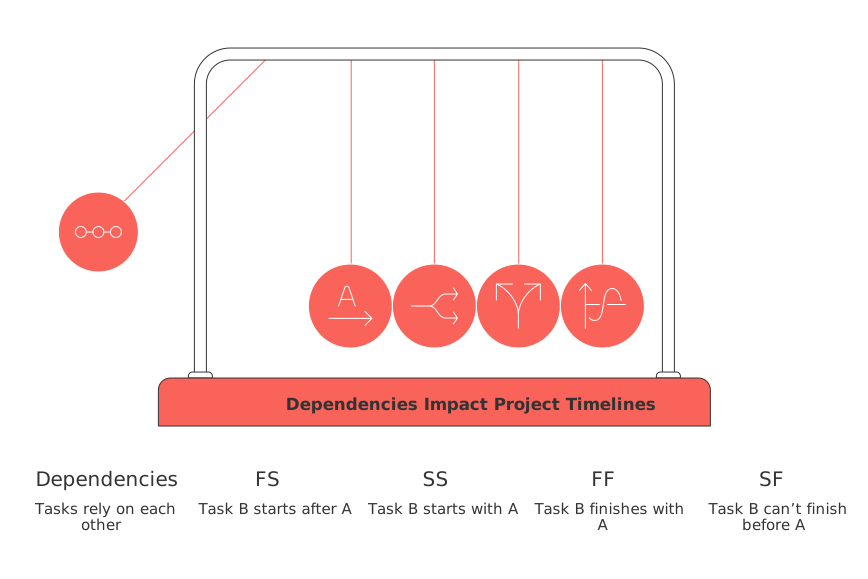
Use the simplest pattern that explains the wait. Complicated links hide risk and confuse owners.
The hidden blockers that cause never-ending lists
Most bottlenecks fall into a few repeatable traps. Spot them fast to cut delay:
Missing inputs: You wait for files, content, access, or parts. Freelancer example: no brand assets, no ad draft.
Undefined approvals: The decider isn’t picked, or criteria remain vague. Proposal sits untouched.
Shared resources: One expert or tool throttles many tasks. Video render queue stalls three projects.
Sequence errors: Work starts out of order. You paint before sanding, then redo the wall.
Dependencies don’t waste time; unclear dependencies do.
How to map dependencies without drowning in process
Keep the ritual short. Clarity beats ceremony.
Run a 10-minute mapping session
List the final outcome in one line. Example: Launch product page.
Break it into 5–9 tasks. Keep each task actionable and measurable.
For each task, write: “I can start when ______ is done.” That blank is the prerequisite.
Circle tasks with no prerequisites. Those are your true starters.
Draw arrows from prerequisite to dependent tasks. Use paper or any light tracker.
If you prefer a visual approach, represent dependencies with a simple Gantt or project tracker. Seeing the chain reduces guesswork and idle gaps.
Why prioritization changes when dependencies exist
When tasks connect, sequence beats size. A small upstream task can delay the entire outcome. Focus on the earliest blockers first.
Protect the chain: Give priority to tasks that feed many others.
Finish starters early: Unblock teammates, vendors, or your future self.
Batch approvals: Group decisions so work doesn’t ping-pong.
This applies to solo creators as well. For instance, a 20-minute legal review of a contract can prevent a week of rewrites due to unforeseen legal issues.
Scheduling and estimates: why task order is more important than optimistic deadlines
Optimistic dates collapse when links stretch. Build margin where uncertainty lives.
Add small buffers after external approvals and vendor handoffs.
Set service levels for frequent reviews. Example: feedback within two business days.
Measure wait time, not just work time. Waiting is often the villain.
Quote this to your team:“We plan durations, but dependencies plan deadlines.”
Dependency hygiene for individuals, freelancers, and teams
Good habits keep chains short and visible:
One owner per task: Shared ownership hides delays.
Clear entry and exit rules: Define “ready” and “done.” Attach examples or checklists.
Single source of truth: Keep links, assets, and status in one workspace.
Lightweight check-ins: Ask “What are you waiting on?” instead of “How’s it going?”
Kill zombie tasks: If no owner or next step, archive or re-scope.
When tools help: connecting tasks, docs, and CRM
Tools matter when work spans sales, delivery, and support. A connected workspace links tasks to contacts, deals, and docs. Apps like Routine, Notion, or ClickUp can tie a client approval to the proposal task and the CRM record. Building that link makes the wait time more explicit, turning an unspecified delay into a clear obstacle to be addressed.
Pick one system that your team actually uses. Fewer surfaces mean fewer lost dependencies.
Templates and visuals that make dependencies obvious
Templates reduce thinking time and align language. Start with a project charter, a slim ai-work-breakdown-structure>WBS, and a dependency map. When you need ready-made formats, use project planning templates that clarify owners, handoffs, and links. For deeper context on timing and transitions, see “Mastering the Project Lifecycle: The 5 Phases and What Really Happens in Each.”
Troubleshooting: why your list still refuses to finish
Run through this quick checklist:
Is the next action clear? If it reads like an outcome, split it.
Who holds the authority to make decisions? Clearly define the approver and set a specific deadline.
What are we waiting on? Call out the exact file, access, or event.
Can we reorder? Pull forward tasks without blockers.
Is scope bloated? Trim to ship a smaller, coherent slice.
Want visual options beyond pure lists? Pair your map with time-based views to catch slips early. If you’re unsure which visualization fits your work, explore practical Gantt and tracker choices for simple project management and match the view to your chain.
FAQ
Why do task dependencies stall productivity?
Task dependencies often create bottlenecks because one task can't proceed until another is completed. This leads to delays and forces team members to wait idly, resulting in inefficiencies and frustration.
What are the different types of task dependencies?
Task dependencies include Finish-to-Start, Start-to-Start, Finish-to-Finish, and Start-to-Finish. Each has unique implications for scheduling and task management, influencing how and when tasks can progress.
How can I efficiently map task dependencies?
Conduct a short mapping session by breaking down complex tasks into manageable parts and identifying prerequisites for each. Use tools like Routine to visualize these dependencies and minimize guesswork.
What are some hidden blockers in task management?
Common blockers include missing inputs, unclear approvals, resource bottlenecks, and incorrect sequencing. Identifying and addressing these issues can greatly enhance workflow efficiency.
Why is prioritization pivotal in dealing with dependencies?
In dependency-rich environments, sequencing tasks correctly is critical. Even small upstream tasks can cause significant delays, so prioritizing effectively can prevent larger issues down the line.
How does dependency management affect deadlines?
Optimistic deadlines are often disrupted by unforeseen dependencies. Effective dependency management requires building in buffer time to handle delays and focusing on critical paths rather than just individual task durations.
What steps can individuals take to maintain dependency hygiene?
Clear task ownership, well-defined start and completion criteria, and regular updates help in maintaining dependency hygiene. These practices prevent tasks from stagnating and ensure everyone is aligned.
When should you rely on tools for managing dependencies?
Engage tools when multiple teams interact or when tasks extend across various functions like sales, delivery, and support. Platforms like Routine tie these elements together, making dependencies explicit and manageable.

Julien Quintard
Founder & CEO at Routine07/21/2026
