4 Questions to Ask Yourself Every Friday to Better Plan Next Week
The 4 Friday questions to set up your next week for success
Every Friday afternoon, a short, structured reset can transform how you approach the week ahead. Use these four questions to reflect, prioritize, and plan, so you start Monday with clarity and intention.
Question 1: Reflect on the outcomes that truly moved things forward
Don’t just count tasks, focus on the few outcomes that created real value, like launching a new feature, closing an important deal, or resolving a thorny issue. These outcomes are your signals about what’s working and where your energy made a difference.
Freelance designer: Achieved two client revision approvals, no rework needed. Completed a new case study draft for the portfolio.
Sales rep: Expanded a pilot with an existing client. Re-engaged three previously stalled deals by looping in new decision-makers.
Product marketer: Finalized a launch brief. Collected testimonials from three beta users.
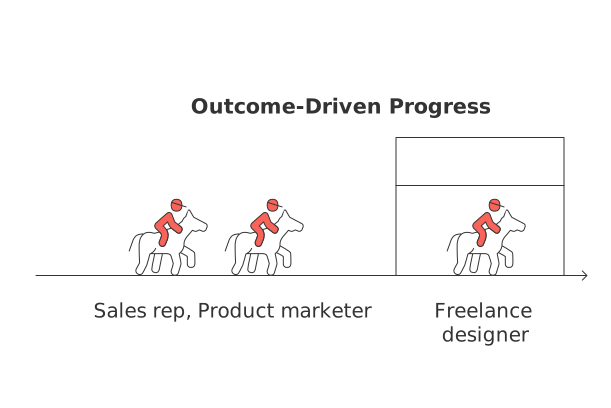
If it didn’t shift a decision, change a metric, or impact a customer, it was just activity.
Record these insights in your knowledge base, keep it direct, outcome-based, and succinct.
Question 2: Choose what to continue, delegate, or drop before Monday
Triage unfinished work instead of carrying an unwieldy to-do list into the weekend. Decide with intention.
Continue: High-impact projects already underway, reserve real calendar time to push them forward.
Delegate: Clearly defined, repeatable tasks. Assign responsibility and set deadlines.
Drop: Low-impact, low-joy, or misaligned tasks. Communicate your decision and insights with stakeholders.
Quick checklist across all work areas
Projects: Confirm next deliverables and assign a single owner to each work stream.
CRM: Move every active deal forward at least one stage or archive it.
Documentation: Update just the top-level resource your teammates actually check.
Be clear if you decide to drop or pause something, share learnings and offer an alternative approach when possible.
Question 3: Surface blockers and clarify your next actions
Write down all current blockers, and for each, define the most specific ask that will unblock you on Monday.
How to turn blockers into precise requests
Need a design asset? Request the final file by Tuesday, with specs attached.
Hold-up in legal? Ask for a bulleted redline summary instead of the full rewrite.
Missing data? Request a chart answering your core question from analytics.
Include who’s responsible, the communication channel, and your deadline, vague requests rarely get addressed.
Question 4: Set a single focus that defines a successful week
Pick one clear, outcome-driven focus for next week that would make you say, this was a productive week. Keep it specific.
Individual: Launch pricing update page and track first 100 user visits.
Team: Move onboarding flow from draft to live A/B test.
Sales: Obtain two written references ahead of Wednesday’s RFP deadline.
Write your personal Friday focus statement: “A successful week means we _____ by _____.” Review it Monday morning to set your direction.
Turn your answers into a clear plan for next week
You don’t need a complex tool. Gather your key outcomes, carry-overs, blockers, and main focus in a simple tracker your team already uses.
Three main priorities: The most impactful outcomes, with one clear owner each.
Supporting actions: Only include work that progresses a priority or addresses a blocker.
Will-not-do list: Temporarily set aside tempting but non-essential tasks; revisit in two weeks.
If you prefer a visual workflow, map your next week using visual project management tools, from ai>Gantt charts to lightweight trackers, to quickly see what’s next and who’s responsible.
Templates and visuals to streamline weekly planning
Save time by reusing planning structures that minimize mental overhead. Choose a lightweight template that supports these Friday questions.
Project one-pager: Clearly state purpose, owner, milestones, and top risks.
Outcome checklist: Define “done,” establish metrics, and schedule reviews.
Risk register: Document your three main risks, early warning signs, and responses.
Need more examples? Explore project planning templates and guides for charters, checklists, and roadmaps you can adapt to your workflow.
How small teams and individuals use this process
See how real people put these four questions into action, always short, simple, and practical answers:
Freelance developer: Outcome: merged billing refactor. Continue: expand test coverage. Blocker: staging data access. Focus: deploy production hotfix by Wednesday.
Customer success manager: Outcome: reduced churn for ACME client. Continue: prep QBR deck. Blocker: pending usage report. Focus: gain two positive health score shifts.
Side-project founder: Outcome: 40 beta signups achieved. Continue: draft onboarding email #2. Blocker: update DNS settings. Focus: launch pricing page and collect initial payments.
Let Friday be your weekly reset ritual
Make this reflection a light, honest ritual. Spend a few minutes with these four questions each Friday, and next week’s path becomes sharper, without added complexity.
Store your responses wherever work happens, whether a unified workspace like Routine or Notion, or a focused project tool like Trello. The process fits everyone, from individuals to executives, the scale may change, but the questions remain the same.
FAQ
How can reflecting on outcomes improve weekly planning?
Focusing on outcomes rather than tasks helps you identify where your efforts have the most impact, allowing for better decision-making and resource allocation in the upcoming week. This method cuts through busywork and sets the stage for targeted progress.
Why should tasks be categorized as continue, delegate, or drop?
Categorizing tasks enforces clarity and prevents you from carrying non-essential tasks into the next week. This triage process ensures your focus remains on high-value activities, not on redundant or low-impact tasks.
What is the importance of identifying blockers before the weekend?
Identifying blockers in advance allows you to clarify necessary actions, responsible parties, and deadlines. This proactive approach ensures your Monday is productive, not spent untangling delays or uncertainties.
How does setting a single focus for next week benefit productivity?
Defining a clear, outcome-driven focus enables you to direct attention and resources on the most critical goal, reducing distractions. This sharp focus aligns activities across the team or individual tasks, driving tangible progress.
Should all tasks be planned visually?
Visual planning tools, like Gantt charts, are beneficial for complex projects by clarifying dependencies and responsibilities. However, using them for simple tasks may lead to unnecessary complexity and time expenditure.
Can templates streamline the weekly planning process?
Templates minimize decision fatigue by offering structured planning frameworks. They can expedite the organization of tasks by standardizing how outcomes, risks, and responsibilities are documented, promoting efficiency.
How can Routine aid in weekly planning and execution?
Routine integrates weekly planning questions within a workspace designed to streamline task management. Its tools help maintain a clear focus on priorities, facilitate delegation, and track progress efficiently.

Julien Quintard
Founder & CEO at Routine05/27/2026
