Productivity for Writers: Protecting the Blank-Page Hours
Why blank-page hours decide whether your draft lives or dies
Your first quiet hours set the tone for everything you write. They carry fresher focus and stronger judgment.
Guard them. Treat them as non‑negotiable. Use them only for new paragraphs, not logistics or admin.
Protect the page and you protect the paycheck.
Blank‑page hours work because attention has not splintered. Distractions cause costly resets, and resets drain momentum.
Define your writing project like a product so priorities stay clear
Great pages follow strong decisions. Before drafting, write a one‑page brief that acts like a product spec.
What your brief should lock down
Audience and problem: Who reads this and what hurts right now?
Outcome: What should the reader know, feel, or do?
Constraints: Word count, tone, required examples, and banned topics.
Acceptance rules: The piece passes only if it meets these tests.
Assets: Sources, interviews, and approved data you will use.
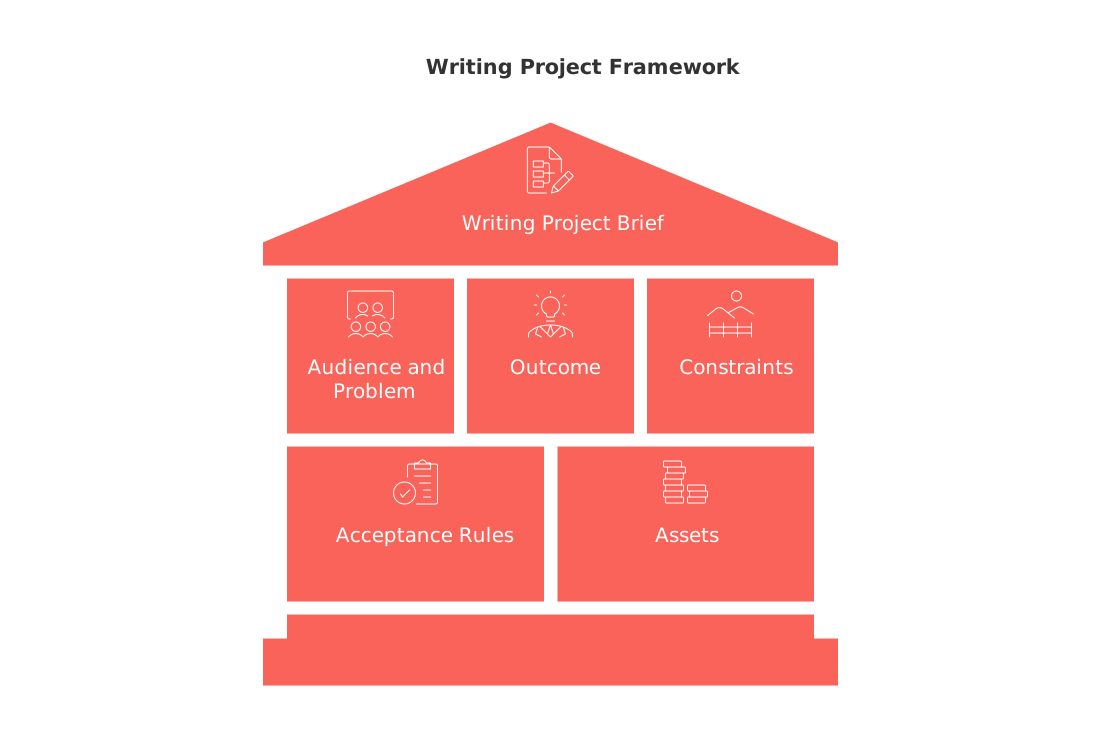
This brief reduces mid‑draft thrash. It also helps editors give faster, cleaner feedback.
Use one workspace to cut context switching while you write
Switching tools steals minutes and fragments memory. Keep tasks, sources, drafts, and contacts together.
You can compare the trade‑offs in this comparison of all‑in‑one workspaces versus dedicated project tools. Pick one model and commit.
Many writers run a single workspace in Routine or Notion. Others prefer ClickUp for task granularity. Choose what reduces hops.
The goal is fewer tabs and fewer decisions before typing.
Create a low-friction pipeline from idea to published piece
Pipeline thinking helps solo writers as much as teams. It gives you one path, not twelve.
Suggested stages that keep work moving
Inbox: Capture raw ideas and approved briefs.
Drafting: Write only new prose here. No formatting.
Edit: Improve structure, clarity, and examples.
Review: Share for review with context and acceptance rules.
Approved: Final text and assets locked.
Published: Live link stored with metadata.
Repurpose: Create threads, emails, or scripts from the core piece.
Limit the number of items in Drafting and Edit. Focusing on fewer active pieces at a time increases productivity and completion rates.
Tip: Add checklists to each stage. Keep them short. Enforce them every time.
Guard the desk with meeting rules and communication fences
Interruptions multiply. Write rules that protect mornings and early sessions.
No meetings during your first two writing sessions.
No same‑day meetings without a clear problem statement.
Batch all calls into two short windows per week.
When a meeting is unavoidable, use strong structure. These templates for meeting formats and concise recaps keep sessions short and useful.
Protect your inbox as well. Set a rule: triage messages only after deep work.
Treat clients and editors as a simple CRM pipeline
Freelancers juggle many relationships. A simple pipeline keeps context close and interruptions rare.
Your lightweight CRM fields
Contact: Name, role, and preferred channel.
Deal stage: Briefed, Contracted, Draft in progress, Revision, Approved, Invoiced, Paid.
Scope: Deliverables, rounds, and dates you promised.
Rates: Per piece, per word, or retainer terms.
History: Key decisions and open risks.
Update the stage after you write, not before. Keep admin behind the drafting wall.
Decide what to automate and what to keep human
Automation helps only when it removes repeat clicks. Keep creative judgment human.
Trigger an editor alert when a piece moves to Review.
Create a task when a client approves scope changes.
Archive assets automatically when a piece reaches Published.
Skip automation for headlines, leads, and transitions. Your voice must make those calls.
Prompts that prime the page without ghostwriting your voice
Use prompts to shake loose angles before you draft. They should inform, not replace, your voice.
Prompt: You are a seasoned features editor. I’m writing a 1,400‑word article for health‑conscious millennials about cold‑weather running. Give me: 1) three fresh thesis options with tension, 2) a tight outline for the strongest thesis with H2s and H3s, 3) five counterarguments readers might raise, 4) three data points I should verify with sources. Keep the tone evidence‑based and practical.
Prompt: Act as a critical copy editor. Here is my lede and nut graf: [paste 180 words]. Identify clichés, passive constructions, and hedging. Suggest sharper verbs and one alternative opening line. Explain the why behind each change in one sentence.
Prompt: I pitch B2B SaaS case studies. Create a client interview guide for a 45‑minute call. Include 12 specific questions that surface outcomes, numbers, and surprising moments. Add a final consent statement for using quotes publicly.
A sample daily flow that protects blank-page hours
This flow respects energy, not gadgets. Adjust the lengths as your brain prefers.
Session 1(new words): Draft 600–800 words. No formatting.
Quick break: Step away. No screens.
Session 2(new words): Draft the next 600–800 words.
Admin window: Triage email and update your pipeline.
Session 3(polish): Edit one section with a single goal.
Shut‑down: Log what moved and what blocked you.
Consistency beats heroic marathons. End before you are empty. Return stronger tomorrow.
A compact toolkit that keeps art and business in one place
Writers need fewer tools, not more. One workspace should handle projects, sources, and contacts.
Routine offers a unified approach for projects and CRM. If you prefer another route, Notion or ClickUp can deliver similar control. Pick the system you will maintain when deadlines crowd in.
Remember: your system exists to protect those blank‑page hours. Everything else is there to serve the draft.
FAQ
Why are blank-page hours crucial for a writer?
Blank-page hours offer undisturbed focus essential for fresh content creation. In these hours, free from distractions, a writer's judgment and creativity flourish, leading to more coherent and powerful drafts.
How can I ensure my writing project stays on track?
Define your project as a product with a clear brief outlining the audience, goals, and constraints. This approach minimizes confusion mid-draft and aligns everyone involved for more efficient feedback.
What's the advantage of using a single workspace for writing tasks?
Adopting a single workspace, like Routine, reduces the cognitive load caused by switching between tools. Keeping all resources in one place enhances memory retention and maintains task momentum.
How should I structure my writing process to enhance productivity?
Implement a streamlined pipeline, from idea capture to publication, with minimized concurrent projects. Limiting works-in-progress boosts focus and completion rates, sidestepping the chaos of juggling too many drafts.
What meeting rules should I enforce to protect writing time?
Institute strict guidelines, such as no meetings during peak writing hours and batching calls to specific times. Proper structure prevents interrupts, safeguarding those vital creative windows.
How do I effectively manage client relationships?
Treat client interactions as a CRM pipeline, maintaining clear stages from briefing to payment. This prevents out-of-context interruptions and keeps project deliverables and admin work organized and efficient.
What tasks should not be automated in the writing process?
Retain human oversight for critical content elements like headlines and transitions. While automation streamlines logistical tasks, only human judgment can craft a compelling narrative, ensuring authentic communication.
How can I use prompts without losing my unique writing voice?
Utilize prompts to unlock fresh perspectives and structuring ideas, but not as a crutch that dictates your voice. They are tools to stimulate thinking, not replacements for your distinct narrative style.
What is the benefit of managing fewer tools for writing and business tasks?
By consolidating tools, you minimize context switching and decision fatigue, allowing for greater focus on content creation. Routine can unify project management and CRM, reducing complexity and keeping priorities clear.

Julien Quintard
Founder & CEO at Routine06/03/2026
