Working at 50%: A Productivity System for Low-Capacity Days
Why working at half capacity needs a different playbook
Some days your brain stalls. Energy drops. Decisions feel heavier. Yet work still requires deliverables. This article proposes a simple system to help you stay productive and deliver value even on low‑energy days.
You are not lazy; you are depleted. Adjust the workload, not your worth.
Goal for a 50% day: protect essentials, finish one small deliverable, and avoid creating future messes.
How to define a 50% day so you can still deliver value
Give your low-capacity day a shape. Decide what success looks like before you start.
Pick one must-ship outcome you can complete today.
Limit your work categories to two at most.
Cap new decisions. Choose defaults where possible.
Cut scope, not standards. Keep quality; reduce volume.
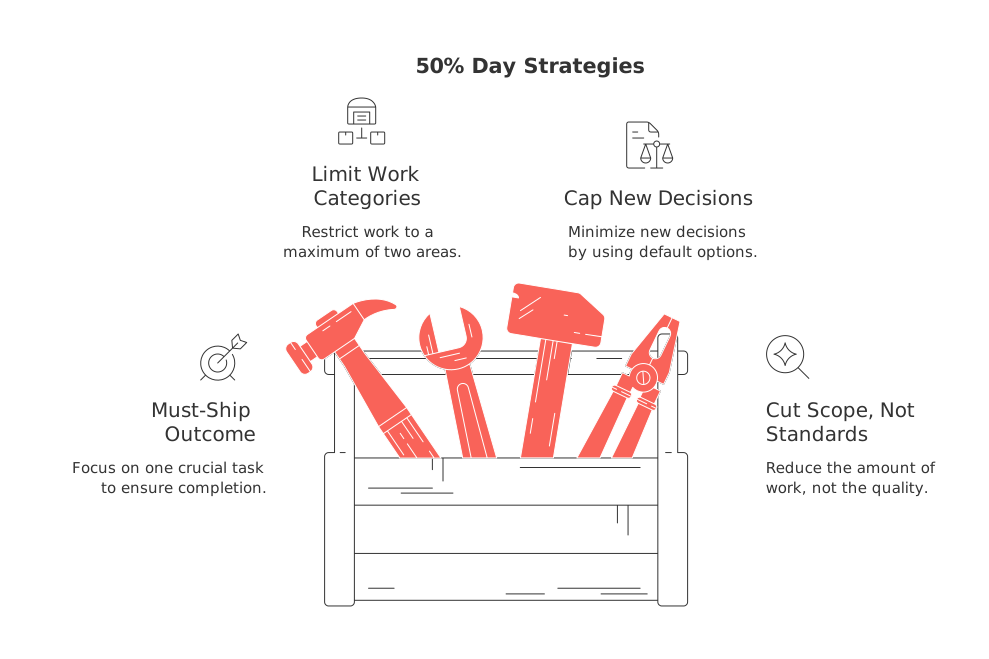
When you define the floor, you protect your ceiling for tomorrow.
How to triage tasks on low-capacity days using three layers
Quickly categorize your tasks into three clear categories. Each task should fit into just one category.
Obligations: commitments with real consequences today. Do these first.
Small wins: tasks under 25 minutes that move work forward.
Parked items: safe to revisit later. Capture and move on.
Stack the day with obligations and two to three small wins. Park the rest without guilt.
How to use micro‑sprints to protect focus on tough days
Short bursts reduce friction. They also prevent spirals.
Set your rhythm
Work in small bursts (sprints) of 25–40 minutes, followed by a short 5–10 minute break (reset).
Work one task per sprint. No context switching.
During breaks, stand up and breathe. Avoid screens.
Stop when a sprint ends. Restart only after a reset. Treat it like a rule, not a wish.
How to visualize work with lightweight trackers that reduce choices
A simple visual lets you see flow without thinking hard. Keep three columns: Doing, Blocked, Done. Avoid complex layers on hard days.
If you need options, explore these simple project management visualization tools. They help you spot scope without heavy setup.
How to keep CRM momentum on low‑energy days without burning bridges
Deal flow can stall when you feel drained. Nudge, do not overhaul.
Send one-line check‑ins to near‑close contacts.
Update critical fields only: stage, amount, next step.
Log quick outcomes after each message. Keep it factual.
Template two replies: follow‑up and timeline nudge.
Close tabs after each action. Fewer open items means fewer choices.
How to choose tools that reduce friction on 50% days
Use fewer apps on tough days. Centralizing your work in fewer applications can reduce the number of decisions you need to make and the amount of distractions. Some people prefer all‑in‑one workspaces like Routine or Notion. Others like focused stacks with ClickUp or Trello.
Not sure which path fits you? This comparison of all‑in‑one workspaces vs dedicated project tools explains trade‑offs with clear examples.
A simple 50% day checklist you can reuse
State your one must‑ship outcome in one sentence.
Pick two work categories for the day, max.
Run one sprint to create momentum.
Ship something small before noon.
Send one status update to stakeholders.
Park non‑urgent work in one place for later review.
Close with a two‑minute reflection. Capture one lesson.
Copy‑paste prompts that save thinking on foggy days
Use the following prompts as quick helpers when you’re experiencing difficulty in articulating your thoughts.
Focus support: I’m currently operating at 50% capacity and could use help prioritizing. Could you ask me three questions to define one must‑ship outcome I can finish in 40 minutes or less? Then propose a tiny scope that still delivers value to the recipient.
Task triage: Act as my task triage partner. I will paste 10 tasks. Please sort them into Obligations, Small Wins (under 25 minutes), and Parked Items. For Obligations, give a first micro‑step I can do in 5 minutes. Keep language plain.
Client update: Draft a one‑paragraph client update in a calm, human tone. Include: what moved, what is blocked, and the next concrete step. Keep it under 120 words. Avoid apologies unless essential.
30‑minute micro‑sprint: Help me run a 30‑minute micro‑sprint. Create a step‑by‑step checklist for building a minimal deliverable on [project]. Include a clear definition of done. End with a 2‑sentence status I can send to my manager.
How to communicate expectations to teammates and executives on slow days
Clarity prevents worry. Share what will and will not happen today.
State capacity:“I am at 50% today.”
Name the must‑ship item and delivery time.
List one risk and your mitigation.
Invite help on one blocker only.
End with gratitude. People respond well to steady signals.
FAQ
What is a 50% workday?
A 50% workday is when your capacity for work is significantly reduced. It's about adjusting your workload to focus on essentials and minimal outputs without compromising quality.
How can I stay productive on low-energy days?
Focus on completing one essential task, limit your decision-making, and reduce work categories. Use micro-sprints to manage energy and attention effectively.
What are micro-sprints, and how do they improve productivity?
Micro-sprints are short, focused bursts of work, typically 25–40 minutes long, followed by a brief break. They enhance focus by reducing multitasking and mental fatigue.
How can I manage client relationships when feeling drained?
Maintain momentum with quick, concise updates and use templates for repetitive tasks. Centralize CRM activities to avoid decision fatigue and keep communication consistent.
What tools help streamline work on low-capacity days?
Use fewer, more efficient tools to minimize distractions and decision fatigue. Platforms like Routine can centralize your tasks, reducing the cognitive load needed to manage multiple interfaces.
How do I communicate my reduced capacity to my team?
Be transparent about your current capacity and manage expectations by stating essential deliverables and mitigation strategies. Clear communication prevents misunderstandings and maintains trust.
What should I avoid on low-efficiency days?
Avoid taking on new decisions or expansive tasks that demand high energy. Stick to your predefined goals to prevent overwhelming yourself and causing errors that could create future challenges.

Julien Quintard
Founder & CEO at Routine06/18/2026
