Pre-Mortems: Planning for Failure Before It Happens
Pre-mortems explained: why planning for failure creates better outcomes
Assume your launch flops. Name the reasons. That mental flip is a pre‑mortem. You imagine failure first, then trace the causes. Unlike a post‑mortem, you act while choices remain. Teams surface fragile assumptions, missing owners, and risky dependencies before they bite.
If this project fails six months from now, what went wrong? That single question invites candor. It de‑personalizes risk, keeps status games low, and helps executives and solo creators spot blind spots fast.
Better decisions: You stress‑test the plan under realistic constraints.
Clear ownership: You attach names to countermeasures and review dates.
Fewer surprises: You define early warning signals, not vague “keep an eye on it.”
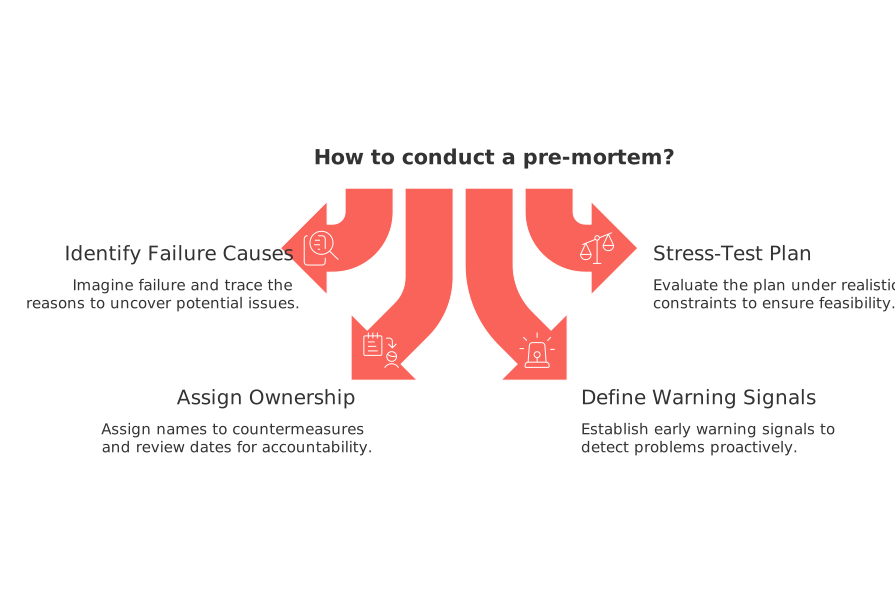
The step-by-step pre-mortem process that any team or solo creator can run
State the objective. What must be true for “success” to count?
Write the failure story. Describe the flop in two sharp paragraphs.
List causes silently. Everyone adds causes privately to avoid anchoring.
Cluster risks. Group by theme: scope, people, timing, tech, market.
Score probability and impact. Use High, Medium, Low to keep it quick.
Design countermeasures. Convert top risks into actions with owners.
Define tripwires. Pick measurable signals that force a decision.
Commit to reviews. Set a regular cadence and who attends.
Try this starter prompt to kick off the silence round with your team:
You are a skeptical project sponsor. In three bullet points, list the most likely reasons our [project / launch] will fail within [timeframe]. Keep each reason specific, testable, and free of blame.
Pre-mortem templates tailored to project management and CRM scenarios
A simple one‑pager works. Include a failure headline, a tight narrative, clusters of risks, scores, countermeasures, owners, and tripwires. For Customer Relationship Management (CRM) work, add fields for key areas: stage leakage (leads lost as they move through sales stages), handoff gaps (issues during transfers between teams such as marketing to sales, or sales to success), and renewal risk (signals a customer may not renew a contract). Keep the language plain so anyone can scan it in minutes.
Project delivery template: Risks by workstream, dependency map, fallback tactics, and a “stop rule.”
Sales pipeline template: Slippage causes, lead quality checks, routing delays, and mitigation owners.
Customer success template: Churn signals, health score gaps, and playbooks for recovery.
Need structured artifacts? Explore practical planning templates such as risk registers and project charters to give your pre‑mortem a sturdy frame.
How to facilitate a pre-mortem workshop without blame or groupthink
Set the tone early. Say the goal is to protect the plan, not reputations. Start with silent writing, then collect causes round‑robin. Vote privately on probability and impact. Timebox each segment. Close with owners and explicit next steps.
“We assume the release failed. Our job is to list causes, not culprits.”
Invite dissent first from quiet voices.
Avoid solutioning until ranking ends.
Capture tripwires and decisions in the same document.
End with a crisp summary you can read in two minutes.
Using pre-mortems across the project lifecycle to cut risk early
Run a quick pre‑mortem at kickoff, mid‑flight, and before release. Early sessions surface dependency gaps. Mid‑flight checks validate assumptions after real data arrives. Final passes confirm contingency plans and exit criteria. For deeper context on phases, see how to apply pre‑mortems across the five project lifecycle phases.
Consumer and freelancer use cases for simple, high-impact pre-mortems
Freelancer launch: You plan a course sale. Failure story: weak list, unclear promise, poor checkout. Countermeasures: tighten value prop, seed testimonials, test checkout on three devices, and set a refund rule.
Home renovation: Failure story: budget blowout, missed permits, wrong materials. Countermeasures: price buffer, permit checklist, supplier backups, and hold points before demolition.
Want a nudge to spot weak spots fast? Use this personal prompt:
I am planning [project]. Write a short failure story from six months after launch. Then list the top five causes, each with a simple action and a measurable tripwire.
Where pre-mortems live in your workspace and how to act on them
Keep the pre‑mortem close to the work. In an integrated digital workspace such as Routine or Notion, link each top risk to a task, assign an owner, and include a tripwire, a predetermined indicator that triggers a review or action. In dedicated tools like Asana or ClickUp, mirror that as a small task list inside the project. The key is traceability: a risk without an owner is a wish.
For those who prefer a visual representation, plot high‑impact risks on your project tracker to keep them visible during daily work. Pair these with ai>Gantt charts or Kanban board views for quick oversight.
Common pre-mortem mistakes and lightweight fixes you can apply today
Mistake: Brainstorm stays vague. Fix: Force specificity and testability.
Mistake: Only managers contribute during discussions. Fix: Begin with silent idea writing, then implement a structured rotation so every team member, regardless of rank, shares their points.
Mistake: No tripwires. Fix: Define thresholds that trigger action.
Mistake: Zero follow‑through. Fix: Assign owners and review dates on the spot.
Mistake: Treating the pre‑mortem as a one‑time session. Fix: Revisit after new data arrives.
One-page pre-mortem checklist to copy for your next kickoff
Objective stated in one sentence.
Two‑paragraph failure story written.
Risks clustered and ranked.
Top five countermeasures with owners.
Tripwires and exit rules defined.
Review dates and attendees listed.
Document linked to tasks and CRM records.
If you need visual aids to keep risks front‑and‑center, use simple timelines, Gantt charts, or Kanban boards. They pair neatly with pre‑mortems and make drift obvious during execution.
FAQ
What is a pre-mortem and how does it differ from a post-mortem?
A pre-mortem is a strategic practice where you anticipate potential failures before a project begins, allowing you to address issues proactively. Unlike a post-mortem, which analyzes causes after a project fails, a pre-mortem enables intervention while options are open.
How can pre-mortems lead to better decision-making?
Pre-mortems expose hidden risks and assumptions in a plan, providing an opportunity to address them before they impact outcomes. This process pressure-tests your strategy, ensuring decisions are based on realistic constraints.
What steps are involved in conducting a pre-mortem?
The pre-mortem process involves setting clear objectives, creating a hypothetical failure story, listing potential causes, clustering and scoring risks, designing countermeasures, and setting tripwires and review dates.
How can pre-mortems be applied to personal projects like freelancing or home renovations?
Pre-mortems can be tailored to personal projects by identifying specific failure scenarios, such as unclear value propositions in freelancing or budget overruns in renovations, and devising targeted countermeasures for each.
What are common mistakes in pre-mortem sessions and how can they be avoided?
Vague brainstorming, lack of tripwires, and zero follow-through are frequent errors that undermine effectiveness. Remedy by insisting on specificity, defining action-triggering thresholds, and assigning accountability during the session.
Why is ownership important in a pre-mortem?
Assigning ownership to countermeasures ensures accountability and follow-through, transforming abstract risks into actionable tasks. In Routine, you can link risks directly to tasks and assign them, integrating pre-mortem insights into your workflow.
How can Routine help you implement a pre-mortem effectively?
Routine provides an integrated digital workspace to embed pre-mortem plans seamlessly, linking risks to tasks with clear ownership and tripwires. This setup helps maintain visibility and accountability throughout the project lifecycle.

Julien Quintard
Founder & CEO at Routine07/17/2026
