The 4-Day Workweek Experiment: What Actually Breaks First
What breaks first when you cut a workday
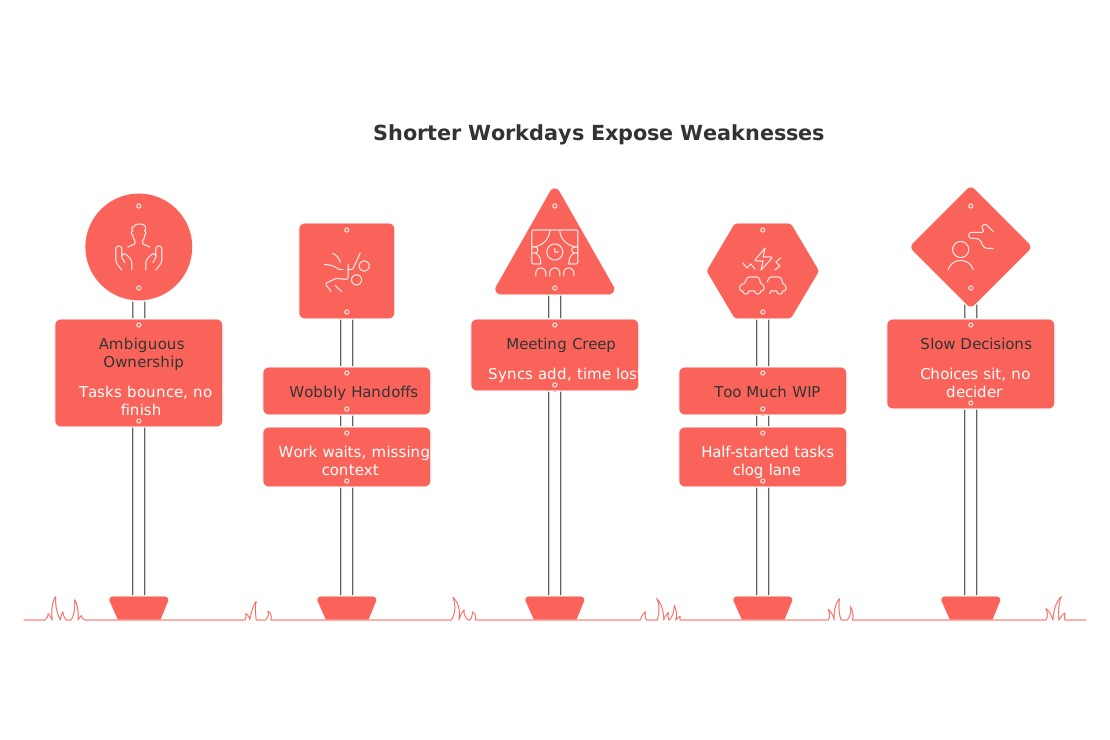
Shorter weeks expose weak seams. You’ll spot these patterns fast.
Ambiguous ownership. Tasks bounce because no one owns the finish.
Wobbly handoffs. Work waits on missing context or access.
Meeting creep. Teams add syncs to “stay aligned,” then lose time.
Too much work in progress. Half-started tasks clog the lane.
Slow decisions. Choices sit in threads with no decider.
We shipped more by deciding faster, not by working longer.
Address these issues first. Meeting productivity is more significant than the duration of working hours.
How a four-day workweek stresses project management fundamentals
Projects fail from fuzziness, not effort. A shorter week punishes fuzziness faster.
Scope and outcomes must fit the shorter cadence
Define the smallest outcome that signifies noticeable progress. Write what “done” includes and excludes. Keep the scope thin, but meaningful.
Dependencies need daylight, not surprises
List who you depend on and when. Surface blockers early. Create one visible lane for cross-team asks.
Limit work in progress
Set a WIP cap. Finish before you start. Aging tasks get attention first.
If your team needs a refresher on flow, see “Mastering the Project Lifecycle: The 5 Phases and What Really Happens in Each.” It frames handoffs and checkpoints in plain language.
Meetings that survive a shorter week
Keep only the meetings that make decisions or unblock delivery. Kill status updates that repeat dashboards.
Cut status, keep decisions
Replace round-robin updates with a single progress view.
Schedule decision reviews with one clear owner and a timebox.
Move Q&A to threads that close with a verdict.
For structure that saves time, borrow effective meeting formats and recap templates that keep outcomes crisp. Use the meeting format that best suits your team size and the level of project complexity.
Toolstack consolidation reduces friction in a shorter week
Context switching steals a shocking share of a four-day week. Fewer tools mean fewer edges to cross.
Connect tasks, specs, and CRM activity in one place.
Link discussions to the work item, not a chat dump.
Standardize intake so requests land with the right fields.
Decide where your team should centralize. Compare the tradeoffs in all‑in‑one workspaces versus dedicated project tools. An integrated workspace like Routine or Notion, or an execution suite like ClickUp, can cut tool hopping. Pick based on your workflow, not trend charts.
CRM and customer communication under a four-day rhythm
Customers accept clarity. They reject silence. Set rules that respect both.
Publish response windows that match the new hours.
Offer an emergency lane with a firm SLA and clear scope.
Batch outreach on two selected days each week for consistency.
Tag accounts at risk and assign one human owner.
Freelancers can state office hours on proposals and invoices. Agencies can rotate a small on-call crew with simple guardrails. Product teams can align launches to the first half of the week. Rituals reduce stress for everyone.
Metrics that tell you if the four-day experiment works
Measure flow, not feelings. These signals tell the story fast.
Lead time: request to delivery. Shorter means less waiting.
Cycle time: start to finish. Watch the median, not only the average.
Throughput: items finished per week. Track by type for clarity.
Work in progress: items started but not done. Keep it low.
Carryover: work that slips into next week. Fix root causes.
Customer wait: first-response and resolution times. Hold the line.
Team capacity: planned versus actual tasks done. Learn your real pace.
Review these weekly. Adjust scope before you adjust hours.
Pilot playbook for a four-day rollout that avoids chaos
Run a time-boxed pilot before you commit. Treat it like product work.
Pick one team and one quarter. Name the decision-maker.
Choose the model: 32 hours or 4x10s. Write the rule.
Set hard guardrails: WIP cap, meeting limits, response windows.
Freeze tool changes during the pilot. Reduce variables.
Create a single intake lane for new requests.
Hold a 30-minute weekly retro with data, not vibes.
Plan two checkpoints, at week 4 and week 8. Make your decisions based on collected data and concrete observations.
Solo operators can also adopt the same plan for a four-day workweek. The cadence from “The 12-Week Year: Why Quarters Beat Annual Goals for Solo Operators” fits this window well.
What to cut, what to compress, and what to protect
You cannot do everything. Choose with intention.
Cut: status meetings, tasks that do not contribute to clear outcomes or productivity, duplicate reviews.
Compress: grooming, demos, and planning. Timebox each.
Protect: deep work blocks, decision reviews, customer escalations.
Publish the rules where everyone can see them. Follow them even when busy.
When a four-day week fails and how to recover without drama
Sometimes the model doesn’t fit the moment. That’s fine. Avoid blame.
Revert to five days for launch weeks only. Document why.
Keep the meeting cuts and WIP caps. They work either way.
Shift to a 9-day fortnight as a bridge. Review again in six weeks.
Share results. Explain what you’ll try next.
Failure is data. Treat it like any other experiment.
Real examples that show a four-day week in everyday work
Freelance designer
She works Monday to Thursday. She batches client updates on Tuesday. She reserves Wednesday for production. Friday remains for personal projects.
Small agency
The team rotates a two-person Friday desk for emergencies. Everyone else rests. Monday starts with a 20-minute decision review, not status.
Product squad
The squad ships on Wednesday. Thursday hosts a short retro and planning. They cap WIP at three items per person.
A shorter week rewards clarity more than stamina
Cutting a day forces sharp choices. Clean scopes, clear owners, and fewer tools carry the load. You can run this experiment without burning trust or output. Start small, decide fast, and keep what works.
Explore independent case studies on four‑day pilots if you want external examples before your pilot. Review them with your team, then set a start date.
FAQ
What is the primary challenge of implementing a four-day workweek?
The main challenge is managing tasks with clear ownership and reducing the inefficiencies exacerbated by the shorter time frame. Projects and dependencies must be handled with precision to avoid bottlenecks.
How can toolstack consolidation benefit a four-day workweek?
Fewer tools mean less time lost to context switching, which is vital for maintaining productivity in a compressed schedule. Using integrated platforms like Routine ensures seamless task management and reduces friction.
Why do traditional meetings often fail in a four-day workweek setting?
Traditional meetings tend to waste time on status updates with minimal decision-making impact. Replacing them with concise, decision-focused sessions prevents time drain and ensures productivity.
How should companies handle dependencies in a shorter workweek?
Dependencies must be transparent and managed proactively to prevent project delays. Centralizing tasks and maintaining visibility are crucial for identifying blockers early.
What metrics are vital to track the success of a four-day workweek?
Metrics like lead time, cycle time, and throughput are critical in assessing performance. Understanding these can pinpoint inefficiencies and help adjust scope or processes before altering hours.
How do customer communication strategies change with a four-day workweek?
Setting clear response windows and maintaining open lines of communication are essential. Providing structured communication days ensures customers feel adequately supported despite fewer operational hours.
What roles do rituals play in a four-day workweek?
Structured rituals like planning and retrospectives provide stability and predictability in a faster-paced environment. They allow teams to maintain focus and adapt quickly to change.
What are the risks of not addressing work in progress (WIP) in a shorter workweek?
Overlooking WIP can lead to a backlog of unfinished tasks, clogging progress and reducing overall efficiency. Setting caps forces completion and prevents workflow bottlenecks.

Julien Quintard
Founder & CEO at Routine07/24/2026
