RACI vs DACI vs RAPID: Which Decision Framework Fits Your Product Team?
Why decision rights determine product velocity for teams using RACI, DACI, or RAPID
In product development, shipping speed rarely fails due to code alone. Velocity often drops when teams lack clarity in decision-making. This is where structured frameworks like RACI, DACI, and RAPID become essential. They assign clear decision rights, minimize rework and status churn, and provide CXOs with oversight without micromanaging. Product managers, in turn, gain genuine authority alongside accountability.
Clarity scales. Ambiguity stalls. Treat decision roles as fundamental to your operational workflow.
What the RACI, DACI, and RAPID decision frameworks mean in plain language
RACI: defining roles for task execution
Responsible is tasked with completing the assigned work. Accountable owns the outcome and signs off on the result. Consulted provides feedback and expertise before execution begins. Informed is kept up to date after decisions and milestones. RACI fits execution-driven workstreams such as backlog refinement, QA, and release checklist processes.
DACI: defining roles for decision-making
Driver leads the decision process from start to finish. Approver has the single authority to make the final call. Contributors offer insights, options, and analysis. Informed remains notified of the decision and its implications. DACI works best for product calls that need an unambiguous owner, for example, deciding feature scope or user experience direction.
RAPID: roles for cross-functional or high-risk decisions
Recommend develops possible options and a proposed path forward. Agree can veto choices in their domain, such as legal or risk. Perform executes once the decision is made. Input supplies critical data to refine options. Decide makes the final determination. RAPID works well when decision stakes are high or vetoes are necessary, for instance in pricing or compliance discussions.
Key differences between RACI, DACI, and RAPID for product governance
Scope of use: RACI governs execution; DACI addresses discrete product decisions; RAPID is for strategic or risk-intensive calls.
Single point of accountability: RACI establishes a single Accountable person; DACI a single Approver; RAPID a sole Decide role. Always keep these roles singular.
Veto rights: Only RAPID formalizes veto power via the Agree role.
Speed vs inclusivity: RACI emphasizes speed, but is less inclusive. RAPID aims for inclusivity but may slow down if overused. DACI strikes a balance between both ends.
Documentation: RACI typically attaches to task lists; DACI and RAPID are better suited to decision records and structured memos.
When to use RACI vs DACI vs RAPID in common product scenarios
Roadmap prioritization: Use RAPID if finance or legal requires veto authority. Otherwise, opt for DACI, typically with the product manager as Driver.
Feature scope cut: Choose DACI. The product manager drives; design and engineering provide input; the director approves.
Critical outage response: Select RACI for maximum speed. The incident lead is Accountable; SREs are Responsible.
Pricing change: Apply RAPID. Product recommends, legal and finance agree, and the CRO decides.
Go/no-go launch: Leverage DACI for ownership of the launch decision and complement it with a RACI checklist for execution tasks.
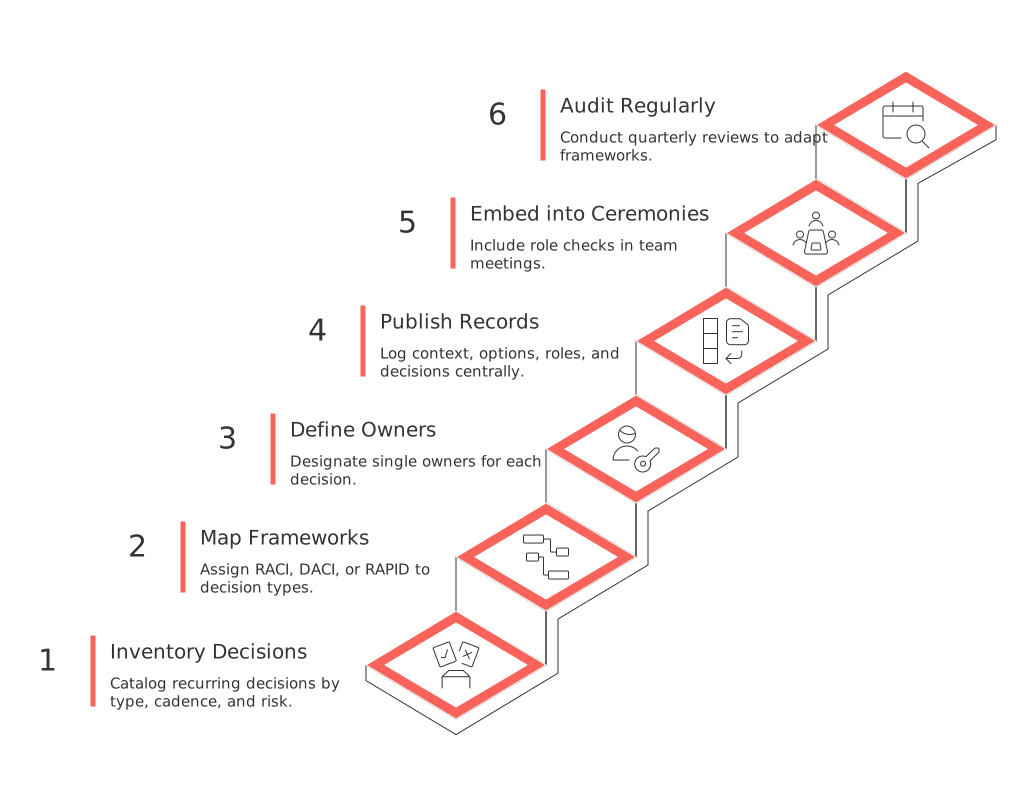
How to implement RACI, DACI, or RAPID in product rituals and artifacts
Inventory your decisions: Catalog recurring decisions by type, cadence, and associated risk levels.
Map frameworks to decision types: Assign either RACI, DACI, or RAPID to each type accordingly.
Define single owners: Always designate exactly one Accountable, Approver, or Decide role for any decision. Avoid committees.
Publish decision records: Log context, considered options, assigned roles, and decisions in a central repository.
Embed into team ceremonies: Include a role check as part of planning, reviews, and especially go/no-go meetings.
Audit on a regular basis: Conduct quarterly reviews to phase out outdated roles and adapt frameworks to organizational shifts and new risks.
For effective meeting structure and ensuring actionable follow-through, refer to these effective decision meeting templates. These resources help you finalize decisions and record outcomes with clarity.
Pitfalls to avoid when adopting RACI, DACI, or RAPID in product teams
Never assign more than one person to the final decision-maker role. Resist the temptation to bloat the Consulted or Input roles, excessive involvement leads to disengagement. Clearly distinguish between roles related to execution and decision-making; someone highly skilled in implementation may be Responsible but not Approver. Prevent framework overload by matching one framework to each decision type. Finally, treat decision records as key knowledge assets, avoid letting them get buried in chat threads or file attachments.
Techniques to operationalize RACI, DACI, and RAPID across projects, CRM, and knowledge bases
Embed roles and responsibilities where your teams work. Many organizations utilize integrated workspaces or PM/CRM solutions like Routine, Notion, or ClickUp. Create a comprehensive decision database, including fields for Type, Framework, Roles, Status, and Outcome. Each entry should link to the corresponding epic, customer account, or product launch.
Projects: Attach the RACI matrix directly to relevant epics and release plans.
Knowledge management: Store all decision memoranda with DACI or RAPID participant roles listed at the top.
CRM systems: Relate customer-impacting decisions to specific accounts and sales opportunities.
Meetings: Initiate each agenda with a concise “role check” before any debate or discussion.
If you are considering various platforms, consult this analysis of all-in-one workspaces versus dedicated project tools for insights on how these choices affect decision governance.
Real-world examples of RACI, DACI, and RAPID applied to roadmap changes and launches
Example 1: roadmap change following enterprise feedback
Context: A strategic client requests SSO enhancements, directly competing with a Q2 analytics epic.
Framework: RAPID, due to impacts on revenue and security.
Recommend: Product manager outlines three options with detailed effort and ARR implications.
Agree: Security and finance teams review for margin and risk concerns.
Input: Sales provides customer timeline and likelihood of deal success.
Decide: VP of Product selects Option B, accepting a two-sprint delay to the roadmap.
Perform: Engineering updates the backlog and revises delivery dates accordingly.
Example 2: feature launch go/no-go
Context: The mobile feature is ready, but the crash rate exceeds the acceptable limit.
Framework: DACI for the go/no-go call; RACI for operational tasks.
Driver: Product manager coordinates and presents all decision evidence.
Approver: Director of Product is responsible for the launch decision.
Contributors: QA and Data Science teams contribute supporting data.
Informed: Marketing and Support prepare communications in line with the result.
RACI tasks: SRE is Responsible for developing a hotfix; Product manager is Accountable for the final launch documentation.
How to choose the right decision framework for your product team
Begin by assessing your risk and decision-making cadence. Use RACI for situations that call for rapid, repeatable execution. Apply DACI to decisions where clear ownership is needed. Choose RAPID when decisions involve veto power from legal, finance, or compliance. Always ensure that roles are singular for each decision, comprehensively document the rationale and results, and close the loop by tracking outcomes.
For practical, ready-to-use documents, explore project planning templates including charters and roadmaps. They integrate well with decision logs and matrices. For a broader view of where these decisions fit within delivery, see “Mastering the Project Lifecycle: The 5 Phases and What Really Happens in Each.”
FAQ
What is the primary benefit of using decision-making frameworks like RACI, DACI, or RAPID?
These frameworks provide clarity and structure in decision-making, preventing endless loops of indecision. By clearly defining roles and responsibilities, they reduce rework and facilitate faster, more confident decision execution.
How does using RACI, DACI, or RAPID impact team accountability?
By assigning specific roles such as Accountable, Approver, or Decide, these frameworks ensure there is no ambiguity about who is responsible for what. This not only holds team members accountable but also empowers them with genuine authority to make informed decisions.
What potential pitfalls should teams avoid when implementing these frameworks?
Avoid assigning multiple people to the decision-maker role—it dilutes responsibility and stifles progress. Overloading the Consulted or Input roles leads to disengagement rather than inclusivity, so keep these roles streamlined.
When should a team choose RAPID over RACI and DACI?
RAPID is best suited for high-risk decisions or scenarios where specific domains require veto power, such as in legal or compliance matters. Prioritize RAPID when stakes are high and input from various experts is crucial.
Can a team use multiple frameworks simultaneously on a single project?
Yes, but it's crucial to apply each framework to distinct aspects of the project—mixing them for the same decision can lead to confusion. For example, use DACI for strategic decisions and RACI for execution-level tasks to maintain order.
How can integrating Routine enhance the implementation of decision frameworks?
Routine offers integrated workspaces and CRM solutions that can embed roles and responsibilities directly where work happens, ensuring decision frameworks are not just theoretical but actively guide daily operations. This prevents decisions from being buried in chat threads.
What are the consequences of not having decision roles in product development?
Lack of decision roles can lead to chaos, with teams mired in endless discussions without direction. This results in stalled projects and missed opportunities due to the inability to act decisively and efficiently.
Why is role singularity important in these frameworks?
Singular roles ensure clear accountability, preventing the 'too many cooks' syndrome that often hinders progress. When everyone knows their role, teams can operate seamlessly without wasting time on role disputes.

Julien Quintard
Founder & CEO at Routine03/03/2026
